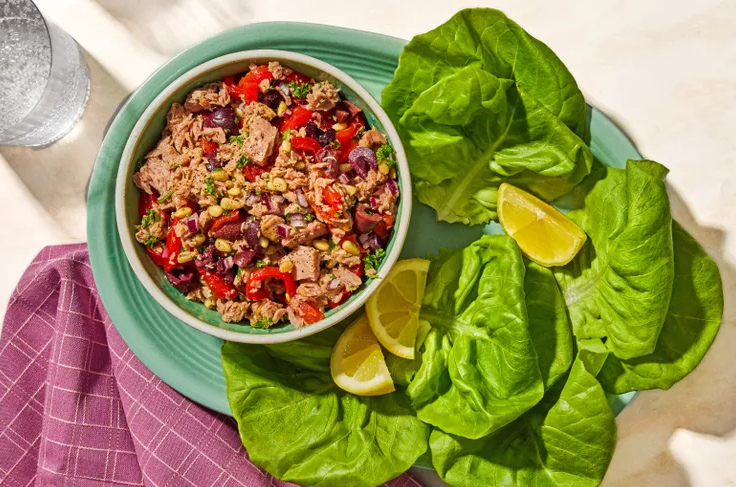
Italian tuna salad is a bright Mediterranean lunch that feels special but comes almost entirely from the pantry. Instead of a heavy mayonnaise base, this version uses olive oil packed tuna, roasted red peppers, kalamata olives, red onion, fresh herbs, and toasted nuts in a simple lemony dressing. You can stir it together in about ten minutes, then scoop it over crisp lettuce, pile it onto crusty bread, or tuck it into a pita. Because the ingredients are sturdy and well seasoned, it also works very well as a make ahead tuna salad for two to three days of easy meals.
Time and Serving
- Prep time: about 10 minutes
- Cook time: 3 to 5 minutes for toasting the nuts
- Total time: about 15 minutes
- Yield: about 2 generous main dish servings or 3 smaller portions
- Serving size: roughly one to one and one quarter cups per person
Insight of The Easy, Flavor-Packed Italian Tuna Salad
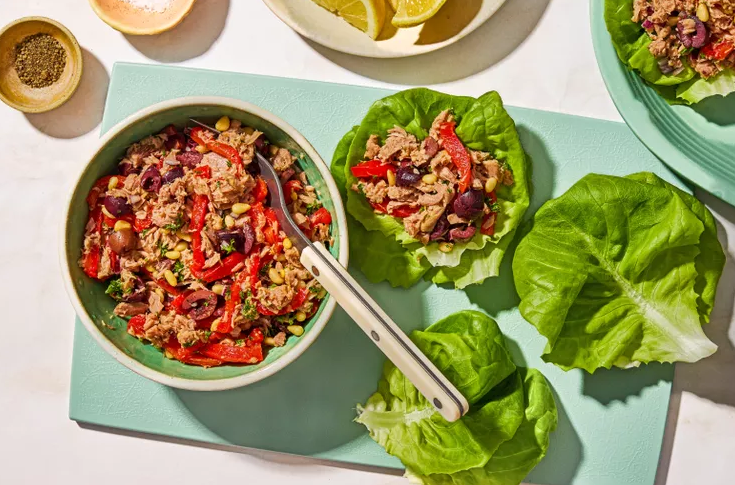
At its core, this recipe is a chunky bowl of Italian tuna salad dressed with good olive oil and fresh lemon juice instead of mayonnaise. The flavor comes from contrast and texture. You have rich olive oil packed tuna, sweet and smoky roasted red peppers, briny kalamata olives, a little bite from red onion or shallot, and crunch from toasted pine nuts or almonds. Fresh parsley or basil keeps everything tasting lively.
For a busy day, this is the kind of no cook Mediterranean lunch that feels like something you might pick up from a small deli rather than something that came straight out of your pantry. Olive oil packed tuna and jarred roasted red peppers are shelf stable foods, so you can keep them on hand for nights when you are tired and still want a real meal. Food Safety and Inspection Service
Because this is a no mayo tuna salad, it feels lighter than the creamy version many people grew up with, yet it is still satisfying enough to serve as a light dinner with bread, greens, or a simple grain bowl. The salad holds its texture in the fridge, so it is ideal as a make ahead tuna salad for work lunches or packed meals.
Ingredients
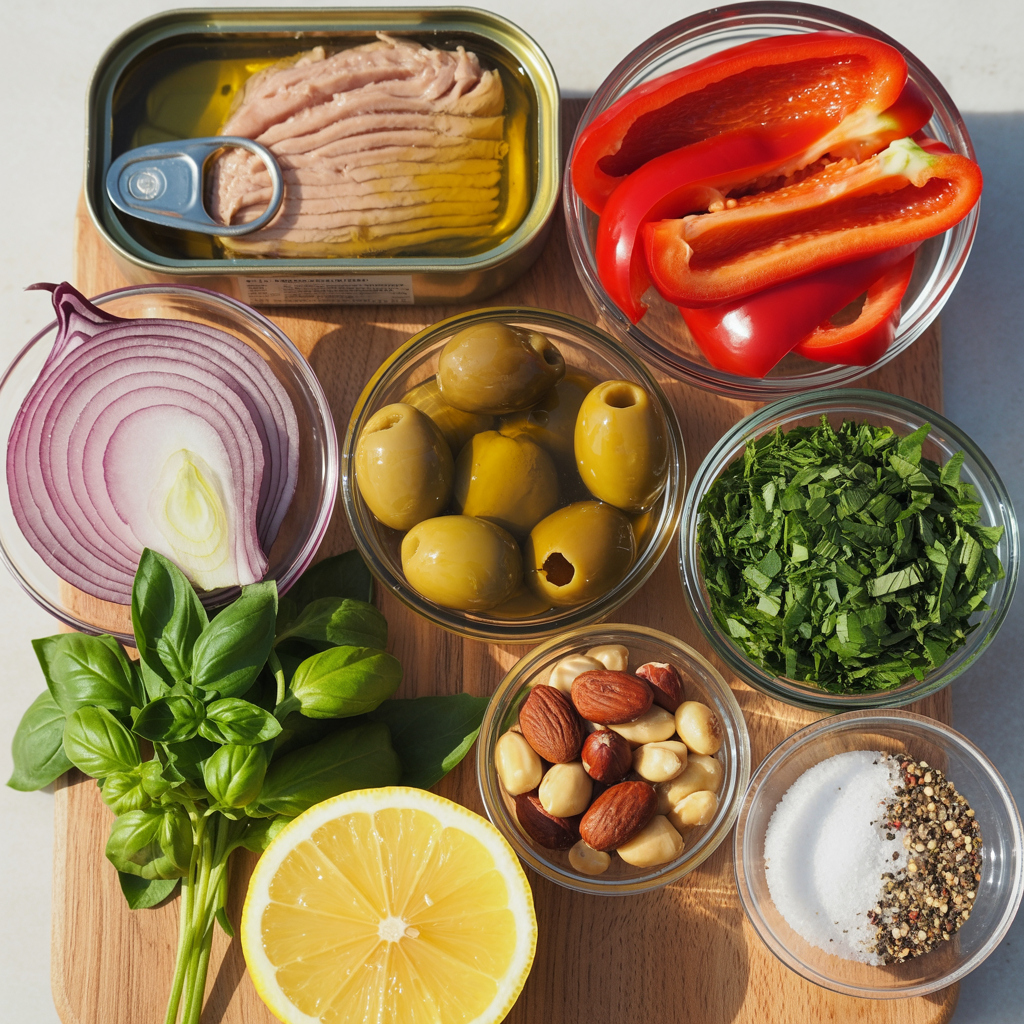
The quantities below make about two generous servings. You can double or triple everything if you want to prep lunches for several days.
Main salad ingredients
- 1 can tuna packed in olive oil, about 4 to 5 ounces, undrained
- 1 half cup drained jarred roasted red bell peppers, cut into thin strips or bite size pieces
- 1 quarter cup pitted kalamata olives, roughly chopped
- 1 tablespoon finely minced red onion or shallot
- 2 tablespoons chopped fresh flat leaf parsley, basil, or a mix of the two
- 2 tablespoons toasted pine nuts or toasted slivered almonds
Dressing and seasoning
- 1 tablespoon freshly squeezed lemon juice, or white wine vinegar to taste
- 1 small pinch fine sea salt, more only if needed
- Freshly ground black pepper to taste
Optional for serving
- Lettuce leaves or mixed salad greens
- Slices of crusty bread, toasted bread, pita halves, or crackers for scooping
- Extra virgin olive oil, 1 to 2 tablespoons, if you are using water packed tuna instead of olive oil packed tuna
If you scale the recipe up, keep the basic ratio of one can of tuna to about three quarters to one cup of vegetables and mix ins. That keeps the salad nicely chunky and balanced rather than dominated by tuna alone.
Required Tools
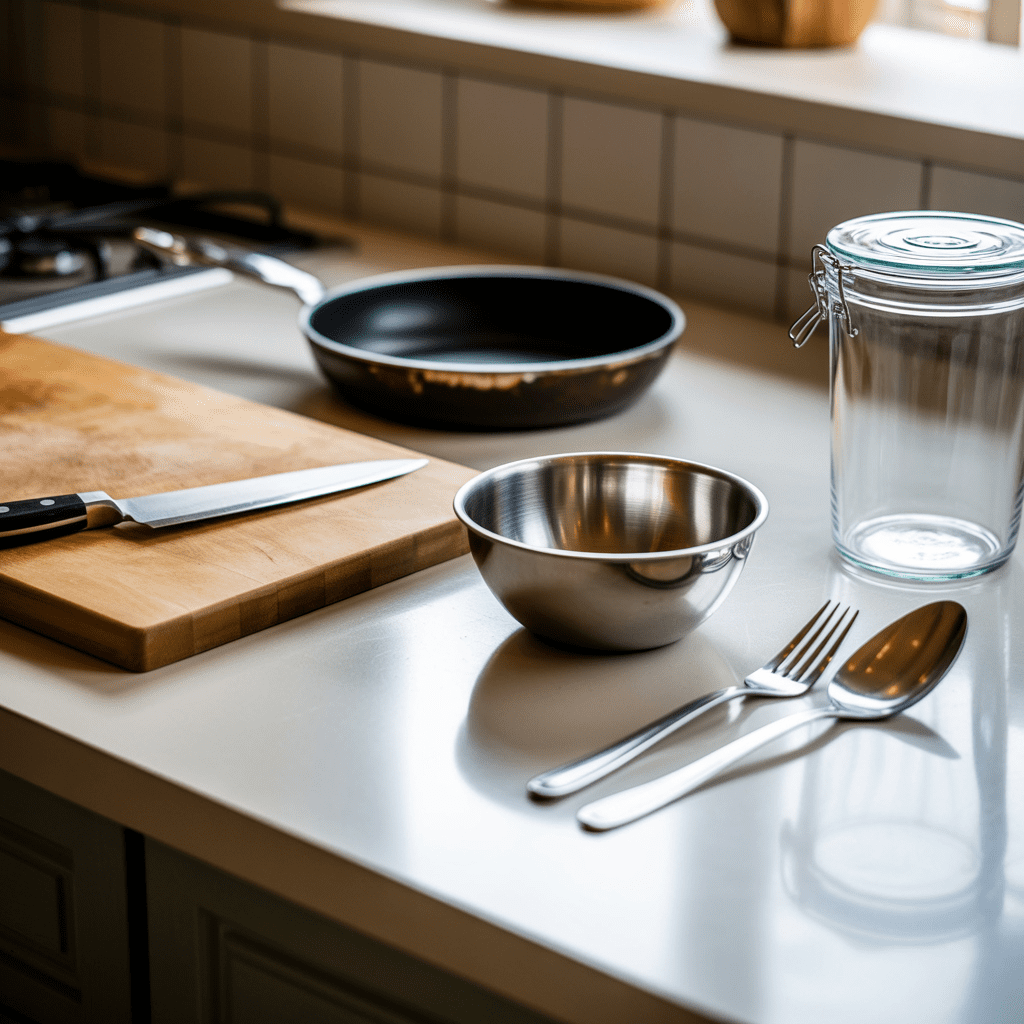
You truly do not need much equipment for this pantry friendly recipe.
- Cutting board
- Sharp knife
- Small skillet for toasting nuts
- Small or medium mixing bowl
- Fork and spoon for mixing and serving
- Measuring spoons and a measuring cup
- Airtight container for storing leftovers in the refrigerator
Method: Step by Step Preparation Guide
Step 01: Toast the nuts for extra flavor
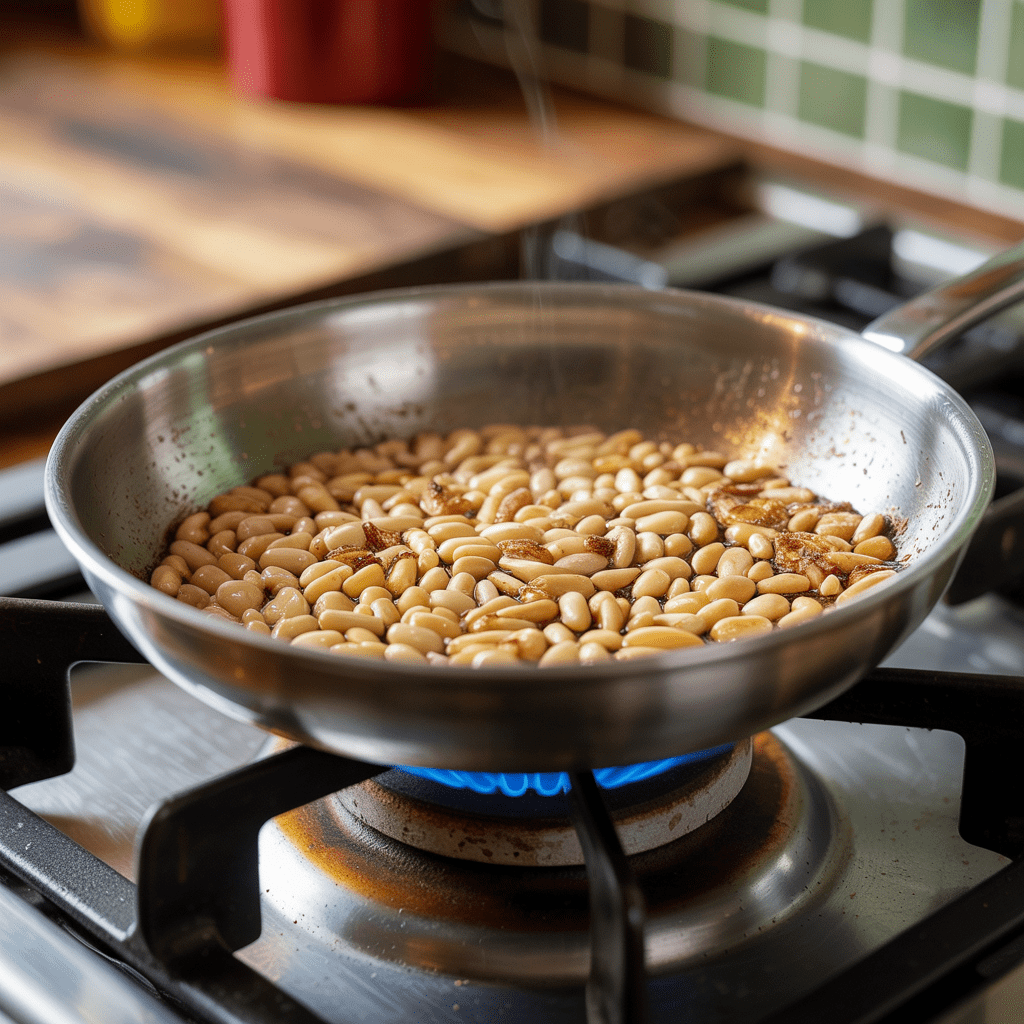
Place the pine nuts or slivered almonds in a dry small skillet. Set the skillet over medium low heat and cook, stirring frequently, until the nuts smell fragrant and you see light golden color on the edges. This usually takes three to five minutes.
Nuts can go from pale to scorched quickly, so stay nearby and keep the heat moderate. As soon as they are lightly toasted, transfer them to a small plate to cool so they do not continue to darken in the hot pan. Toasting brings out more flavor and gives the salad a satisfying crunch.
Step 02: Prep the vegetables and herbs
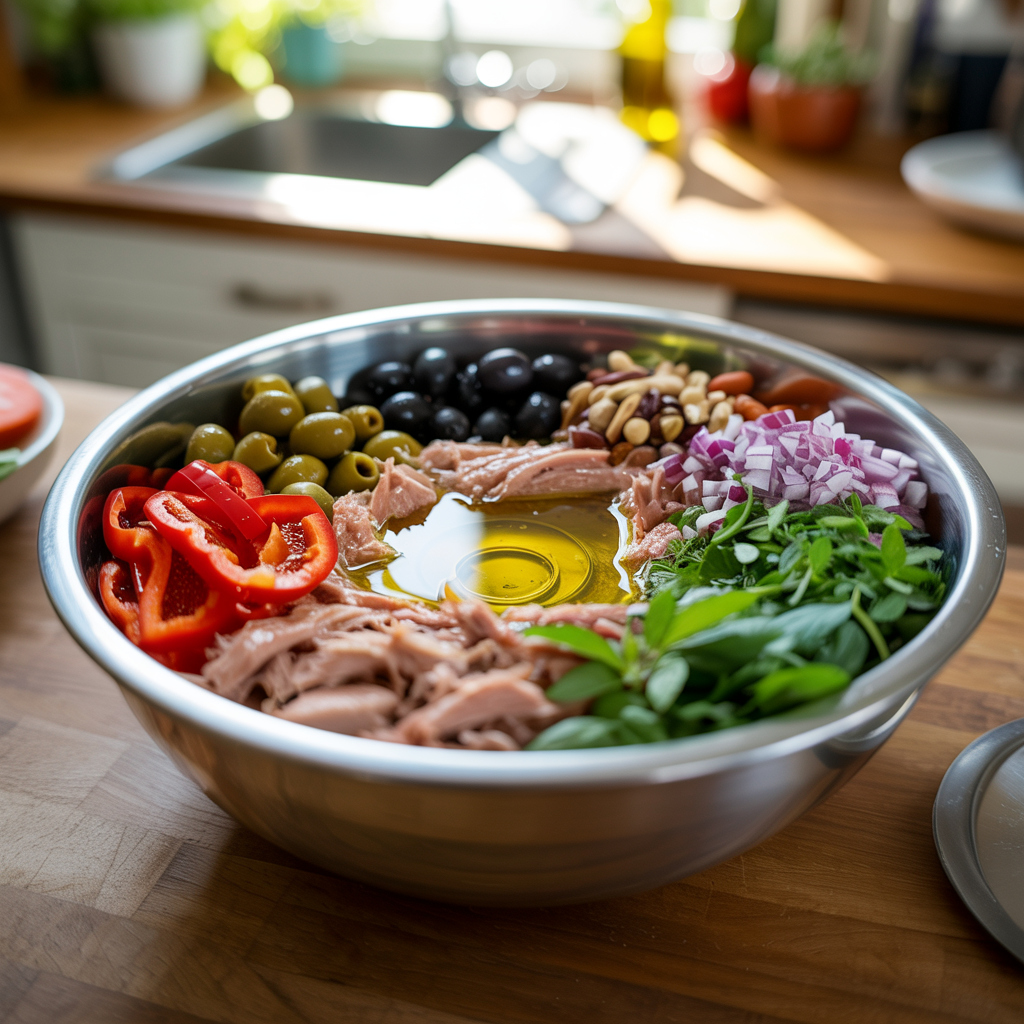
While the nuts cool, finely mince the red onion or shallot. You want small pieces so that the flavor is present but does not overwhelm each bite. Slice the roasted red peppers into thin strips or small squares. Roughly chop the kalamata olives so that you get little bursts of salty flavor rather than whole olives.
Chop the parsley and or basil. For parsley, include the tender stems, since they have good flavor. For basil, stack the leaves, roll them into a loose cigar, and slice crosswise into thin ribbons.
Step 03: Combine the tuna and its olive oil
Open the can of olive oil packed tuna over the sink in case a little oil spills over. Pour the tuna and all of its olive oil directly into the mixing bowl. According to nutrition data for canned tuna in oil, the olive oil contributes both flavor and a source of fat that helps make this salad satisfying. Wikipedia
Use a fork to break the tuna into large flakes. Aim for pieces that are about the size of a bite, not tiny shreds. If you over mix at this stage, the salad can feel mushy rather than pleasantly chunky.
If you only have water packed tuna, drain it well, then add one to two tablespoons of extra virgin olive oil to the bowl before you move on. Water packed tuna is leaner and drier, so this extra oil helps mimic the texture and flavor of olive oil packed tuna. Wikipedia
Step 04: Add vegetables, herbs, and lemon
Add the roasted red peppers, chopped olives, minced onion or shallot, and chopped herbs to the bowl with the tuna. Sprinkle the cooled toasted nuts over the top.
Drizzle the lemon juice over everything. Start with one tablespoon, then you can add a little more if you like a brighter, more tangy Italian tuna salad. The lemon balances the richness of the olive oil and tuna and keeps the salad from tasting heavy.
Step 05: Toss gently and season
Use the fork and a spoon to gently fold everything together. Try to lift from the bottom and turn rather than aggressively stirring. The goal is to distribute the vegetables, herbs, and nuts while keeping the tuna in visible pieces.
Taste a small bite. Remember that kalamata olives are naturally salty, so you may need only a pinch of added salt. Add freshly ground black pepper. If the salad tastes a bit flat, add another small squeeze of lemon juice. If it tastes a little too sharp, add a small splash of olive oil to round things out.
Step 06: Serve
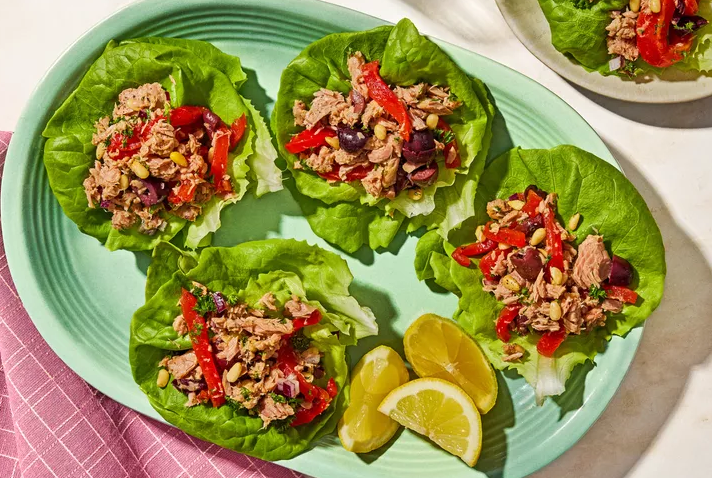
You can serve the salad right away at cool room temperature or chill it for twenty to thirty minutes to let the flavors mingle. Some everyday serving ideas:
- Spoon over crisp lettuce or mixed salad greens for a light Mediterranean lunch
- Pile onto slices of toasted bread or ciabatta for an open face sandwich
- Tuck into pita pockets with extra chopped vegetables for a portable quick ten minute lunch
- Serve with crackers and cut vegetables as part of a snack style dinner plate
Step 07: Store leftovers safely
Transfer any leftover salad to a clean airtight container and refrigerate promptly. According to cold food storage charts from trusted food safety resources, salads made with tuna are best eaten within about three to four days when kept refrigerated at or below about 40 degrees Fahrenheit. foodsafety.gov
This Italian tuna salad keeps its texture well because there is no mayonnaise to separate, and the olive oil helps keep the tuna moist. For the best quality, many home cooks prefer to enjoy it within about two to three days.
Simple Variations
You can treat this pantry friendly recipe as a template and adjust based on what you have.
- Swap the nuts
- Use toasted slivered almonds or chopped walnuts instead of pine nuts for a more budget friendly option.
- Change the peppers
- Use thinly sliced fresh red bell pepper if you do not have roasted peppers, or try sweet and slightly spicy peppadew peppers from a jar for extra brightness.
- Add more protein and fiber
- Stir in half a cup of rinsed canned white beans or chickpeas to turn this into a heartier Mediterranean lunch bowl. FoodData Central
- Turn it into a full meal
- Serve the salad over warm cooked farro, quinoa, or pasta, or spoon it over rice for an easy grain bowl.
- Adjust the herbs
- Use parsley for a fresher, grassy flavor, basil for a more aromatic, classic Italian note, or a mix of both.
Key Advantages of Making The Easy Italian Tuna Salad
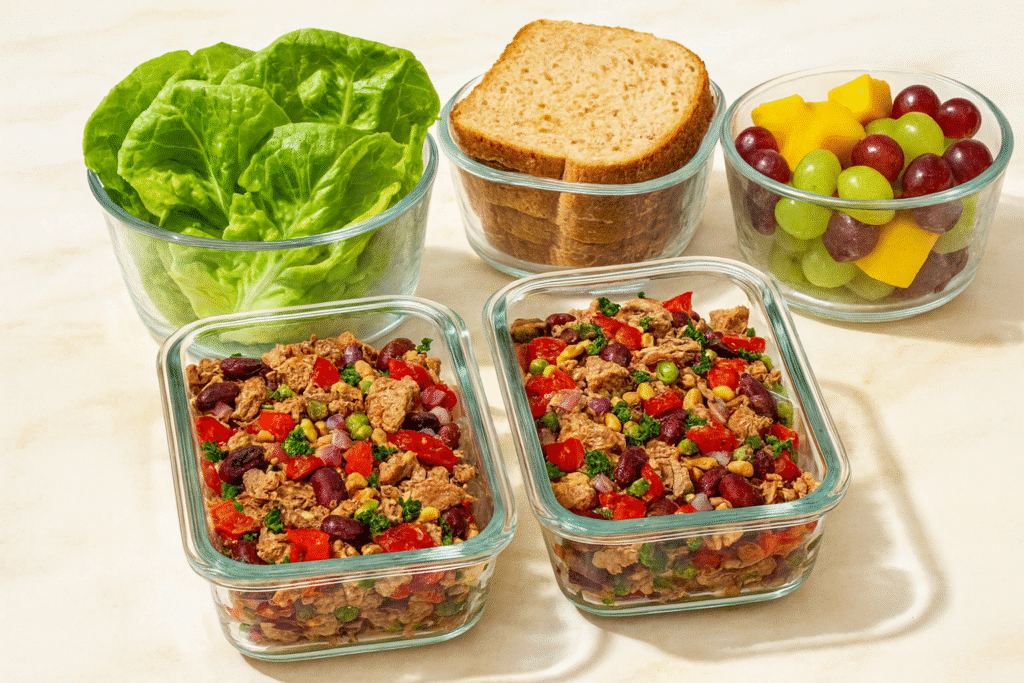
- Quick and realistic for busy days
You can open a few pantry items and have a colorful bowl of Italian tuna salad on the table in around ten minutes, which makes it a very practical quick ten minute lunch or light dinner. - Pantry friendly recipe
Canned tuna, jarred roasted red peppers, olives, and nuts are all shelf stable. As long as you keep a lemon and a small bunch of herbs around, you can assemble this Mediterranean lunch even when the fridge looks almost empty. - No mayo tuna salad that still feels satisfying
The olive oil dressing keeps the salad naturally dairy free and egg free, yet the combination of tuna and olive oil still provides satisfying fat and plenty of protein. Canned tuna in oil typically provides around 200 calories and more than 25 grams of protein per 100 grams, which makes it a relatively protein rich base for a meal. - Versatile serving options
You can serve this Italian tuna salad over greens, tucked into pita, piled on toast, or spooned into lettuce leaves for low carbohydrate wraps. It also works well as part of a larger platter with sliced cucumbers, tomatoes, olives, and bread. - Make ahead friendly
When stored in an airtight container in the refrigerator, tuna salads are generally safe for about three to four days, according to guidance from United States food safety resources, as long as they are kept cold. This makes the recipe ideal for meal prep.
Mistakes to Avoid
Using water packed tuna without adding extra olive oil
Water packed tuna is leaner and drier. If you use it without adding extra olive oil, the salad can taste flat and feel dry. Always add at least one to two tablespoons of good olive oil to compensate. Wikipedia
Adding too much salt before tasting
Kalamata olives and roasted red peppers already bring plenty of salt. Taste the salad before you add additional salt and season gradually.
Skipping the lemon or vinegar
Without acid, the salad can taste heavy. Lemon juice or white wine vinegar brightens the flavors and balances the richness of the tuna and olive oil.
Over mixing the tuna
If you stir too aggressively, the tuna breaks down into a paste and the salad loses its appealing chunky texture. Fold gently so the tuna stays in bite size pieces.
Leaving the salad at room temperature too long
Like other seafood salads, this should not sit out for long periods. Food safety guidance for leftovers notes that perishable dishes are safest when kept refrigerated and eaten within a few days. Food Safety and Inspection Service+1 Keep the salad chilled and return it to the fridge promptly after serving.
Expert Tips and Real Life Examples
- Choosing olive oil packed tuna
There are premium brands of olive oil packed tuna that taste almost like fresh fish and more budget friendly options in the regular canned goods aisle. Look for cans labeled light or white tuna in olive oil. You do not need the most expensive brand to get a very good Italian tuna salad, especially once you add roasted peppers, olives, and herbs. Wikipedia - Toasting nuts without burning them
Always toast nuts in a dry skillet over medium low heat and stir often. As soon as you see light color and smell a nutty aroma, move them to a plate. Leaving them in the pan off the heat can still cause scorching. - Packing for lunch
For a workday Mediterranean lunch, pack the Italian tuna salad in one compartment of a container and keep lettuce or bread in a separate compartment or bag. This keeps the greens from wilting and the bread from becoming soggy. Add lemon wedges on the side if you like things extra bright. - Adjusting for milder taste
If you are serving kids or people who do not enjoy strong onion flavor, rinse the minced onion under cold water and pat it dry before adding, or use a small amount of shallot instead, which is naturally milder. - Real life example: weekend prep
Many home cooks like to make a double batch of this Italian tuna salad on Sunday afternoon. One portion becomes an immediate lunch, spooned over mixed greens with a slice of toast. The rest goes into a glass container for quick weekday meals, such as a pita stuffed with salad and lettuce on Monday and a grain bowl with leftover rice and cucumbers on Tuesday. As long as the salad stays refrigerated and covered, it fits comfortably within the usual three to four day window recommended for tuna salads. foodsafety.gov
Nutrition Facts (Per Serving)
The values below are approximate and will vary based on the exact tuna brand, amount of olive oil, and portion of nuts and olives used. They are based on one half of the recipe made with one can of tuna in oil, roasted peppers, olives, a small handful of nuts, lemon juice, and herbs. Typical nutrition data for canned tuna in oil and similar ingredients were used as references. Wikipedia
Approximate per serving
- Calories: about 230 to 260
- Protein: about 18 to 22 grams
- Carbohydrates: about 4 to 6 grams
- Fat: about 16 to 20 grams
- Fiber: about 2 grams
- Sodium: roughly 550 to 700 milligrams
If you serve the salad with bread, crackers, or grains, the calorie, carbohydrate, and sodium values will increase based on those additions.
Frequently Asked Questions
Q1: Can I use water packed tuna instead of olive oil packed tuna
Yes, you can use water packed tuna in this Italian tuna salad. Drain it well, then add one to two tablespoons of extra virgin olive oil to the bowl before mixing in the other ingredients. This helps mimic the texture and rich flavor you get from olive oil packed tuna. Wikipedia
Q2: How long does Italian tuna salad last in the fridge
When stored in a clean airtight container and kept at or below about 40 degrees Fahrenheit, tuna salads are generally safe for about three to four days, based on guidance from foodsafety resources that cover egg, chicken, ham, and tuna salads. foodsafety.gov+1 For best quality, try to enjoy this salad within two to three days.
Q3: How can I make this recipe more budget friendly
Use a reasonably priced olive oil packed tuna rather than a premium brand, choose almonds or walnuts instead of pine nuts, and rely on parsley as your main herb. Buying roasted peppers and olives in larger jars and using them in several recipes during the week can also help reduce the cost per serving.
Q4: What can I use instead of pine nuts
Toasted slivered almonds, chopped walnuts, or even sunflower seeds all add crunch and richness in place of pine nuts. Toast them gently in a dry skillet until fragrant and light golden before adding them to the salad.
Q5: How do I make this recipe gluten free
The salad itself is naturally gluten free when all ingredients are plain and unseasoned. To keep the full meal gluten free, serve the Italian tuna salad over lettuce, with gluten free crackers, or alongside cooked gluten free grains instead of regular bread or pita. Always check labels on canned tuna, roasted peppers, and olives to be sure no gluten containing flavorings were added.
Q6: Can I make this recipe ahead for meal prep
Yes. This make ahead tuna salad works well for two to three days of meal prep. Pack it in a shallow airtight container, refrigerate promptly, and keep any greens or bread separate until serving so they stay crisp. Follow the usual guideline of eating tuna salad within about three to four days for safety. foodsafety.gov
Conclusion
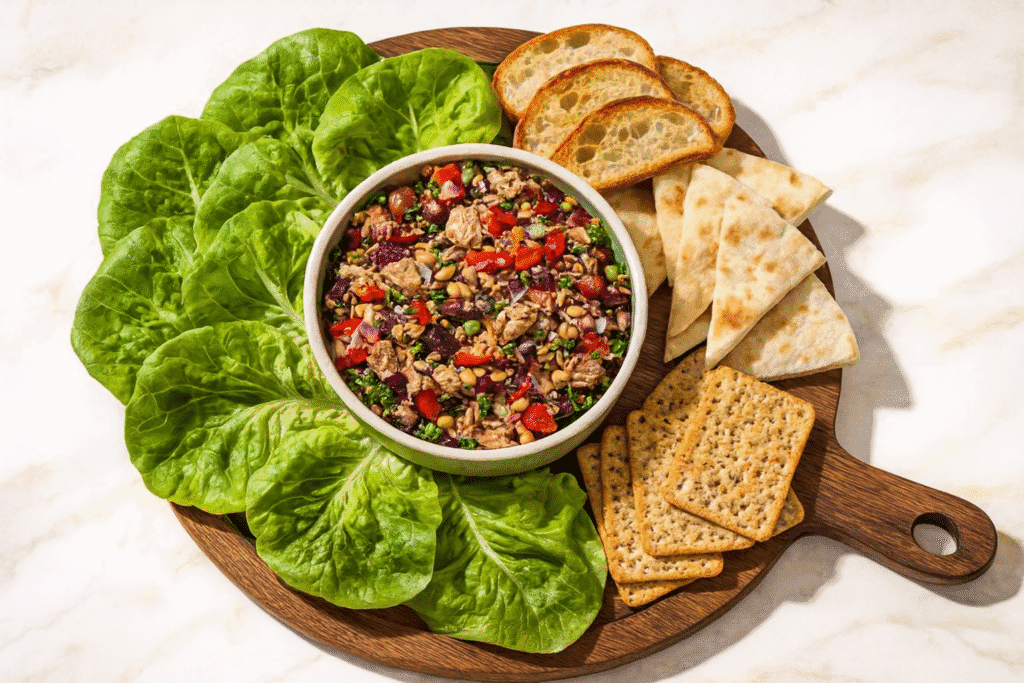
This easy Italian tuna salad turns a few pantry ingredients into a colorful Mediterranean lunch or light dinner in around ten minutes. Olive oil packed tuna, roasted red peppers, kalamata olives, herbs, and toasted nuts come together in a fresh lemon dressing that feels far more interesting than typical mayonnaise based tuna salad.
Once you learn the basic formula, you can adjust it to your taste with different herbs, nuts, or beans and serve it over greens, on toast, or tucked into pita. Try making a small batch for lunch, then scale it up for make ahead meal prep and see which combination becomes your own house favorite.
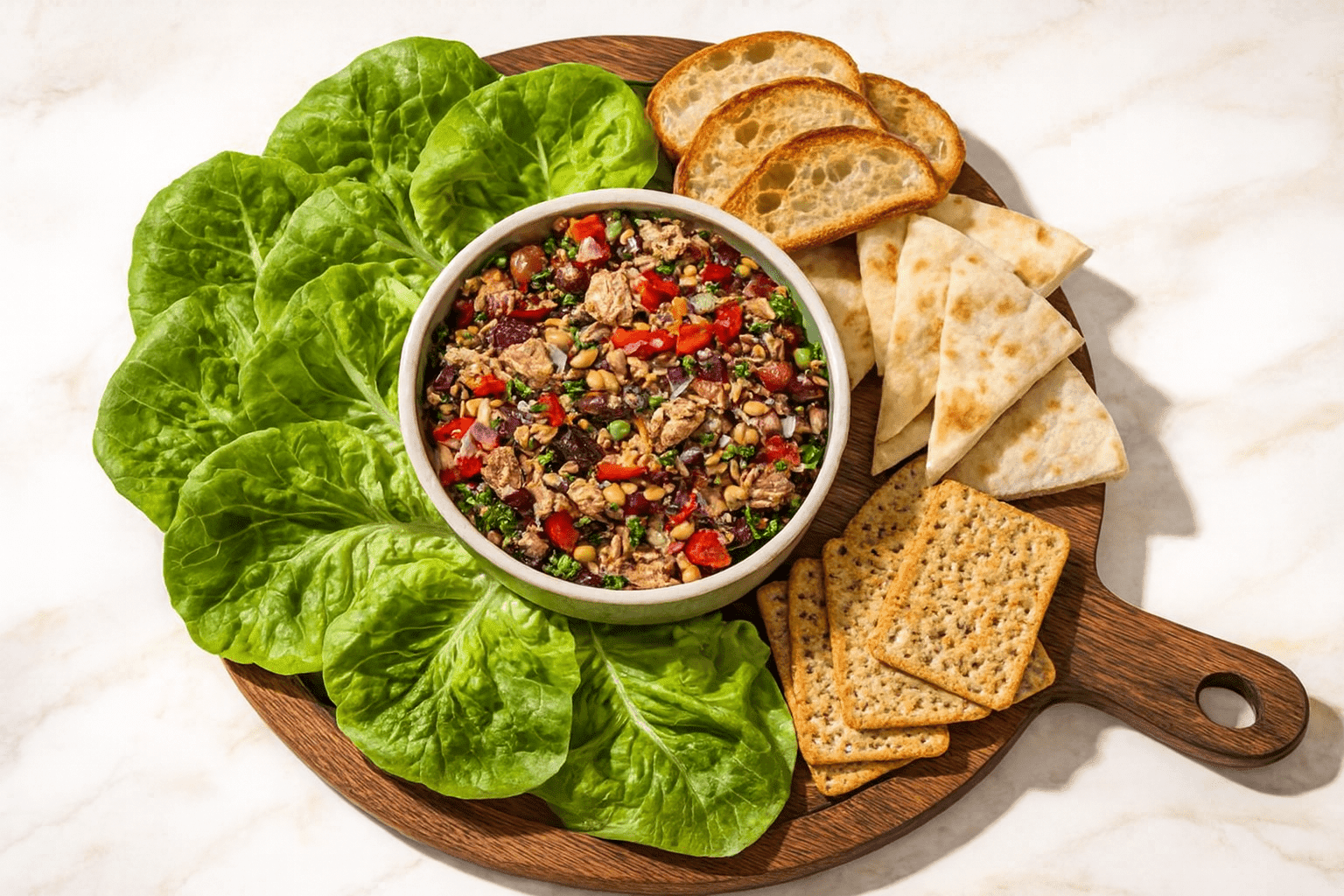
Easy Italian Tuna Salad with Olive Oil and Peppers