
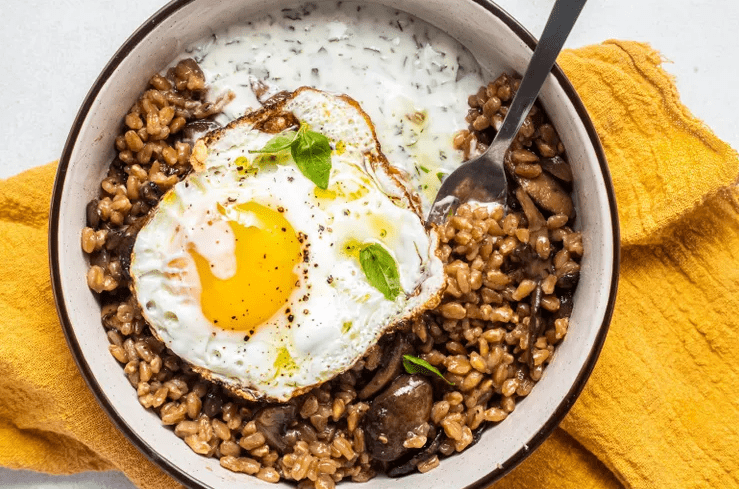
Farro, mushroom and egg grain bowls are the kind of lunch that makes you feel like you really took care of yourself, even if you assembled everything in a few minutes between meetings. Chewy farro simmers with savory mushrooms and onions, gets topped with a fried egg, then finished with a bright herb yogurt that acts like a built in sauce. The result is a vegetarian grain bowl that is comforting, high in fiber, and surprisingly satisfying. Because the components keep well, you can cook a batch on Sunday and turn it into easy work lunches or simple dinners for several days. This version is beginner friendly and, once you are set up, usually takes about one hour from start to finish.
Time and Serving
- Prep time: about 20 minutes of active chopping, stirring, and mixing
- Cook time: about 40 to 45 minutes for simmering the farro and cooking mushrooms and eggs
- Total time: about 1 hour to 1 hour and 10 minutes
- Servings: 4 grain bowls
Insight of the Farro, Mushroom and Egg Grain Bowls
Farro is an ancient type of wheat that cooks up with a nutty flavor and a pleasantly chewy bite. It is often used in salads, soups, and grain bowls because it holds its shape and does not turn mushy easily. Nutrition analyses from sources such as Verywell Fit describe a one third cup dry serving of pearled farro as providing roughly one hundred fifty calories, about twenty nine grams of carbohydrates, around three grams of fiber, and about five grams of protein, although exact values vary by brand.
In this farro grain bowl, the grains simmer directly with onions, garlic, and mushrooms so they soak up savory flavor, similar to a relaxed risotto. The mushrooms bring deep umami and a slightly meaty chew that makes this vegetarian grain bowl feel substantial without any actual meat. A fried egg on top turns it into a complete meal, adding more protein and a rich yolk that drips into the grains. Greek yogurt blended with herbs, garlic, and a little water or lemon juice becomes a creamy, tangy herb yogurt that does double duty as dressing and sauce.
From a nutrition perspective, you get complex carbohydrates and fiber from the farro, protein from the eggs and yogurt, and extra vitamins, minerals, and antioxidants from mushrooms and herbs. Registered dietitians and public health guidance often highlight whole and high fiber grains as supportive of digestive health and more stable energy because fiber slows digestion and helps you feel full longer.
These bowls are especially useful for busy home cooks because:
- They are naturally vegetarian and feel hearty enough for lunch or dinner.
- The mushroom farro and herb yogurt keep well in the fridge, so you can cook once and eat several times.
- You can easily change the vegetables, toppings, or egg style so the meal does not feel repetitive through the week.
A few quick dietary notes:
- Farro is a wheat based grain, so it contains gluten and is not suitable for gluten free diets.
- If you need a gluten free version, you can swap the farro for cooked quinoa, brown rice, or another gluten free high fiber grain.
- The recipe is vegetarian when you use vegetable broth and dairy yogurt.
- To make it dairy free, use a plant based yogurt for the herb sauce and check that your broth is also dairy free.
Ingredients
For the mushroom farro
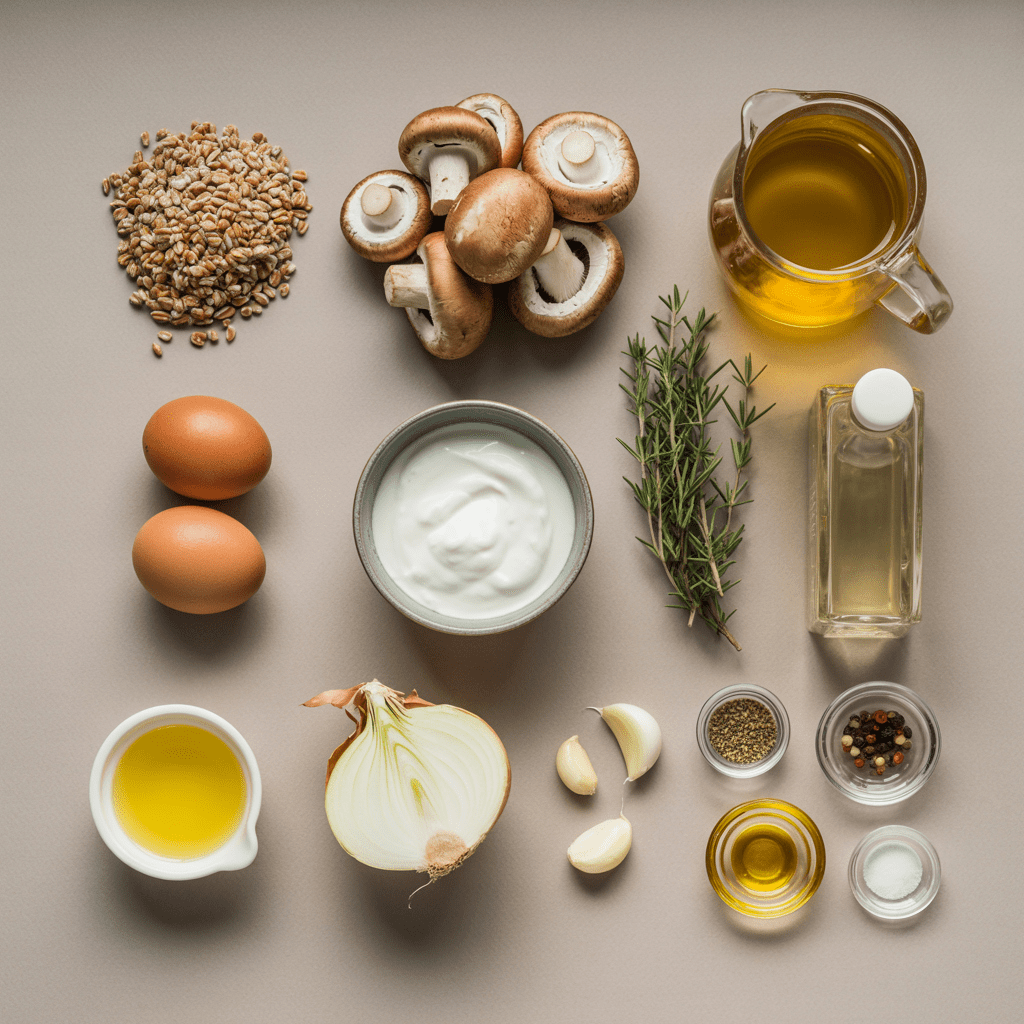
- Three cups low sodium vegetable broth, plus extra water or broth as needed
- One cup semi pearled farro, rinsed
- One tablespoon neutral oil such as canola or avocado
- Eight to ten ounces cremini or baby bella mushrooms, cleaned and sliced or torn into bite size pieces
- One medium yellow onion, finely diced
- Three to four cloves garlic, finely minced
- Two tablespoons extra virgin olive oil
- One teaspoon fine sea salt, plus more to taste
- Half teaspoon freshly ground black pepper
Using one cup dry farro usually yields around three cups cooked, which lines up with many whole grain cooking guides.
For the herb yogurt
- One cup plain Greek yogurt, preferably whole milk for a richer bowl
- One quarter cup finely chopped fresh flat leaf parsley
- Two tablespoons finely chopped fresh chives or green onion
- One small garlic clove, grated or very finely minced
- One to two tablespoons fresh lemon juice or cool water, enough to loosen the yogurt to a drizzling or dolloping consistency
- One eighth teaspoon fine sea salt, plus more to taste
- A pinch of freshly ground black pepper
For the eggs
- Four large eggs
- Two to three teaspoons olive oil or other cooking oil
- A pinch of salt and pepper for each egg
Large eggs generally provide about seventy calories and around six grams of protein each, according to several nutrition references. American Egg Board
Optional toppings and add ins
- Extra chopped parsley or chives
- Handfuls of baby spinach or arugula
- Crushed red pepper flakes
- Lemon zest
- Toasted nuts or seeds such as pumpkin seeds or sliced almonds
- Grated hard cheese if you like a richer bowl
Required Tools for Making the Recipe
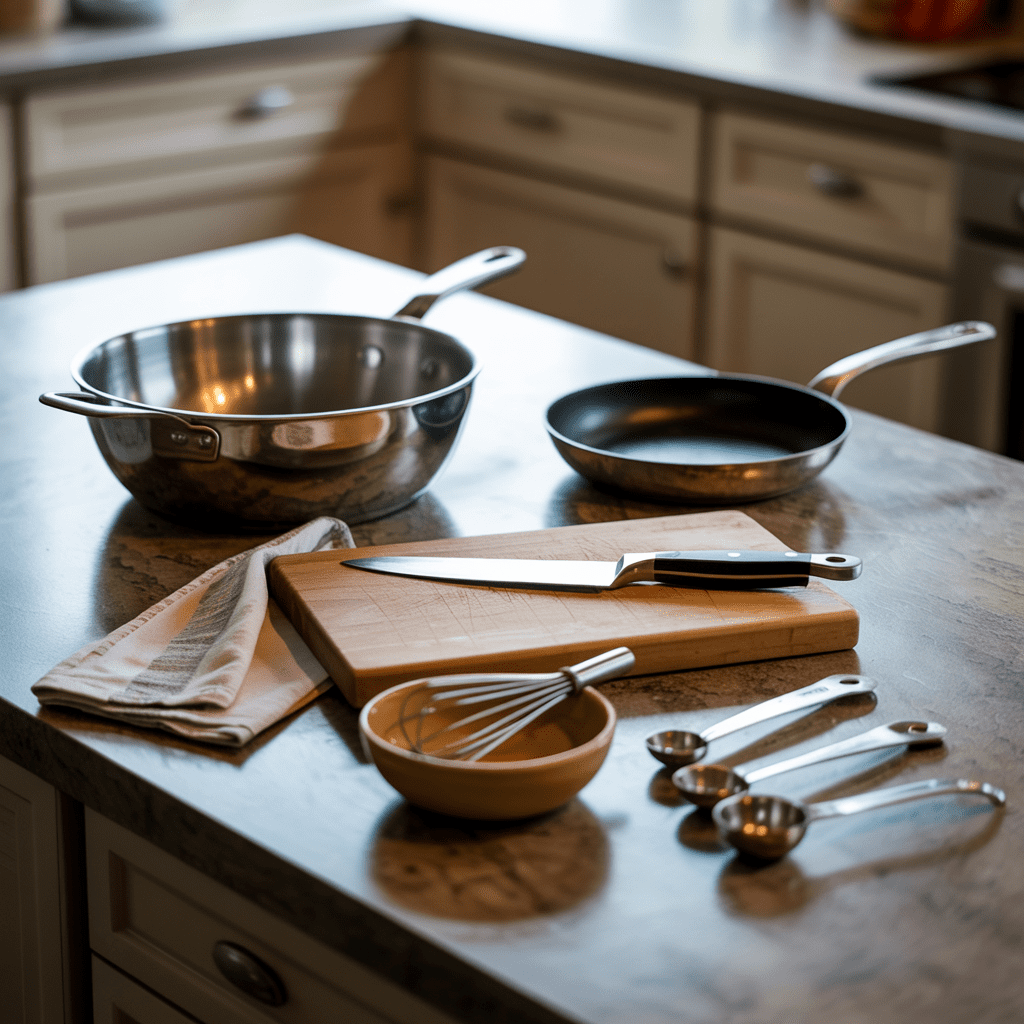
- Large deep skillet or wide Dutch oven for cooking mushrooms and simmering the farro
- Medium nonstick skillet for frying the eggs
- Medium mixing bowl for soaking farro
- Small bowl and whisk or spoon for the herb yogurt
- Cutting board and sharp knife
- Measuring cups and spoons
- Airtight containers for storing cooked farro, herb yogurt, and eggs if you plan to use this as meal prep
A wide pan is important for good mushroom browning. When mushrooms are packed too tightly in a small pan, they release moisture and steam rather than turning golden. A wide skillet allows the mushrooms to sit in a single layer so they can actually sear.
Method: Detailed Step by Step Preparation Guide
Step 01: Rinse and soak the farro
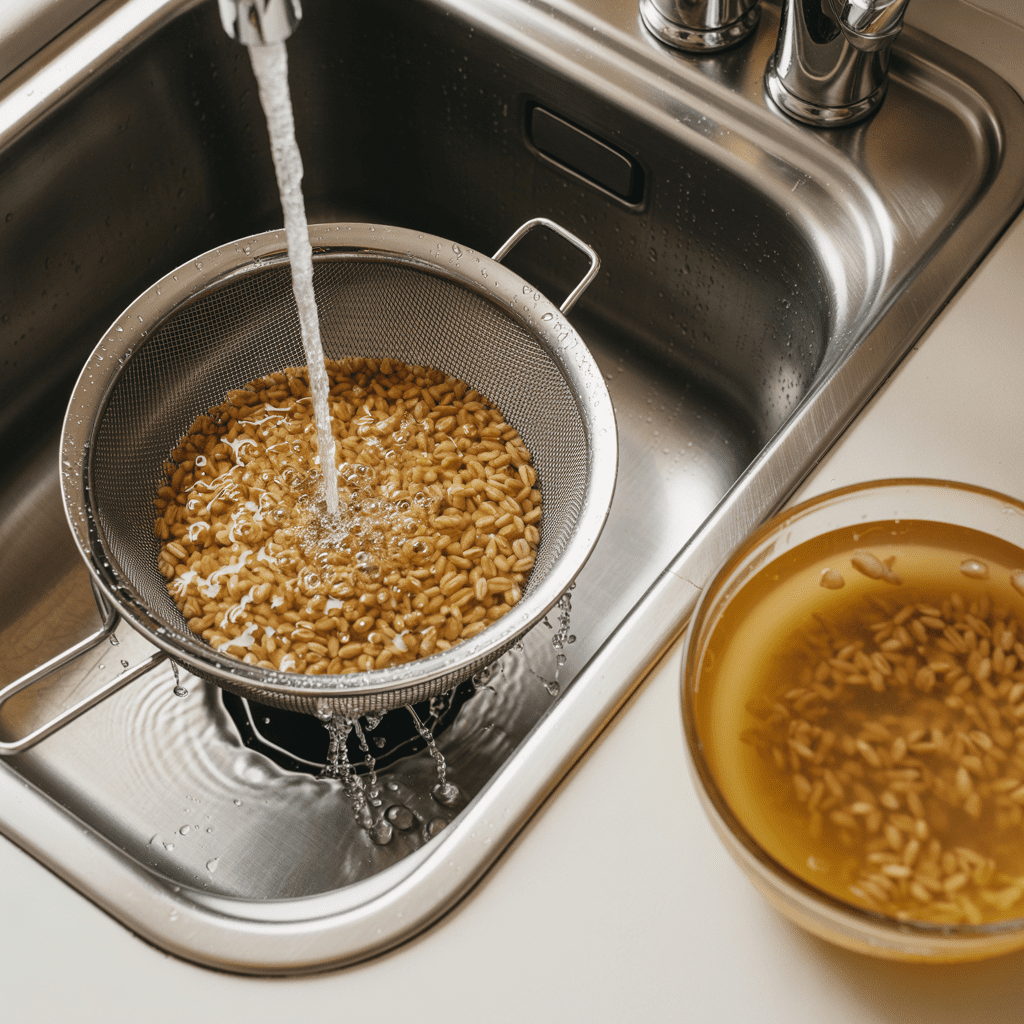
- Place the farro in a fine mesh strainer and rinse under cool running water to remove any dust or loose starch.
- Transfer the rinsed farro to a bowl and add two cups of the vegetable broth. Let it soak while you start the mushrooms, at least fifteen to twenty minutes.
- Soaking is especially helpful if your farro is labeled whole or if its package suggests longer cooking. Several cooking guides note that semi pearled farro usually cooks in roughly twenty five to thirty minutes on the stovetop, while whole farro may take thirty to forty minutes or more. Soaking can trim that time slightly and allows the grains to start absorbing flavor.
Step 02: Sear part of the mushrooms for extra flavor
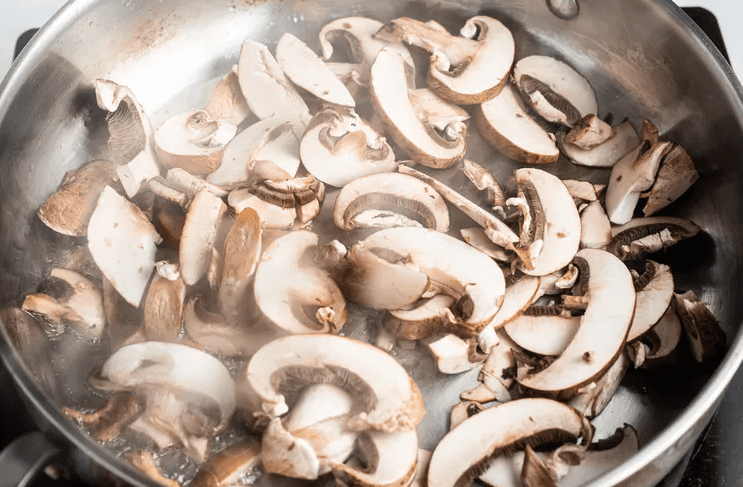
- Heat the neutral oil in your large skillet or Dutch oven over medium high heat.
- When the oil looks shimmering, add about half of the mushrooms in a single layer. Try not to crowd them.
- Let the mushrooms cook without stirring for three to five minutes until the undersides are deep golden and you can smell a toasty, earthy aroma.
- Flip the pieces and cook another three to four minutes until the second side is browned.
- Transfer these seared mushrooms to a plate and sprinkle with a small pinch of salt and pepper. This batch will stay a little firmer and add nice texture to the finished grain bowl.
If the mushrooms release a bit of liquid at first, keep going. Eventually the moisture cooks off and browning begins, as long as the pan is not too crowded.
Step 03: Sauté the remaining mushrooms and aromatics
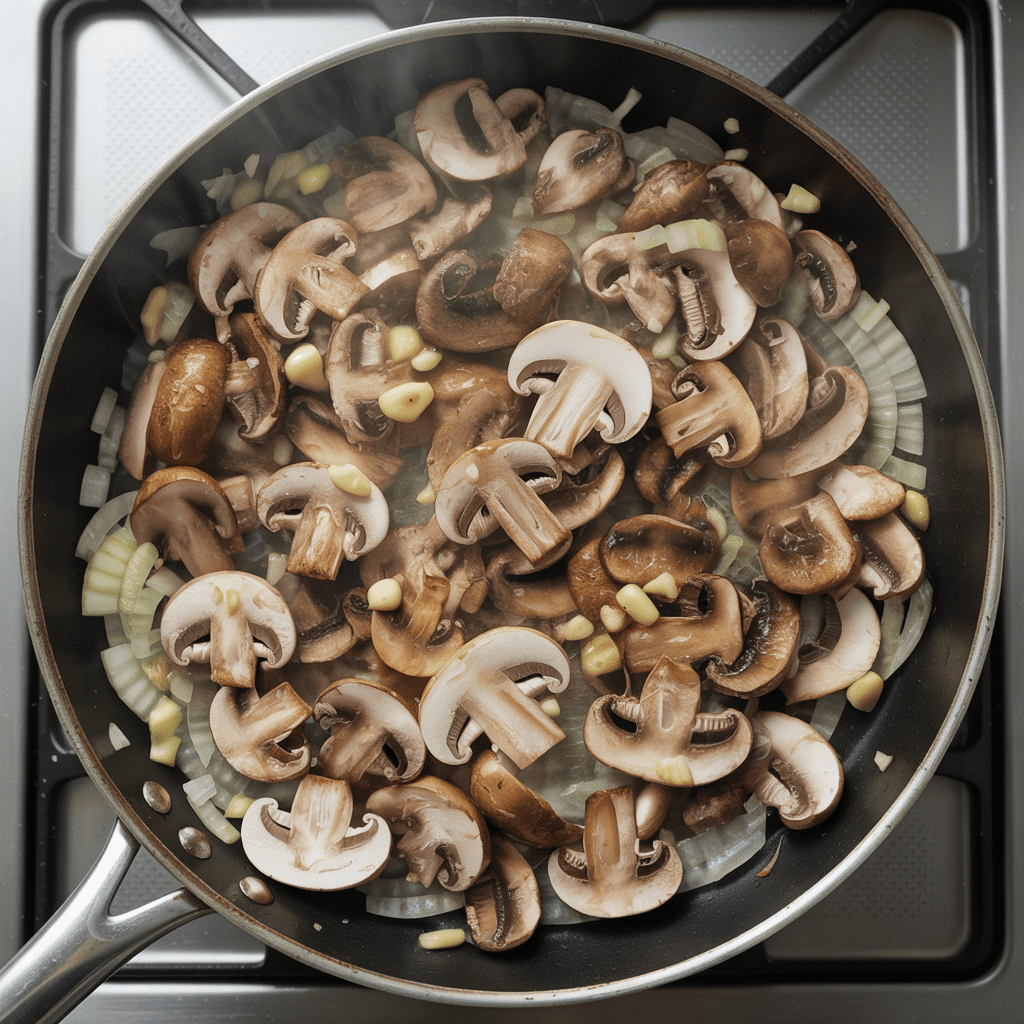
- Reduce the heat to medium. Add the olive oil to the same pan.
- Stir in the remaining mushrooms along with the diced onion and minced garlic.
- Cook, stirring occasionally, for about eight to ten minutes. The onions should become soft and translucent, the garlic fragrant, and the mushrooms tender and lightly browned.
- Season with about half a teaspoon salt and a quarter teaspoon pepper as they cook, tasting and adjusting at the end.
At this point the kitchen should smell deeply savory, with sweetness from the onion and roasted notes from the mushrooms.
Step 04: Cook the farro in the same pan
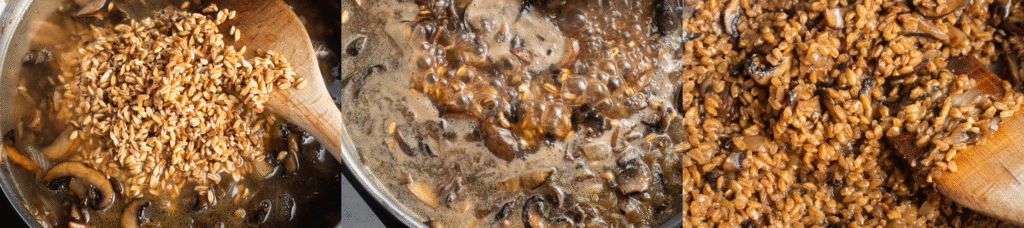
- Pour the soaked farro together with its broth into the pan with the mushrooms and onions. Add the remaining one cup broth.
- Use a wooden spoon to scrape up any browned bits from the bottom of the pan. Those bits carry a lot of flavor into the broth.
- Bring the mixture to a gentle boil, then reduce the heat to low or medium low so it simmers steadily.
- Cook uncovered, stirring every five to seven minutes, until the farro is tender yet still chewy in the center. For most semi pearled farro, this takes around twenty five to thirty minutes, although you should always begin tasting at the earlier end of the range and continue until the texture feels right.
- If the pan looks dry before the grains are done, add a splash of hot water or extra broth, about one quarter cup at a time, and continue to simmer.
- When the farro tastes chewy but not hard in the middle and the pan has a risotto like, creamy look, turn off the heat. Stir in the reserved seared mushrooms and adjust salt and pepper to taste. Put a lid on the pan to keep everything warm.
Properly cooked farro should feel pleasantly springy between your teeth, not crunchy, and the broth should be mostly absorbed.
Step 05: Make the herb yogurt while the farro simmers
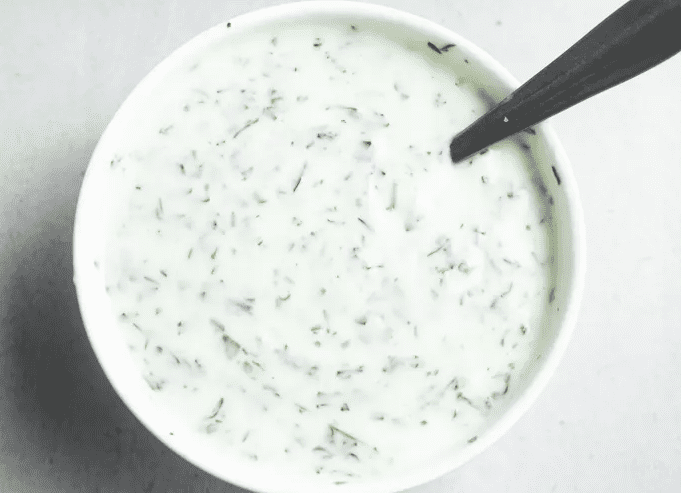
- In a small bowl, combine the Greek yogurt, chopped parsley, chopped chives or green onion, grated garlic, and one tablespoon lemon juice or water.
- Stir until smooth. If the yogurt seems very thick and hard to stir, add a little more lemon juice or water, a teaspoon at a time, until it loosens. You want a texture that can be spooned in a dollop or drizzled with a spoon.
- Season with salt and pepper to taste. The yogurt should taste bright and tangy with a fresh herbal aroma.
- Refrigerate the herb yogurt until you are ready to serve or pack your bowls.
Step 06: Fry the eggs just before serving

There are many ways to fry an egg. Here are two approaches: one with crisp edges and a runny center, and one that leans softer. Food safety agencies such as the United States Food and Drug Administration and United States Department of Agriculture advise that eggs which are not pasteurized should be cooked until both the white and the yolk are firm to reduce the risk of illness from bacteria like Salmonella. U.S. Food and Drug Administration If you enjoy runny yolks, consider using pasteurized eggs and be aware that this carries a higher level of risk than fully cooked eggs. Wikipedia
Crispier egg with lacy edges
- Heat about one and a half teaspoons oil in a nonstick skillet over medium high heat.
- Crack two eggs into a small bowl, then slide them into the hot pan.
- The whites will sizzle and bubble around the edges. Cook for about one minute, then reduce the heat to medium and tilt the pan slightly, spooning some hot oil over the whites to help them set.
- Cook until the whites are fully opaque and set. Leave the yolks as runny or as firm as you prefer, keeping the safety note above in mind. Season with a pinch of salt and pepper.
Softer egg with gentle edges
- Heat about one and a half teaspoons oil over medium heat.
- Crack the eggs directly into the pan or slide them in from a bowl.
- Cover the skillet with a lid and cook for two to four minutes, until the whites are set and the yolks reach your preferred doneness.
- For a safer fully cooked egg, continue until both yolk and white are firm, which aligns with FDA guidance. U.S. Food and Drug Administration
Transfer the cooked eggs to a plate while you fry any remaining eggs.
Step 07: Assemble the grain bowls
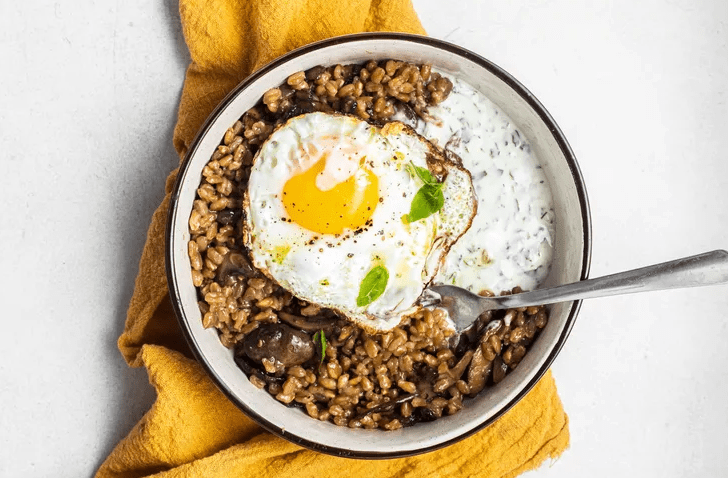
- Divide the hot mushroom farro among four bowls or meal prep containers.
- Add a handful of greens to each bowl if you like. The heat from the grains will gently wilt spinach or arugula.
- Place one fried egg on top of each portion.
- Spoon a generous dollop of herb yogurt over each bowl or drizzle it in ribbons.
- Finish with extra herbs, a sprinkle of chili flakes, toasted nuts or seeds, or a little lemon zest.
When you break the yolk into the hot grains, it should mingle with the yogurt and broth to create a creamy sauce that coats every bite.
Step 08: Make ahead storage and reheating instructions
Food safety authorities such as the United States Department of Agriculture and the Food Safety and Inspection Service generally recommend refrigerating cooked leftovers within about two hours and using them within three to four days. Food Safety and Inspection Service
- Cooling and storing
- Let the mushroom farro cool slightly in the pan, then transfer it to a shallow container so it cools more quickly.
- Store farro and mushrooms together in an airtight container in the refrigerator for up to three to four days.
- Store the herb yogurt in a separate small container for up to three to four days.
- Cooked eggs can be refrigerated safely for about three days, but their texture will firm up. New Mexico Environment Department Many people prefer to cook fresh eggs when possible and only store grains and yogurt.
- Reheating
- Reheat the farro and mushrooms in the microwave with a splash of water or broth, stirring once or twice, until steaming hot. Aim for a temperature of at least one hundred sixty five degrees Fahrenheit in the center for best safety, which aligns with general leftover guidance.
- You can reheat fried eggs gently in the microwave in short bursts under a damp paper towel until hot, knowing that the yolk will become more firm.
- For best texture, many home cooks simply fry a fresh egg right before serving and reheat only the farro and mushrooms.
Step 09: Optional pressure cooker method for the farro
If you like to use an electric pressure cooker, you can adapt the farro portion. Cooking guides often suggest that semi pearled farro cooks under pressure in roughly ten to fifteen minutes at high pressure with natural release, but exact times vary by appliance and grain type, so always check your manual and start with the lower time, then test for doneness. You can still sauté the mushrooms and aromatics in the pot first, then add broth and farro and cook under pressure.
Method Variations and Customizations
Different mushrooms
Use a mix of cremini, shiitake, and oyster mushrooms for more complexity. Tear larger mushrooms into chunks rather than slicing them for a rustic look and more uneven edges that brown better. Cooking time stays similar as long as pieces are roughly the same size.
Extra vegetables
Stir in small cubes of roasted butternut squash, eggplant, or leftover roasted vegetables during the last few minutes of simmering the farro. Roasted vegetables are already tender, so they only need enough time to warm through and mingle with the grains.
Dairy free version
Swap the Greek yogurt for a thick, unsweetened plant based yogurt made from soy, coconut, or almonds. Taste and adjust salt and lemon since some non dairy yogurts can taste sweeter or milder.
Egg free or extra protein
To keep the grain bowl egg free, skip the fried egg and add a scoop of cooked chickpeas or lentils for additional protein and fiber. These can be warmed with the farro or sprinkled over the top with the yogurt.
Gluten free version
Use the same mushroom and egg method but cook a gluten free grain such as quinoa, brown rice, or millet instead of farro. Follow package directions for timing and liquid ratios. Many quinoa and brown rice guides recommend a one to two grain to water ratio, simmered until tender.
Key Advantages of Farro, Mushroom and Egg Grain Bowls
High fiber whole grain style base
Farro is a more fiber rich and protein rich choice than many refined grains. A one third cup dry serving of pearled farro provides roughly three grams of fiber and about five grams of protein, which supports digestive health and can help you stay fuller for longer compared with lower fiber white grains. Verywell Fit
Vegetarian protein combination
Pairing the grain with Greek yogurt and eggs turns this into a protein rich vegetarian grain bowl without meat. A large egg contributes about six grams of high quality protein, and Greek yogurt is also typically protein dense. American Egg Board
Budget friendly and pantry friendly
Farro, broth, eggs, and yogurt are relatively affordable staples. Mushrooms and onions are widely available. You can stretch the meal with whatever vegetables you already have on hand, including leftovers.
Great for meal prep and work lunches
Because cooked grains and other leftovers keep safely in the refrigerator for about three to four days when handled properly, you can prepare a batch of this mushroom farro on the weekend and enjoy ready made lunches through midweek.
Customizable bowls
Each person at the table can choose their egg doneness, toppings, and spice level. That flexibility is especially helpful if some family members prefer extra heat while others want a milder bowl.
Mistakes to Avoid
Relying only on the clock for farro doneness
Different brands of farro and different levels of pearling cook at different speeds. Cooking references show ranges from about fifteen to twenty minutes for pearled farro up to thirty or more minutes for whole farro. Instead of trusting time alone, start tasting a few grains near the end of the suggested range and keep cooking until the center is chewy but not hard.
Crowding the mushrooms
If you put too many mushrooms into the pan at once, they release moisture and steam, which prevents browning. Cook them in batches if needed so each piece has contact with the hot pan. This is what creates that deep, savory mushroom flavor.
Skipping seasoning in layers
If you wait until the very end to add salt, the bowl can taste flat. Lightly season the mushrooms and onions as they cook, then taste the farro at the end and adjust. Remember that broth and yogurt can already contain salt, so go slowly.
Leaving food out too long
Food safety guidance recommends refrigerating perishable foods within about two hours, or sooner in very warm conditions, to reduce the risk of bacterial growth. Do not leave the cooked farro, mushrooms, eggs, or yogurt sitting at room temperature for long periods before chilling.
Storing everything mixed together
If you store the egg and yogurt directly on top of the grains for several days, the yolk can overcook during reheating and the yogurt sauce can become watery. It works better to store farro and mushrooms in one container, yogurt in another, and eggs separately. Assemble bowls right before eating.
Expert Tips and Real Life Examples
- Tear, do not just slice, the mushrooms. Tearing creates more uneven edges and surfaces, which brown more easily and give the bowl a rustic look.
- If your broth tastes very salty on its own, use half broth and half water so the grain bowl does not become overly salty as the liquid reduces.
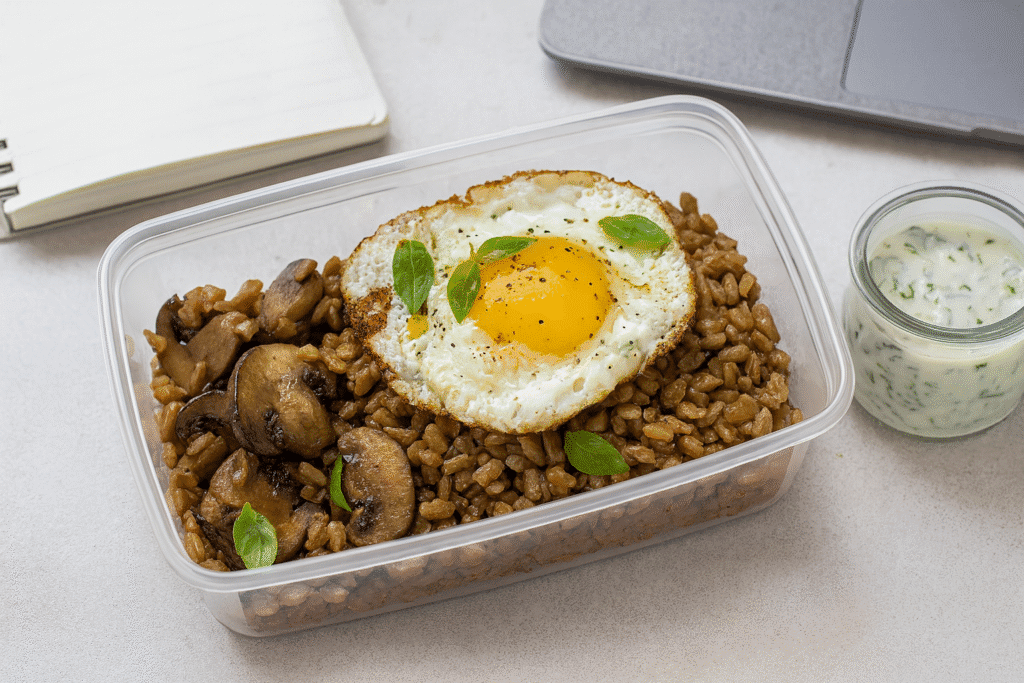
- For a packed office lunch, place farro and mushrooms in a microwave safe container, pack the herb yogurt in a small lidded jar, and carry a hard cooked egg or plan to fry an egg at home in the morning and keep it chilled. At lunchtime, reheat only the grains and mushrooms, then top with egg and yogurt.
- Flavor twists you can try include a pinch of smoked paprika or chili flakes in the mushrooms, or adding lemon zest and a tiny drizzle of olive oil to the herb yogurt.
- In my own kitchen, I like to cook a batch of this mushroom farro on Sunday evening. On Monday I eat it with a fried egg and herb yogurt exactly as written. On Tuesday I might stir in leftover roasted vegetables and add a spoonful of chickpeas. By Wednesday, the last portion becomes a quicker version of a fried egg bowl with extra chili flakes. The base stays the same, but the toppings keep it interesting through a busy work week.
Nutrition Facts (Per Serving, Approximate)
Based on four servings and the ingredient amounts listed, the approximate nutrition per bowl is:
- Calories: about 350
- Protein: about 14 to 16 grams
- Total carbohydrates: about35 to 40 grams
- Dietary fiber: about 4 to 6 grams
- Total fat: about 13 to 17 grams
- Notable micronutrients:
- Iron: roughly 2 milligrams, coming mainly from farro and eggs
- Calcium: roughly 100 to 120 milligrams, largely from yogurt and eggs
These estimates draw on nutrition data for farro, eggs, and similar ingredients from databases such as Verywell Fit and MyFoodData, combined in approximate proportions for this recipe. Actual values can change with different brands of yogurt, the exact amount of oil used, and your portion sizes. If you need precise numbers for medical reasons, use a nutrition calculator with the exact products you cook with.
Frequently Asked Questions
Q1: Can I make this grain bowl gluten free
Farro is a wheat based grain and naturally contains gluten. Verywell Fit To make a gluten free version, cook a gluten free grain such as quinoa, brown rice, or millet instead. Use the same mushroom, egg, and herb yogurt components and follow the package directions for your chosen grain. Always check that your broth and yogurt are certified gluten free if that is medically necessary for you.
Q2: How long do the leftovers keep and how should I store each component
When cooled quickly and stored in airtight containers in the refrigerator, cooked grains and other leftovers are generally best used within three to four days, according to guidance from the United States Department of Agriculture and Food Safety and Inspection Service. Store farro and mushrooms together, herb yogurt in a separate container, and eggs on their own. Reheat the grains until steaming hot and add cold yogurt and freshly cooked or gently reheated eggs just before serving. Discard leftovers that smell off, look unusual, or have been left out of the refrigerator for more than about two hours.
Q3: What can I use instead of Greek yogurt in the herb sauce
You can substitute a thick plain plant based yogurt, such as soy or coconut, to keep the bowl dairy free. Taste and adjust salt and acid, since some non dairy yogurts are milder or slightly sweet. In a pinch, you can also use a mix of tahini and lemon juice thinned with a little water, seasoned with the same herbs and garlic.
Q4: Can I use another grain instead of farro
Yes. The mushroom base pairs well with many high fiber grains. Quinoa, barley, bulgur, and brown rice all work as substitutes. Choose a grain that fits your dietary needs and follow trusted cooking times for that grain. Many whole grain guides emphasize that cooking times can vary widely, so always taste for doneness instead of relying only on time.
Q5: How can I make this higher in protein or lower in calories
For more protein, keep the egg and yogurt and add a scoop of cooked chickpeas, lentils, or extra yogurt to each bowl. To lower calories, you can reduce the oil slightly when cooking mushrooms, use a lower fat Greek yogurt, or use a smaller portion of farro and add extra non starchy vegetables. Be sure to maintain enough fat for flavor and satisfaction.
Q6: Can I pack this for school or work without a microwave
Yes, as long as you are comfortable eating it at cool or room temperature and follow safe storage practices. Pack the mushroom farro in an insulated lunch container with an ice pack, keep the yogurt and egg in separate containers, and assemble just before eating. The texture will be more like a grain salad but still very flavorful. Make sure the food does not stay in the temperature danger zone for longer than advised by food safety guidelines.
Conclusion
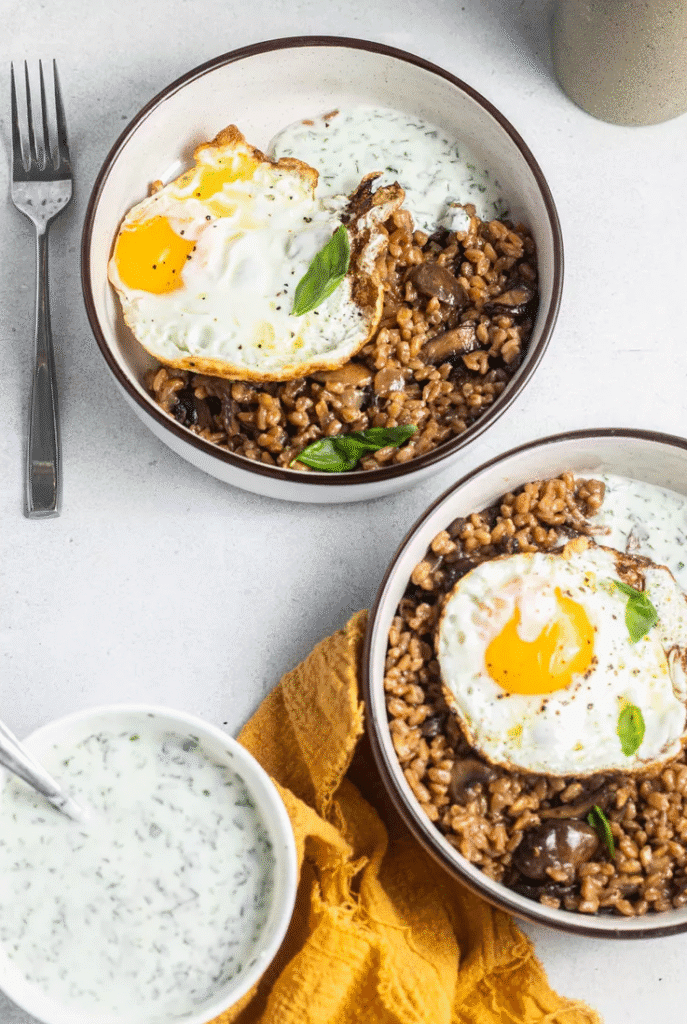
Farro mushroom and egg grain bowls bring together chewy high fiber grains, deeply savory mushrooms, and a rich egg, all brightened with tangy herb yogurt. Once you learn how farro should look and taste when it is perfectly cooked and how to fry eggs to your preferred doneness, this recipe becomes a simple template you can adapt week after week. You can swap vegetables, adjust toppings, and change the egg style while keeping the same satisfying structure. If you cook a batch ahead and tuck it into the fridge, you will have fast, comforting lunches or dinners ready for busy days.
Take this version as a starting point and make it your own grain bowl routine.
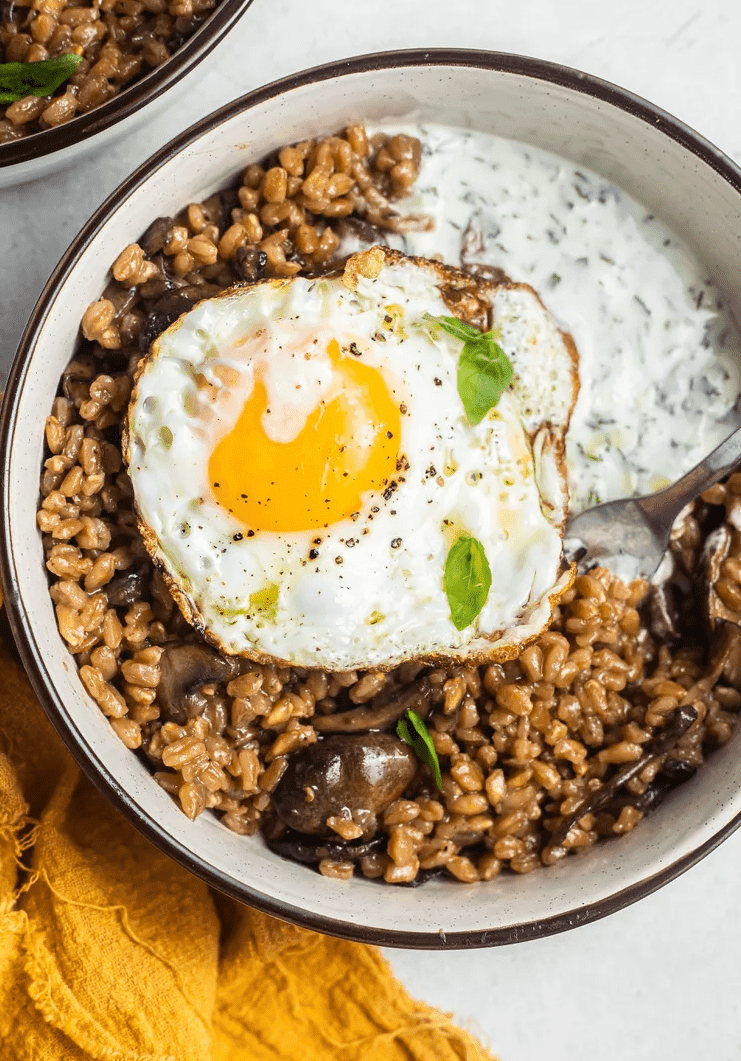
Hearty Farro, Mushroom and Egg Grain Bowls with Herb Yogurt