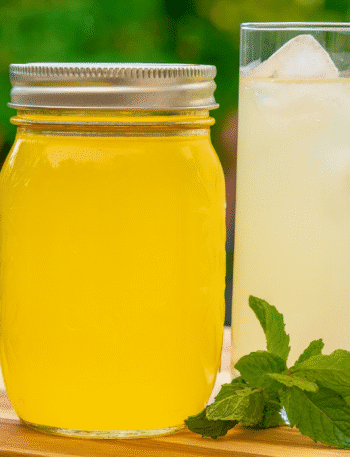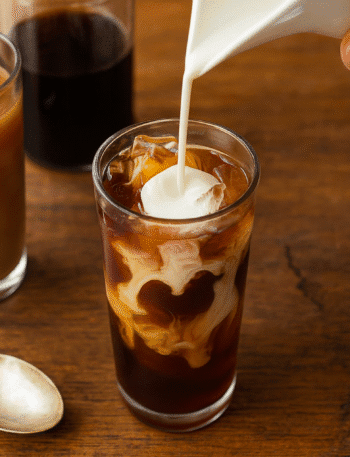

Festive ice cubes are one of those tiny hosting tricks that look incredibly thoughtful but are almost effortless once you know the method. You tuck colorful fruit, herbs, and warm spices into ice cube trays, add clear water, and a few hours later you have dressy little cubes that turn any drink into a holiday moment. They help you stretch cocktails, mocktails, and sparkling water for a crowd while still looking elegant.
In this guide we will walk through exactly how to make them, how to choose combinations that match your drinks, how far ahead you can prepare them, and how to avoid cloudy ice or sad, mushy fruit. Think of this as a friendly step by step playbook from one home host to another.
Time And Serving
- Prep time: about 15 to 20 minutes for slicing fruit and arranging trays
- Freeze time: about 3 to 4 hours for standard trays, longer for large cocktail cubes
- Total time: at least 4 hours, or prepare the day before your gathering
- Yield: about 24 to 32 cubes from two standard trays
- Serving guide: 1 to 2 cubes per drink, so one full batch usually decorates 12 to 16 drinks
Insight Of The Festive Ice Cubes
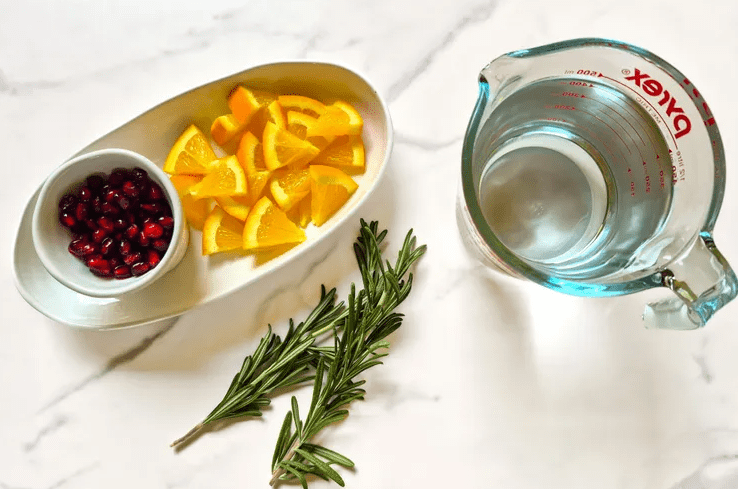
Festive ice cubes are simply ice cubes with little pockets of fruit, herbs, and spices inside. Instead of dropping plain ice into a glass, you add a cube that shows off cranberry red, citrus orange, bright green herbs, or a cinnamon stick. The drink looks like something from a restaurant without much extra work.
Because the base is still water, these cubes work with almost any drink. They are lovely in sparkling wine, prosecco, or a French piscine style drink, but they are just as useful for mocktails, kid friendly punches, and plain sparkling water. The flavor stays gentle and builds as the cube melts.
For holiday entertaining, they are an easy way to add color to a brunch mimosa bar, a Christmas punch bowl, or a New Year toast. You prep them on a quiet afternoon, forget about them in the freezer, and then get all the credit when guests notice the pretty cubes in their glasses.
Ingredients
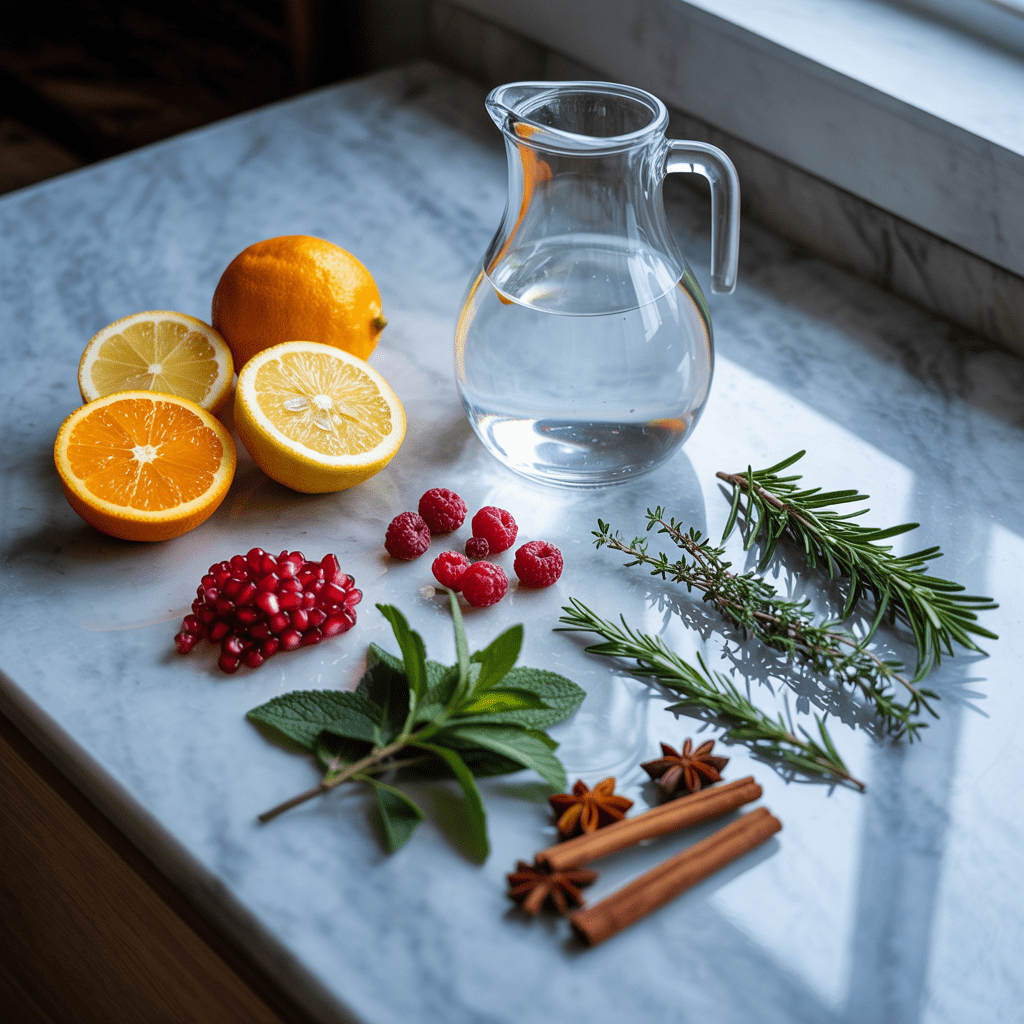
This master recipe makes enough for about two standard silicone trays. Feel free to mix and match fruits and herbs to suit your drinks.
Base ingredients
- About four cups of water
- Use filtered water if you have it.
- For clearer ice, bring the water to a boil, let it cool for about thirty minutes, then bring it to a boil again and cool completely before using. Tests show that double boiled water can reduce trapped air and lead to clearer cubes.
- As a shortcut you can use distilled water, which has fewer minerals that cause cloudiness.
- Citrus and fruit
- One small orange, sliced into thin quarter moons
- One lemon, sliced into thin rounds or half moons
- About one quarter cup pomegranate arils
- About one quarter cup fresh raspberries or cranberries
- Herbs and spices
- Four to six small rosemary sprigs
- Four to six thyme sprigs
- Four to six fresh mint sprigs or large leaves
- Two small cinnamon sticks, cut into short pieces that fit into trays
- Four to six whole star anise pods
You will not use every piece in every cube. Think of this more like a palette of options to play with as you build each tray.
Suggested flavor sets
You can create small “themes” so you end up with trays that match certain drinks.
- Sparkling wine or holiday mocktail cubes
- Orange slice
- Pomegranate arils
- Small rosemary sprig
- Peppermint and cream friendly cubes
- Mint leaves
- Crushed peppermint candy pieces
- Best for creamy cocktails, eggnog, White Russian style drinks, or hot cocoa that you serve iced later
- Light and refreshing berry cubes
- Lemon slice
- Raspberry or cranberry
- Tiny thyme sprig
- Apple cinnamon cubes
- Small apple pieces
- Short piece of cinnamon stick
- Nice for cider, sangria, or apple focused Christmas punches
- Coffee and classic cocktail cubes
- Whole star anise pod
- Single strip of orange peel if you like
- Great in iced coffee or spirit forward cocktails
Required Tools For Making The Recipe
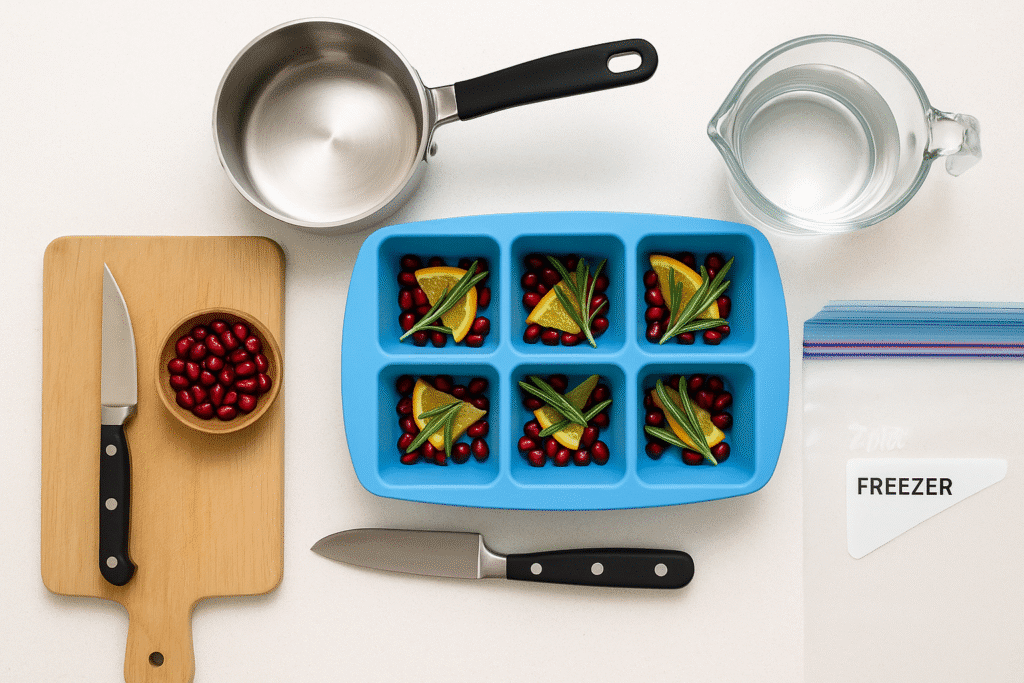
You only need basic kitchen tools that most home cooks already own.
- Two silicone ice cube trays, standard size or large cocktail size
- Silicone trays flex more easily, so the cubes pop out without cracking the fruit or the herbs. They also make it easier to tuck in larger pieces like citrus or cinnamon.
- Small cutting board and a sharp paring knife
- Small measuring cup or a jug with a spout for pouring cooled water
- Medium saucepan for boiling the water
- Paper towels or a clean kitchen towel to blot fruit and herbs
- A small tray or baking sheet to keep the ice cube trays level in the freezer
- Freezer safe bags or containers for storing finished cubes
Rigid plastic trays also work in a pinch, but silicone really does make it easier to remove decorative cubes without breaking off herbs or leaving pieces behind.
Method: Step By Step Preparation Guide
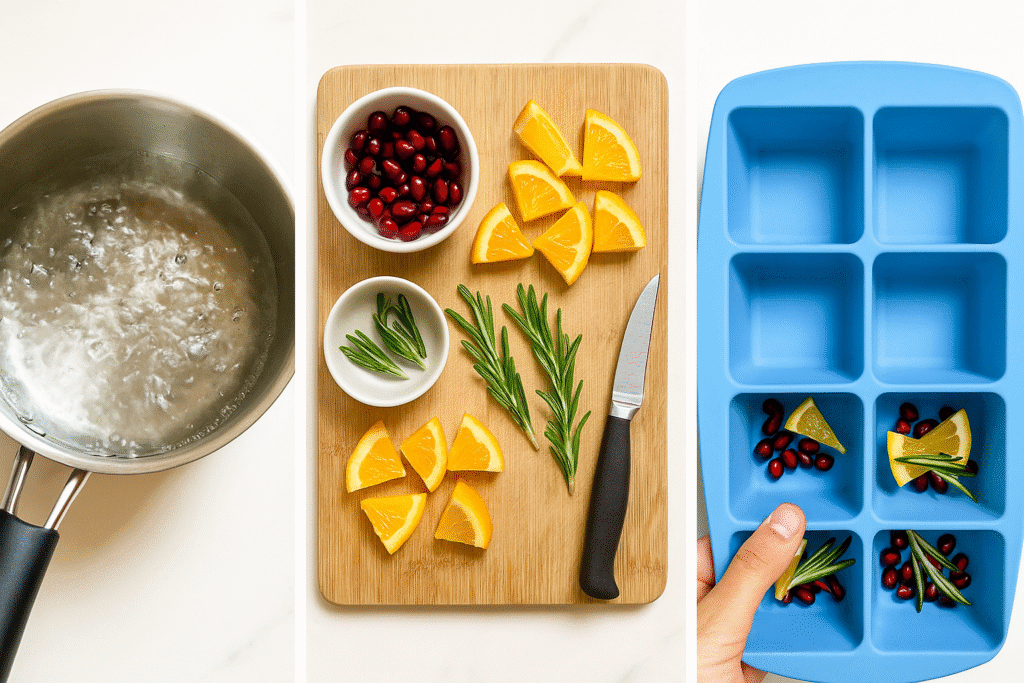
Step one: Prepare clear water
- Fill a saucepan with a little more than four cups of water.
- Bring the water to a steady boil, then turn off the heat. Let it sit for about thirty minutes.
- Bring the same water to a boil a second time, then let it cool until it reaches room temperature. This double boil drives off some dissolved gases that cause tiny bubbles and cloudy centers in ice.
- If you prefer, skip the boiling and use distilled water straight from the container.
Step two: Wash and prep fruits, herbs, and spices
- Rinse all fresh fruit and herbs under cool running water to remove visible dirt or surface contamination. Food safety guidance for fresh produce emphasizes a good rinse even when you plan to freeze or chill it. U.S. Food and Drug Administration
- Pat everything very dry with paper towels. Excess moisture on the surface can create more cloudiness and ice crystals.
- Slice the orange and lemon into thin rounds or quarter moons that will fit inside the compartments. Trim peels if needed.
- If you are using apple, cut it into small cubes or thin slices.
- Separate small rosemary and thyme sprigs so they look tidy in the cubes.
- Lightly crush peppermint candies if you want a mint candy effect, but keep the pieces large enough to see.
Step three: Arrange ingredients in the trays
- Place the empty silicone trays on a flat baking sheet so you can move them without spilling.
- Decide on your flavor sets. For example, you might dedicate one tray to citrus and pomegranate and another tray to apple and cinnamon.
- In each compartment, add a small combination of fruit and herbs. For a standard tray, aim for two or three visible items per cube.
- For citrus cubes, tuck in one small orange segment, a few pomegranate arils, and a tiny rosemary sprig.
- For berry and thyme cubes, use a lemon half moon, one raspberry or cranberry, and a short thyme sprig.
- For apple cinnamon cubes, use two or three small apple pieces and a short cinnamon stick piece.
- Expect light ingredients like herbs or citrus to float toward the top as you add water. This actually looks nice once the cube is popped out and sitting in a drink because the garnish sits near the surface.
Step four: Add the water without disturbing the garnish
- Transfer the cooled or distilled water to a small jug with a spout.
- Slowly pour water into each compartment, aiming for the side of the cavity rather than directly on top of the fruit. Pouring along the side helps avoid splashing ingredients out.
- Fill each compartment almost to the top, leaving a very small space so the water has room to expand as it freezes.
Step five: Freeze the cubes
- Carefully slide the baking sheet with the filled trays into the freezer. Make sure it sits level.
- In a typical home freezer kept at about zero degree Fahrenheit, standard size cubes usually freeze solid in about three to four hours. Larger cocktail cubes can take eight hours or overnight.
- For very clear cubes, try not to open the freezer door often during the first few hours. Temperature swings can introduce cracks and cloudiness.
Step six: Unmold and store for later
- Once the cubes are fully hard, flex the silicone tray gently so the cubes release. Push from the bottom of each compartment.
- Transfer the cubes to a clean freezer safe bag or container. Squeeze out as much air as possible to reduce freezer odors and ice crystals.
- Label with the date and main flavor.
Food safety agencies note that food kept fully frozen at zero degree Fahrenheit or colder remains safe for long periods, although texture and flavor decline over time. Research on frozen fruit suggests that quality is best within about twelve months, but for decorative cubes with herbs and citrus slices, most hosts prefer to use them within one to two months for best color and aroma. UC Agriculture and Natural Resources
Step seven: Serve the cubes
- Add one to two cubes to each glass just before you pour the drink.
- For sparkling wine or mocktails, drop the cubes in first, then top with chilled drink so the bubbles lift the garnishes to the surface.
- For punch bowls, scatter several cubes on top of chilled punch. They will chill the drink and slowly infuse flavor as they melt.
- For kid friendly parties, use all fruit and herb combinations in water, lemonade, juice, or ginger ale.
Key Advantages Of Making Festive Ice Cubes
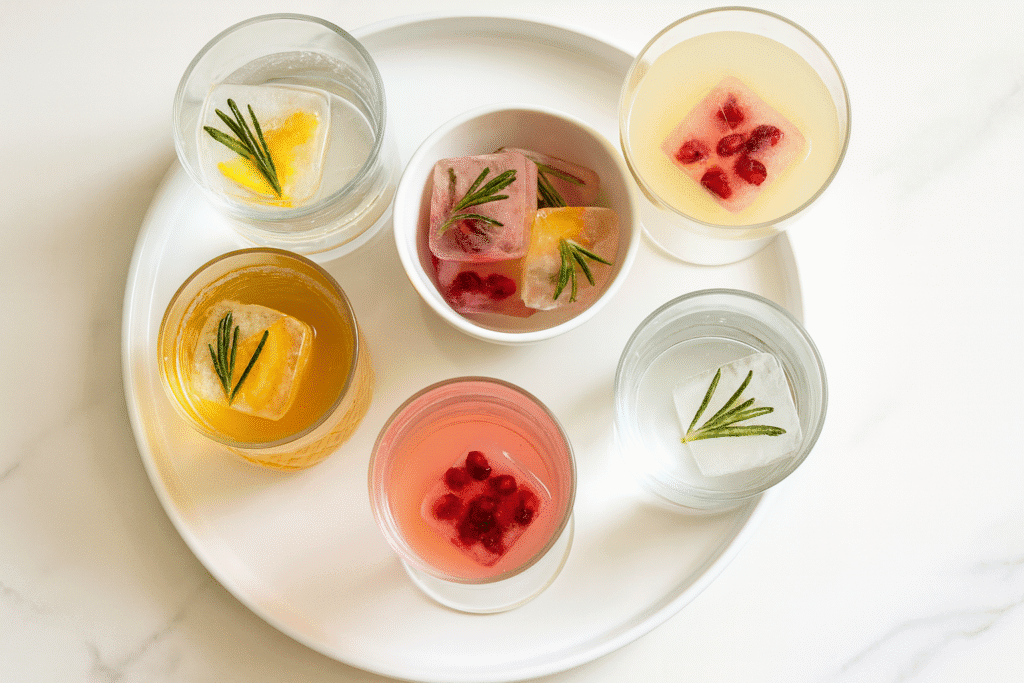
- Big visual impact
Guests notice bright citrus slices, cranberries, and herbs in ice right away. Drinks look photogenic without fancy glassware. - Time saving for hosts
All of the slicing and arranging happen earlier in the week. On the day of your event you simply pull a bag of cubes from the freezer. - Flexible for every drink station
The same technique works for sparkling wine, gin cocktails, vodka sodas, whiskey drinks, mocktails, and plain sparkling water. You only change the fruit and herb mix. - Gentle flavor infusion
As the cubes melt, they release a light citrus, apple, berry, mint, or spice note. Because most of the cube is still water, the drink does not become overly sweet or strong. - Custom choices for guests
You can set out a small bowl of different cubes and invite guests to choose citrus rosemary, apple cinnamon, or berry thyme for their own glass.
Mistakes To Avoid
Even though festive ice cubes are simple, a few missteps can give less than ideal results.
- Using poor quality or unwashed fruit
Frozen fruit and berries have sometimes been linked to outbreaks of norovirus and similar issues when contamination was present earlier in the chain. University of Minnesota Extension Freezing does not reliably kill all pathogens.Always start with clean, fresh produce from a trusted source and rinse it well. - Cloudy or cracked ice
Tap water often contains minerals and dissolved gases that create cloudiness as the water freezes. Double boiled or distilled water and a freezer that stays at a steady temperature give clearer results. - Overfilled trays
If you fill compartments completely, expansion during freezing can force cubes together and trap fruit in odd angles. Leave a small gap at the top. - Too much fruit in one cube
It is tempting to stuff every cube full, but large fruit pieces can prevent the cube from freezing evenly and may fall out of the glass when the cube melts. Two or three visible pieces is usually plenty. - Very delicate herbs that blacken in the freezer
Some tender herbs can darken or turn limp after freezing. If appearance matters, test a small batch first and plan to use those cubes within a few weeks. - Leaving cubes uncovered for months
While frozen food stays safe for long periods at proper freezer temperatures, open trays can pick up freezer odors and frost. USDA Always transfer cubes to sealed bags within a day or two.
Expert Tips And Real Life Examples
Over several holiday seasons, certain tricks have proven especially useful.
- Make flavor sets for each drink station
For a casual holiday brunch, you might keep a tray of orange, cranberry, and rosemary cubes next to prosecco and sparkling water, and a separate tray of apple cinnamon cubes by the cider. Guests quickly learn which cubes belong with which drinks. - Use the partial freeze method for perfect placement
If you want garnishes to sit in the center rather than float at the top, pour a thin layer of water into the trays, add fruit, and freeze for about forty five minutes. Then top up with more water and finish freezing. This two stage approach anchors the garnishes in place. - Offer a “help yourself” ice cube tray
At a New Year gathering, you can set out a small chilled platter with different cubes and small tongs next to the glasses. People enjoy picking a cube that matches their outfit or mood. - Think beyond winter holidays
The same idea works for summer parties with lime and mint cubes for mojito style mocktails, strawberry and basil cubes for lemonade, or cucumber and dill cubes for refreshing water pitchers. - Coordinate colors with your table
If your table has a gold and green theme, lean on citrus, rosemary, and thyme. For a red and white dessert table, make trays heavy on raspberries, cranberries, and peppermint.
Nutrition Facts (Per Approximate Serving)
These cubes are mostly water with small amounts of fruit, so the nutrition impact per drink is modest. Based on nutrient data for fresh citrus fruits and berries from sources such as USDA FoodData Central, one to two cubes with a few pieces of fruit usually contribute only a few calories. Values below are approximate for two cubes that contain a few pieces of fruit.
- Calories: about 2 to 5
- Total carbohydrate: less than 1 gram
- Sugars: less than 1 gram
- Fat: essentially zero
- Protein: essentially zero
- Sodium: essentially zero
If you include sweetened items like peppermint candy or sweetened fruit, the sugar and calories will increase slightly, but they remain low for most home serving sizes.
Frequently Asked Questions
Q1: How far in advance can I make festive ice cubes
As long as they are stored in sealed freezer bags or containers at about zero degree Fahrenheit, festive ice cubes remain safe for long periods. USDA+2Food Safety and Inspection Service For best color and flavor from fresh fruit and herbs, try to use them within one to two months. After that the cubes may still be safe, but the fruit can fade in color or pick up freezer aromas.
Q2: Do festive ice cubes change the flavor of my drink a lot
They add gentle flavor as they melt. A cube with citrus and herbs will give light aroma and a little fruit note without turning a dry drink into juice. If you want more intense flavor, place more fruit in the glass and use the cubes mainly for looks and chilling.
Q3: What is the best way to keep the cubes from cracking or getting cloudy
Start with filtered, boiled, or distilled water. Let the cubes freeze steadily for at least three to four hours without constant opening of the freezer door. Silicone trays also reduce strain on the cubes during unmolding, so they crack less often.
Q4: Are there fruits or herbs I should avoid freezing in ice cubes
Very soft fruits like banana or very ripe peach can become mushy and unappealing once frozen in water. Some tender herbs darken quickly. When in doubt, freeze a small test batch and check after a week. If the fruit looks dull or the herb turns almost black, choose a different ingredient or plan to use those cubes quickly.
Q5: How do I make a kid friendly version for family parties
Use only fruit and gentle herbs such as citrus slices, berries, apple pieces, mint, and thyme. Skip strong alcohol focused spices if you like. Serve the cubes in water, lemonade, juice, non alcoholic punch, or ginger ale. Kids enjoy choosing colors and watching the fruit float as the cubes melt.
Can I use store bought frozen fruit instead of fresh
Yes, you can, and it is often convenient. Choose plain frozen fruit without added sugar. Use it straight from the freezer and keep it cold the whole time. Food safety guidance reminds us that frozen berries can sometimes carry pathogens from earlier handling, so buy from reputable brands and keep good hygiene in your kitchen.
Conclusion
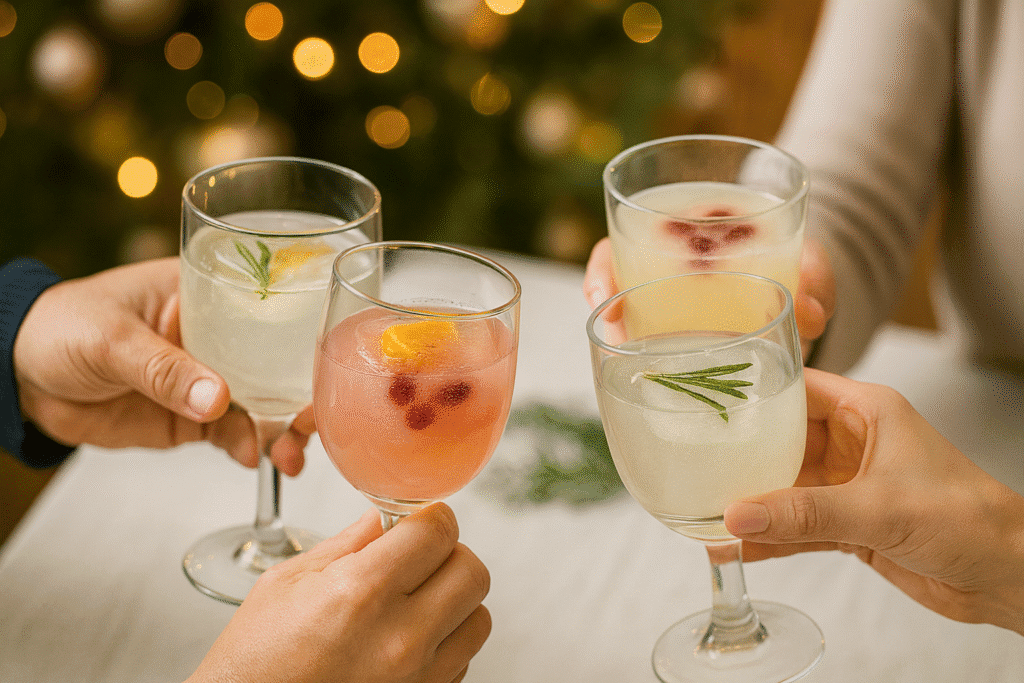
Festive ice cubes are a small project that pays off in a big way. They dress up every drink on the table, add gentle flavor, and let you do the creative work well before guests arrive. With a few trays, clean fruit, and some fresh herbs or spices, you can build custom cubes that match sparkling wine, cozy cider, iced coffee, or kid friendly punch.
Start with one or two flavor sets that match your favorite holiday drinks, notice what your friends and family like, and then create your own combinations for the next gathering. Once you add this trick to your hosting routine, it quickly becomes one of those “of course I made fancy ice” habits that make parties feel special without extra stress.
Festive Fruit And Herb Ice Cubes For Easy Holiday Drinks