
This easy lemon pudding is a rich, spoonable dessert that feels like a cross between classic British lemon posset and a simple stovetop pudding. It uses cream, sugar, lemon zest, and lemon juice to create a silky texture that tastes far more special than the short ingredient list suggests. Recipes from sites such as Simply Recipes and other lemon posset style desserts use a very similar ratio of cream, sugar, and lemon juice, which gives a reliable soft set once chilled.
You only spend about fifteen to twenty minutes at the stove, then the refrigerator does the rest while the pudding firms up. It is perfect when you need a make ahead dessert that can wait in the fridge until you are ready to serve. In this guide I will walk you through each stage, share what the mixture should look and feel like, and help you avoid the small mistakes that can keep it from setting properly.
Time and Serving
Approximate timings for Easy Lemon Pudding
- Prep time: about 10 minutes
- Cook time on the stove: about 10 minutes
- Chilling time in the refrigerator: at least 2 to 3 hours, 4 hours or overnight for the firmest texture
- Total time: about 2 hours 20 minutes, including chilling
- Yield: 4 to 6 small servings, about 100 ml to 150 ml each, depending on the size of your ramekins or dessert glasses
For real life planning, you can make this lemon pudding in the morning for dinner that night, or prepare it the evening before a brunch or holiday meal. Most posset style cream desserts hold well for several days in the refrigerator, and general food safety guidance from the United States Department of Agriculture and Food Safety and Inspection Service suggests that cooked leftovers are best eaten within three to four days when kept at or below four degrees Celsius in the refrigerator.
Insight into Easy Lemon Pudding
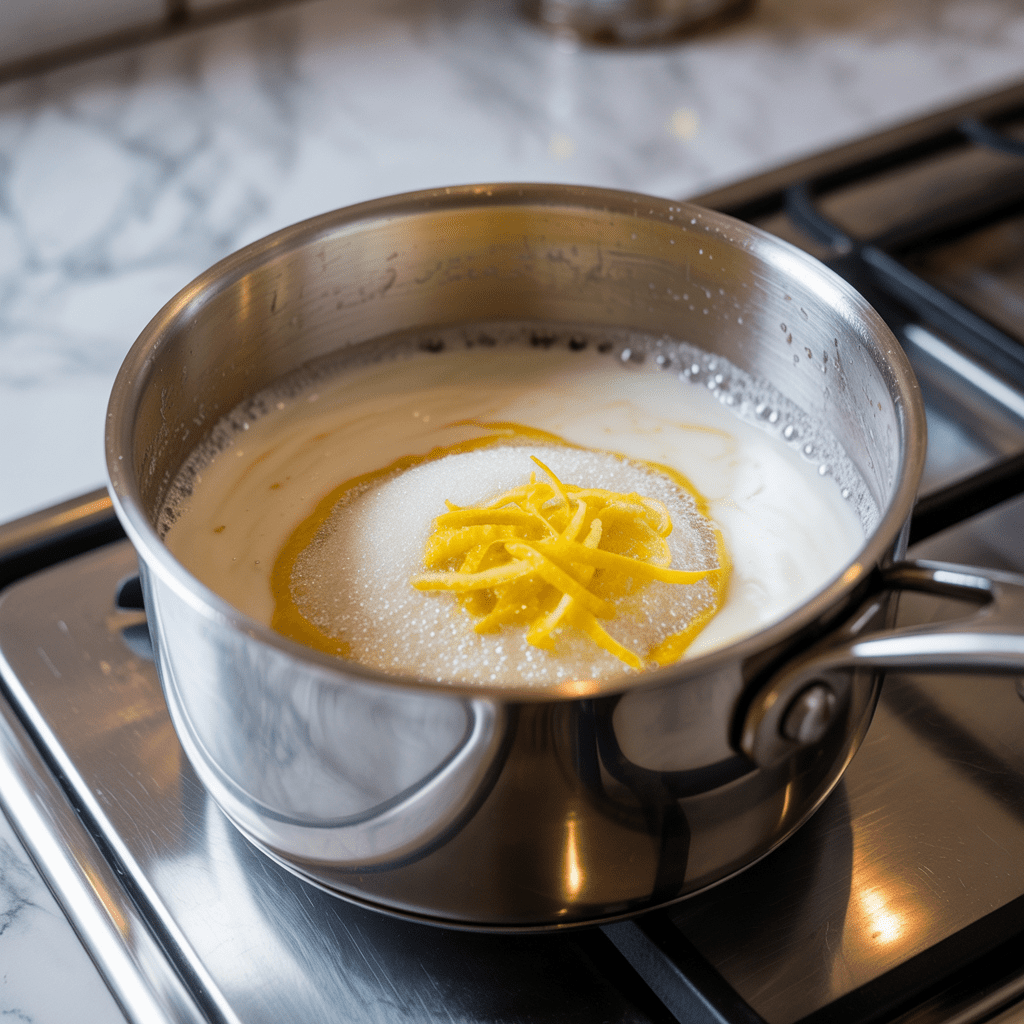
At its heart, this easy lemon pudding is an acid set cream dessert. You heat heavy cream with sugar and lemon zest, then stir in fresh lemon juice. As the mixture cools, it thickens into a soft, custard like pudding even though there are no eggs, no cornstarch, and no gelatin. Many lemon posset recipes use very close to this ratio of about two cups of cream to roughly two thirds cup of sugar and around six tablespoons of lemon juice.
The basic kitchen science is surprisingly simple. Cream contains milk proteins called casein. When hot cream meets the acid in lemon juice, the acidity goes up and those proteins gently change shape and start to cluster together. Several food science focused writers who have explored lemon posset explain that this fine network of proteins, together with the butterfat in the cream, traps water and creates a smooth gel rather than obvious curds.
This dessert appeals to nervous home cooks for several reasons:
- You need only a few everyday ingredients
- There are no eggs to temper and no water bath to set a custard
- The method uses simple simmering on the stove
- It looks elegant when served in small glasses, especially with berries on top
- It is an ideal make ahead dessert for Easter, Mother’s Day, date night, or any dinner when you want something that feels restaurant worthy without complicated technique
Ingredients
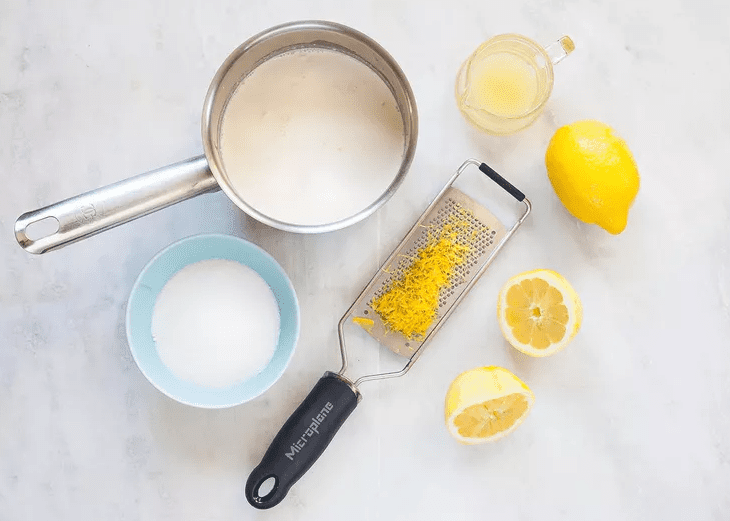
The quantities below give four generous servings or five to six smaller ones.
Core ingredients
- Heavy whipping cream
- 2 cups, about 480 milliliters or 480 grams
- Use cream with at least thirty five percent fat for the best set and creamy mouthfeel. Most lemon posset recipes use heavy cream in this range for reliable thickening.
- Granulated sugar
- Two thirds cup, about 135 grams
- Regular white sugar dissolves cleanly and lets the lemon flavor shine.
- Finely grated lemon zest
- Zest from one large unwaxed lemon, about one to one and one half tablespoons
- Choose unwaxed lemons when possible since the zest is going straight into the cream.
- Fresh lemon juice
- 6 tablespoons, about 90 milliliters, from roughly two to three medium lemons
- Freshly squeezed juice matters here. Bottled juice often has a dull flavor and can be less acidic, which can affect both taste and the way the pudding sets.
- Fine sea salt
- A small pinch, about one sixteenth teaspoon
- Optional but helpful to balance sweetness and bring out the citrus flavor.
Optional flavor additions
- Pure vanilla extract, about one half teaspoon, for a softer, rounded flavor
- Extra finely grated lemon zest, for sprinkling on top before serving
Optional garnishes
Choose one or more of these. Do not feel you must use all of them.
- Fresh berries, about one cup total, such as raspberries, blueberries, sliced strawberries, or blackberries
- Lightly whipped cream
- Crushed shortbread cookies, graham crackers, or crisp biscuit crumbs
- Thin lemon slices or small twists of lemon peel
Required Tools for Making the Recipe
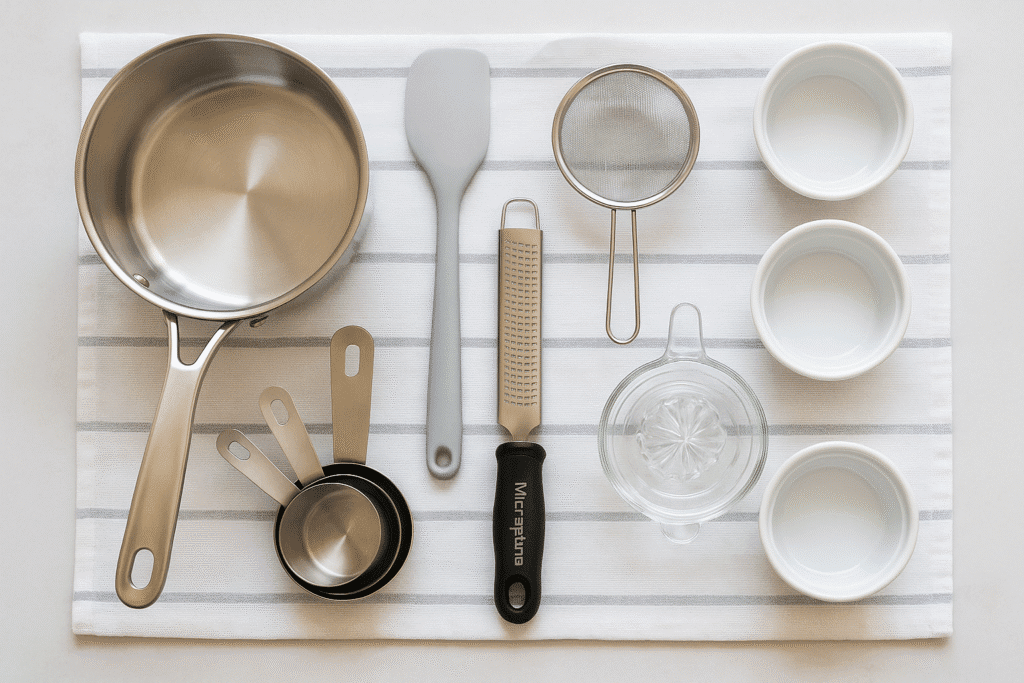
Organized flat lay of a heavy bottomed saucepan, silicone spatula, fine mesh strainer, citrus zester, juicer, measuring cups, and small ramekins on a clean kitchen towel.
You do not need any special equipment, but a few thoughtful choices make your lemon pudding smoother and easier to prepare.
- Medium saucepan with a heavy bottom
- A heavy bottomed pan spreads heat more evenly, which helps prevent hot spots that can scorch dairy. Professional pastry chefs often stress this point for any cream based dessert.
- Heat safe spatula or wooden spoon
- You will stir frequently while the cream and sugar heat and simmer. A silicone spatula lets you scrape the sides and corners of the pan.
- Fine mesh strainer
- Straining removes the zest and any tiny bits of cooked protein so the pudding feels very smooth on the tongue. Most classic lemon posset recipes use this step.
- Measuring cups and spoons or a kitchen scale
- For consistency, especially if you plan to make this dessert often, weighing sugar and cream helps you get the same set each time.
- Citrus zester or microplane
- Produces very fine zest without bitter white pith.
- Citrus juicer
- A small handheld juicer or reamer makes it easier to extract juice and catch seeds.
- Heat safe jug or large measuring cup
- Makes it easier to pour the hot mixture cleanly into glasses or ramekins.
- Ramekins, small glasses, or dessert cups
- Aim for containers that hold one hundred to one hundred fifty milliliters each. Sturdier glass or ceramic cups chill evenly and look pretty on the table.
Method: Step by Step Preparation Guide
Follow these steps and pause after each stage to check the texture and appearance.
Step 01: Prepare the lemons
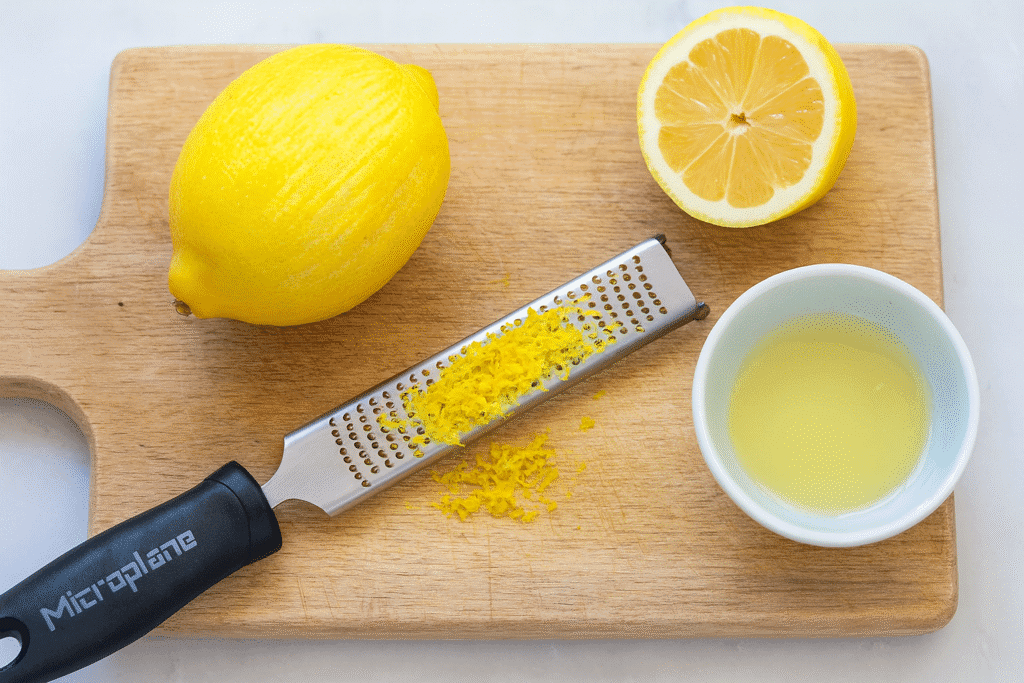
- Rinse the lemons under cool running water and dry them well with a clean towel.
- Using a microplane or fine zester, grate only the bright yellow outer layer of one large lemon directly over a small bowl or plate. Avoid the white pith underneath, which tastes bitter.
- Cut the lemons in half and juice them using a small juicer or reamer. Measure out six tablespoons, about ninety milliliters, of juice. Pass the juice through a small sieve if you see pulp or seeds. Set the juice aside.
Step 02: Measure the cream and sugar
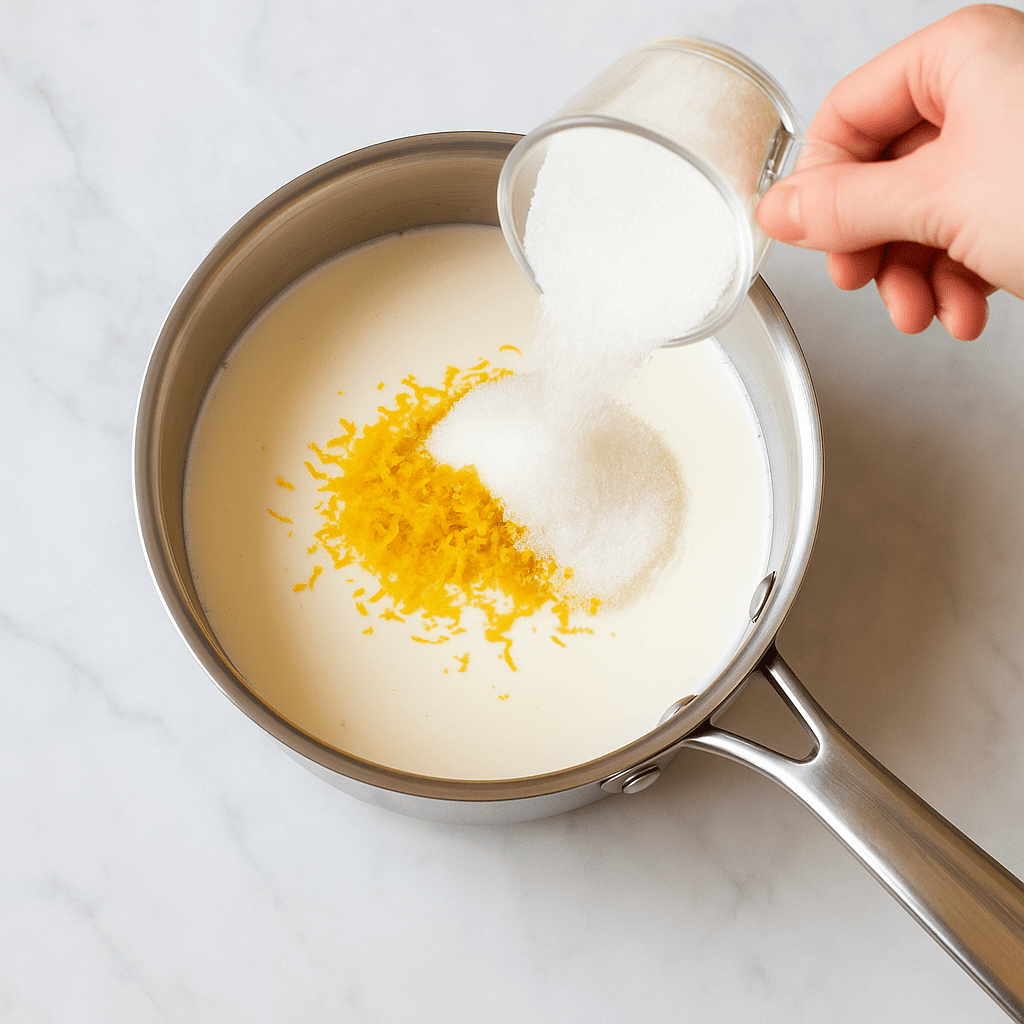
- Pour two cups of heavy whipping cream into a measuring jug or directly into the saucepan.
- Add two thirds cup of granulated sugar to the pan.
- Add the lemon zest and a small pinch of fine salt.
At this point the mixture will look thin and speckled with zest. The sugar will still sit on the bottom of the pan. That is normal.
Step 03: Warm the cream mixture gently
- Place the saucepan over medium heat.
- Stir steadily with a heat safe spatula or wooden spoon as the sugar begins to dissolve. Make sure you sweep along the bottom and sides of the pan.
- Within a few minutes, the cream will feel warm and the sugar granules will no longer be visible. Continue to stir often.
You are looking for the first small bubbles around the outer edge of the pan. The surface may begin to steam lightly.
Step 04: Bring to a gentle boil and simmer
- Once you see small bubbles forming around the edges, adjust the heat so the cream comes to a gentle boil rather than a rolling, vigorous boil.
- Allow the mixture to bubble gently for about five minutes, stirring often.
During this time the cream may thicken slightly and the surface will look a bit more velvety. The goal is to dissolve the sugar fully and allow some water in the cream to evaporate, which strengthens the final set. Several well tested lemon posset recipes follow this same approach of simmering cream and sugar for about five minutes before adding the lemon juice.
Watch carefully. If the bubbles rise quickly or the cream starts to climb up the sides of the pan, lower the heat and lift the pan off the burner for a few seconds, stirring to calm it down.
Step 05: Add the lemon juice
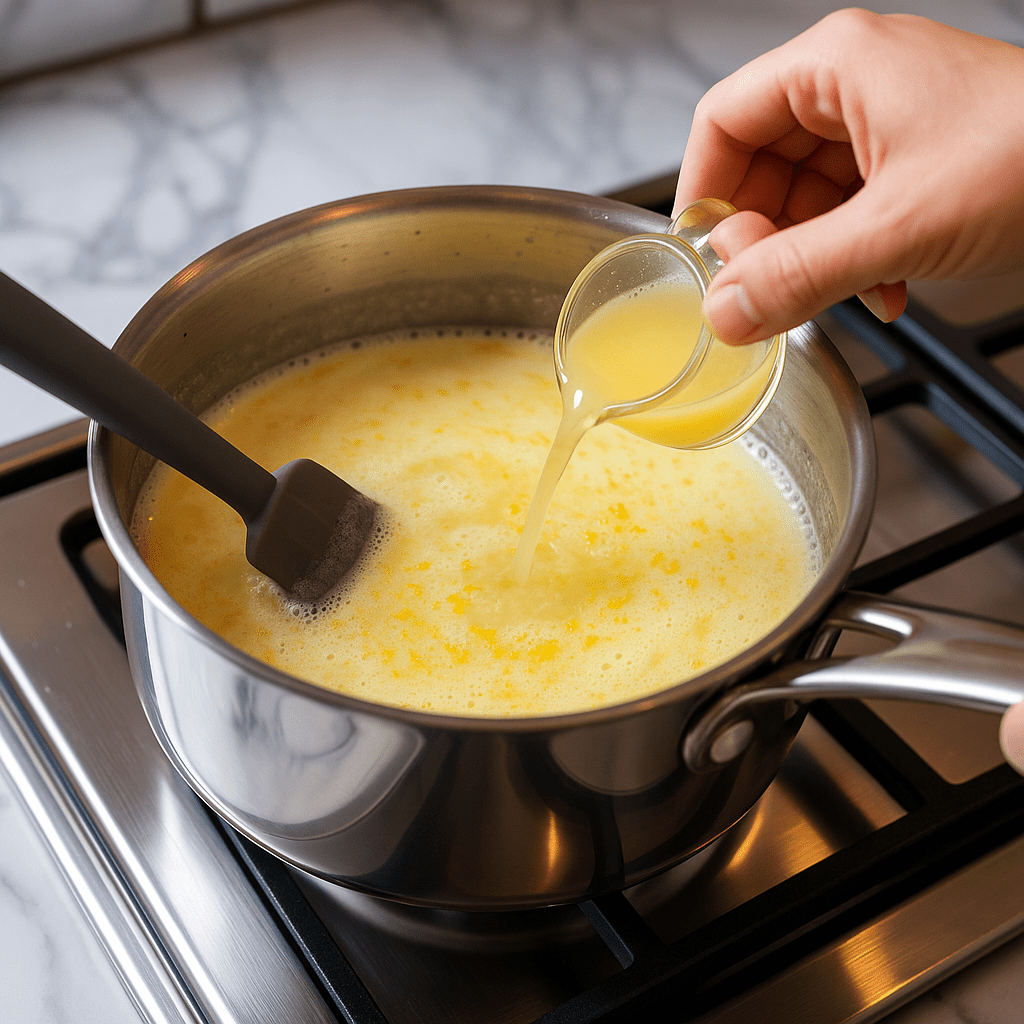
- Turn the heat down slightly so the cream is bubbling gently.
- Slowly pour in the measured lemon juice while stirring constantly.
- Continue to cook for another four to five minutes, stirring often.
As the juice mixes in you may notice the texture change. The cream can look a little thicker and feel slightly heavier on the spoon. This is the acid beginning to act on the milk proteins.
Taste a tiny spoonful once it cools for a moment. It should taste quite sweet and noticeably tangy. Remember that chilling will soften the flavor a bit, so you want it to feel slightly more intense at this stage than you think you want in the finished pudding.
If you want to add vanilla, stir it in during the last minute of simmering.
Step 06: Cool briefly and strain
- Remove the saucepan from the heat and let the mixture sit on a heatproof surface for about five minutes. This short rest lets bubbles settle a little so the top is smoother.
- Place a fine mesh strainer over a heat safe jug or large measuring cup.
- Carefully pour the warm mixture through the strainer, tapping gently so it flows through. Discard the zest left in the strainer.
Straining is important if you want that very smooth, restaurant style texture. It catches any small bits of zest and any tiny coagulated protein particles.
Step 07: Portion into serving dishes
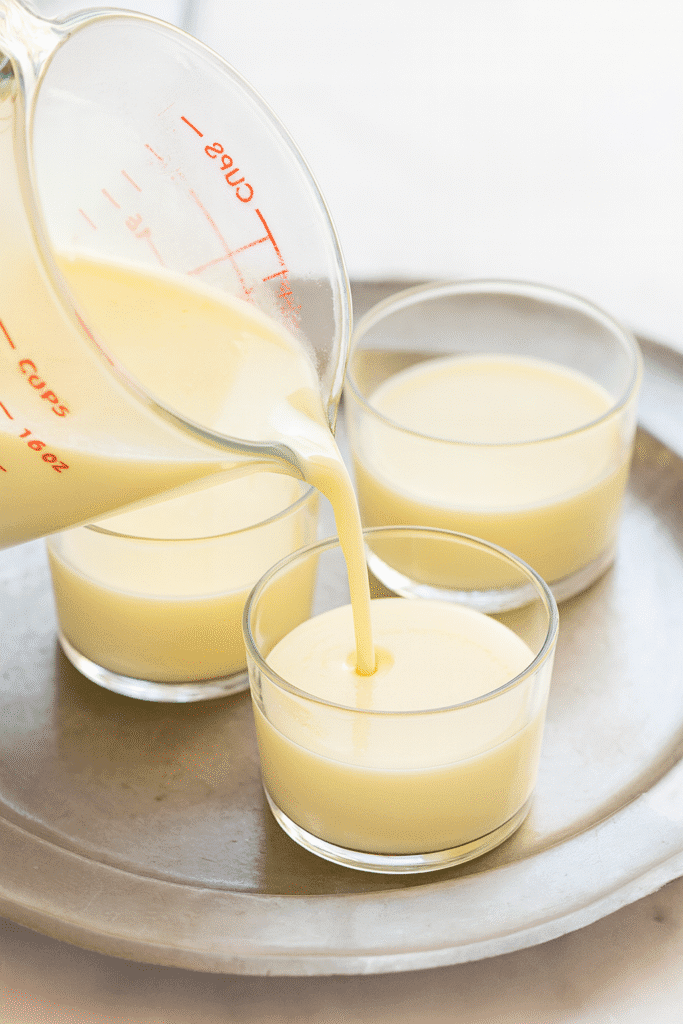
- Arrange your ramekins or glasses on a tray that fits in your refrigerator.
- Divide the strained mixture evenly among them. You can use a small ladle or pour straight from the jug.
- If there is a thin foam layer on top and you prefer a completely smooth surface, you can use a small spoon to skim it off or gently flame it with a brief pass of a kitchen torch. This step is optional and mostly for presentation.
At this stage the mixture will still be pourable, like a thin cream sauce. It will firm up as it cools and chills.
Step 08: Chill until set
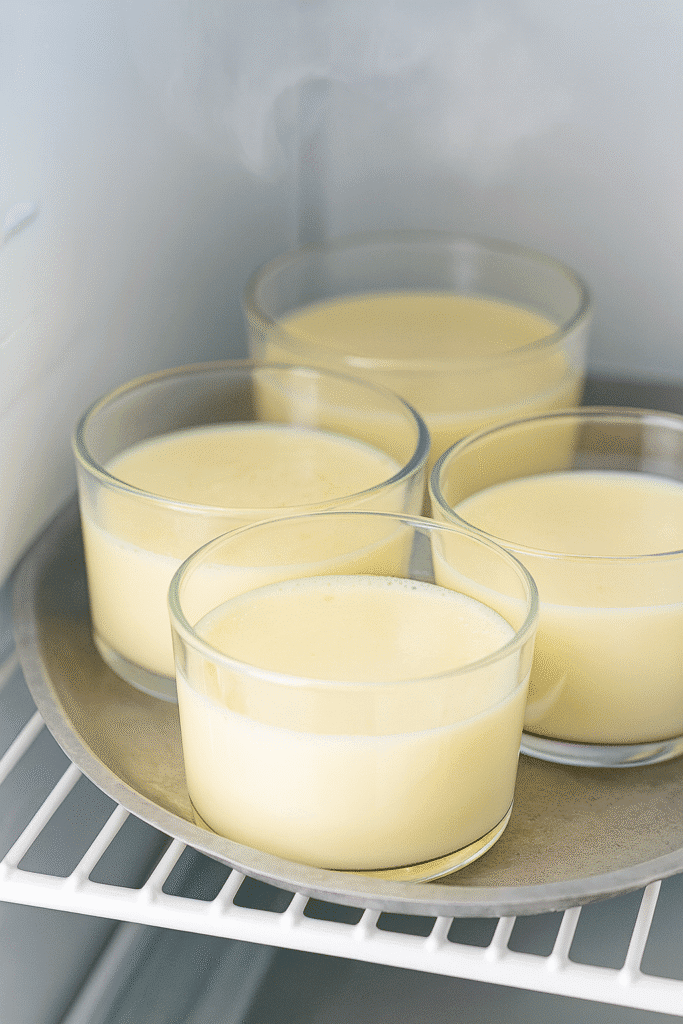
- Let the filled cups sit at room temperature for about twenty minutes, until they no longer feel piping hot.
- Transfer the tray to the refrigerator. Do not cover the cups for the first hour, which helps excess heat escape. After that you can cover them loosely with plastic wrap if you like.
- Chill at least two to three hours. For the best texture, aim for four hours or overnight.
When the pudding is ready, the top should look slightly matte rather than shiny. If you gently nudge a cup, the dessert should wobble softly as one piece, similar to a rich custard. A spoon should glide in without meeting liquid underneath.
Step 09: Garnish and serve
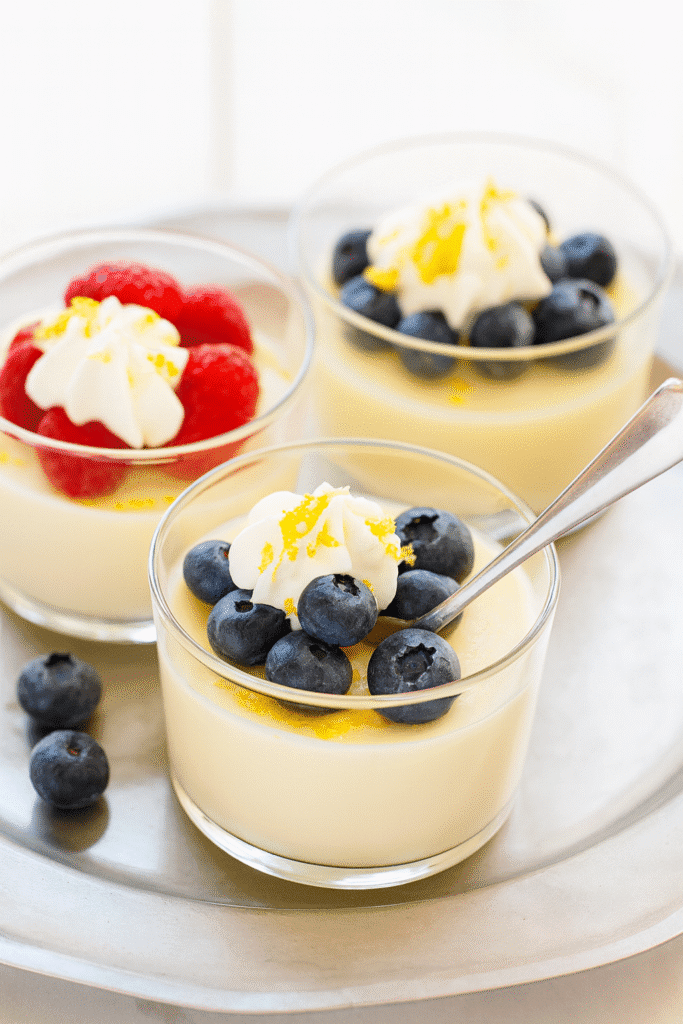
- Just before serving, add a small handful of fresh berries on top of each cup.
- Sprinkle with a pinch of extra lemon zest if you enjoy a very bright lemon aroma.
- You can add a spoonful of lightly whipped cream or a teaspoon of crushed shortbread crumbs for texture.
Serve the pudding well chilled. The texture will be silkier and looser if you serve closer to the two hour mark, and slightly firmer and sliceable around the edges after an overnight rest.
Variations
- Use lime juice instead of lemon for a lime pudding, or blend lemon and lime for a mixed citrus version.
- Stir in a tablespoon of elderflower cordial after straining for a floral note.
- Layer the pudding in small glasses with crushed cookies and berries to create a simple lemon parfait.
- Reduce the sugar by one to two tablespoons if you prefer a more tart dessert, keeping in mind that less sugar can slightly soften the set.
Scaling the recipe
You can double the recipe for a crowd, using a larger saucepan. When the volume increases, it helps to use a wider pan so the cream still reduces during the simmer. The simmering time may increase by a few minutes. For small batches such as half the recipe, use a smaller saucepan so the cream does not scorch in a thin layer.
Key Advantages of Making Easy Lemon Pudding
- Very few ingredients
You need cream, sugar, and lemons, which are easy to find and often already in the kitchen. - Simple technique
There is no custard base with egg yolks and no baking. If you can simmer cream and stir, you can make this dessert. - Restaurant style texture
The final pudding is rich and silky enough to feel like something you might order at a bistro, even though it took you only about fifteen minutes of active cooking time. - Make ahead convenience
Because the pudding must chill to set, it fits naturally into a make ahead menu. You can focus on main dishes when guests arrive and know that dessert is already waiting in the fridge. - Flexible serving options
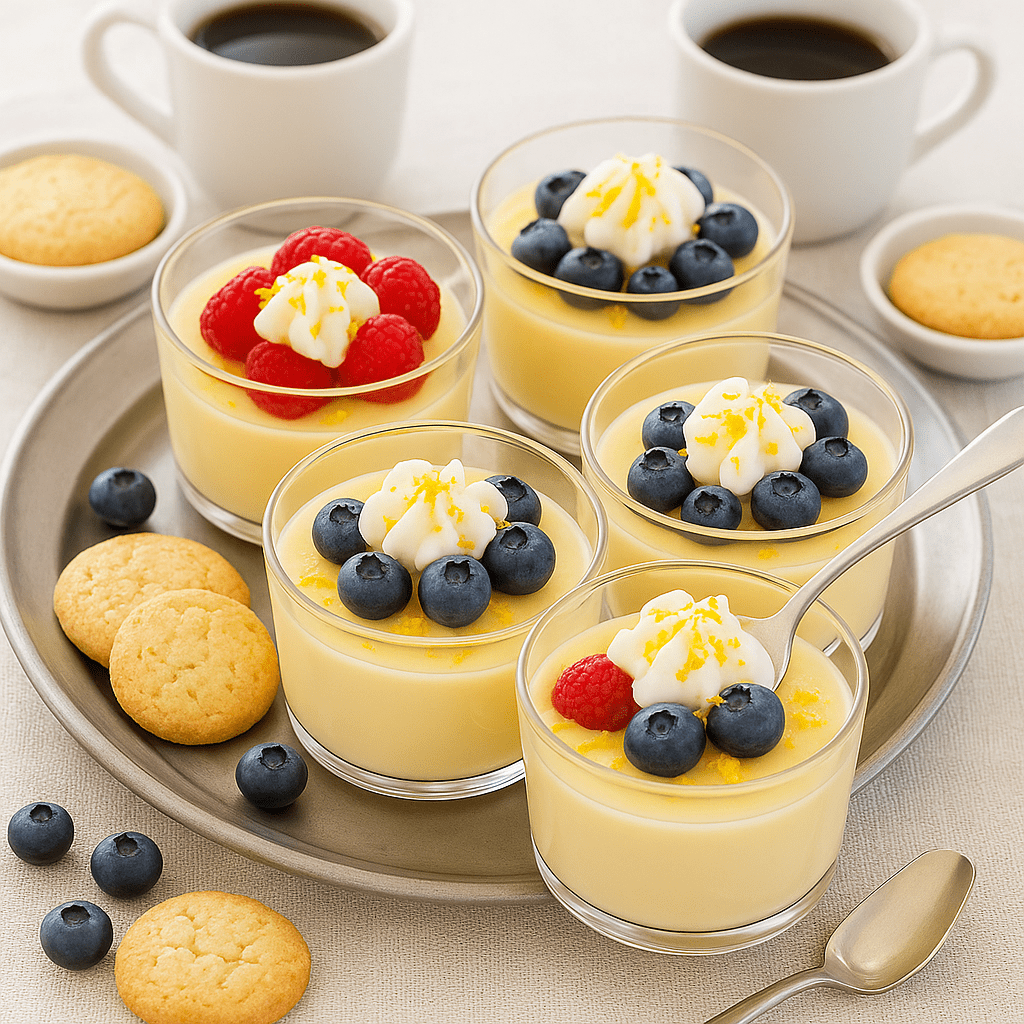
Serve it plain for a pure lemon experience, dress it up with berries and whipped cream, or tuck small cups into a dessert board with cookies and fruit. It travels reasonably well if you pour it into lidded jars and keep it cold.
Mistakes to Avoid
Letting the cream boil too hard
A fierce boil can cause cream to foam up, boil over, or scorch on the bottom of the pan. Keep the heat at a level where you see steady, modest bubbles, not wild boiling. If it starts to climb, pull the pan off the heat and stir until the bubbles settle.
Not simmering long enough before or after adding the lemon juice
If the cream does not simmer for at least several minutes with the sugar, some water may remain and the final pudding can be too loose. Similarly, if you do not give the lemon juice a few minutes in the hot cream, the acid and proteins may not interact fully. Aim for about five minutes before the juice and four to five minutes after.
Using bottled lemon juice
Bottled juice often has preservatives and less bright acidity, which can lead to a flat flavor and can sometimes reduce thickening power. Fresh juice gives a cleaner taste and more predictable acid level, which is important for this style of lemon pudding.
Adding too much zest
A generous amount of zest adds fragrance, but a very large quantity can introduce bitterness, especially if some white pith slips in. Stick to the zest of about one large lemon and make sure your grater only captures the colored layer.
Pouring into very large dishes
A large bowl of lemon pudding will set much more slowly and may be firm around the edges but softer in the center. Small ramekins or glasses chill more evenly, which means a more consistent texture.
Expert Tips and Real Life Examples
- Taste before chilling
After you add the lemon juice and simmer for a few minutes, let a spoonful cool slightly and taste. If you want a sharper lemon flavor, you can add another teaspoon or two of juice, but be cautious. Too much acid can make the texture grainy or overly firm. - Adjust sweetness gently
If you find the mixture too tart at this stage, you can dissolve an extra tablespoon of sugar while the cream is still hot. Make sure it dissolves fully before you move to the cooling step. - Choosing serving cups
Short stemmed glasses, small jam jars, or classic ceramic ramekins all work well. For a dinner party I often use small stemmed glasses because they make a simple dessert feel more special. For a family meal, sturdy ramekins are easier to stack in the refrigerator. - Soft set versus firmer set
For a very soft, spoonable dessert, chill for about two to three hours. For a firmer, almost sliceable edge, chill overnight. Both are correct, so you can choose the texture that suits your menu. - Turn it into a layered dessert
Place a spoonful of crushed cookies in the bottom of each glass, add a layer of lemon pudding, and top with berries just before serving. It becomes a quick lemon trifle style dessert that looks impressive with very little extra work.
A real life example: I often make this easy lemon pudding the night before a holiday meal. After dinner, I bring out a tray of chilled glasses, a bowl of mixed berries, and a small dish of cookie crumbs. Everyone can top their own pudding the way they like. It feels relaxed and festive, and I do not have to fuss in the kitchen at the last minute.
Nutrition Facts (Per Serving)
The exact numbers will vary with portion size, cream brand, and garnishes, but for a batch divided into four servings with cream, sugar, and lemon only, nutrition estimates are similar to those given for comparable lemon pudding or lemon posset recipes.
Approximate values per serving, without toppings
- Calories: about five hundred seventy to six hundred
- Total fat: about forty to forty five grams
- Saturated fat: about twenty five to twenty eight grams
- Carbohydrates: about forty five to fifty grams
- Sugars: about forty five to fifty grams
- Protein: about three to four grams
This dessert is rich and meant for occasional enjoyment. If you prefer smaller portions, use six cups instead of four so each serving is lighter.
Frequently Asked Questions
Q1: Can I use half and half or milk instead of heavy cream
Half and half or regular milk do not contain enough fat to thicken reliably with lemon juice alone. The mixture can curdle or stay thin instead of forming a smooth gel. Food science explanations of acid set cream desserts note that both sufficient fat and casein protein content are important for this gentle thickening. For best results use heavy whipping cream with at least thirty five percent fat.
Q2: How far in advance can I make Easy Lemon Pudding
You can prepare the pudding up to two days in advance with excellent texture, which matches guidance from several well tested lemon posset and easy lemon pudding recipes. For food safety, general leftovers advice from United States agencies suggests using cooked cream based dishes within three to four days when refrigerated properly. Virginia Tech Publications
Q3: What if my pudding does not set properly
If the pudding is still quite loose after four hours of chilling, leave it overnight. If it is still runny the next day, common causes include not simmering long enough, using cream with a lower fat content, or using lemon juice that was not acidic enough. Some experienced cooks recommend adding a little more lemon juice and bringing the mixture back to a gentle simmer, then cooling and chilling again, but this can risk a slightly grainier texture.
Q4: Can I freeze lemon pudding
Freezing is not ideal for this style of dessert. While cooked leftovers can be frozen for longer storage from a safety perspective, creamy desserts often separate and become icy after thawing. Food Safety and Inspection Service If you do freeze it, expect some change in texture and thaw it slowly in the refrigerator.
Q5: How can I make the dessert a little lighter without losing too much creaminess
You can make the portions smaller, serve the pudding with plenty of fresh berries, or use a mix of cream and a higher fat milk product like light cream. Keep in mind that any reduction in fat can affect how firmly the dessert sets, so it is safer to keep the core recipe as written and simply enjoy a more modest portion.
Conclusion
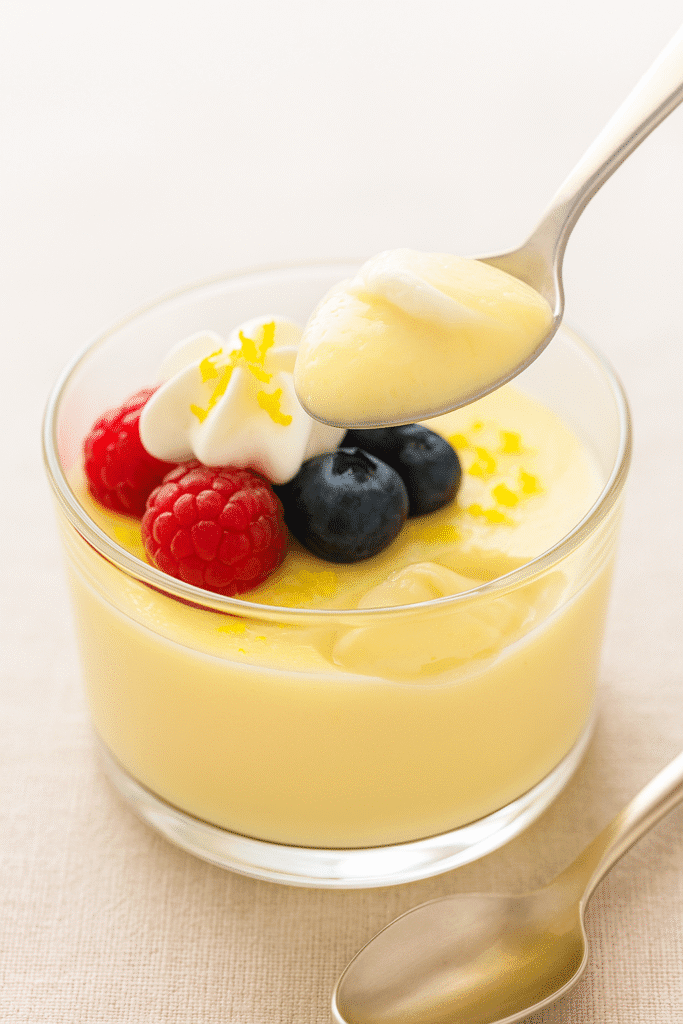
Easy lemon pudding is one of those rare desserts that gives maximum reward for very little effort. With four main ingredients and a short time at the stove, you end up with a creamy, lemon rich pudding that feels special enough for holidays yet simple enough for a weeknight treat.
Once you understand the basic pattern of warming cream with sugar and zest, simmering briefly, then adding lemon juice and chilling until set, the method becomes second nature. From there you can adjust the balance of sweetness and tang, play with garnishes, or experiment with other citrus fruits.
If you have a few lemons and some cream in the refrigerator, you already have almost everything you need. Try a small batch, taste as you go, and soon this easy lemon pudding will be one of those recipes you can reach for whenever you want a bright, comforting dessert.

Easy Lemon Pudding You Can Make Any Night Of The Week