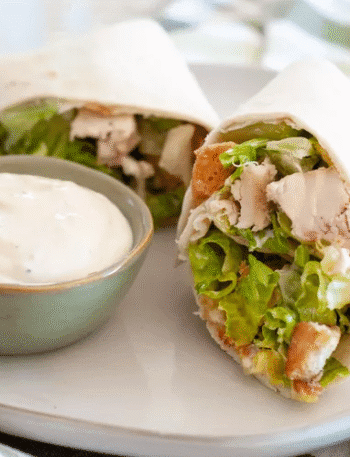
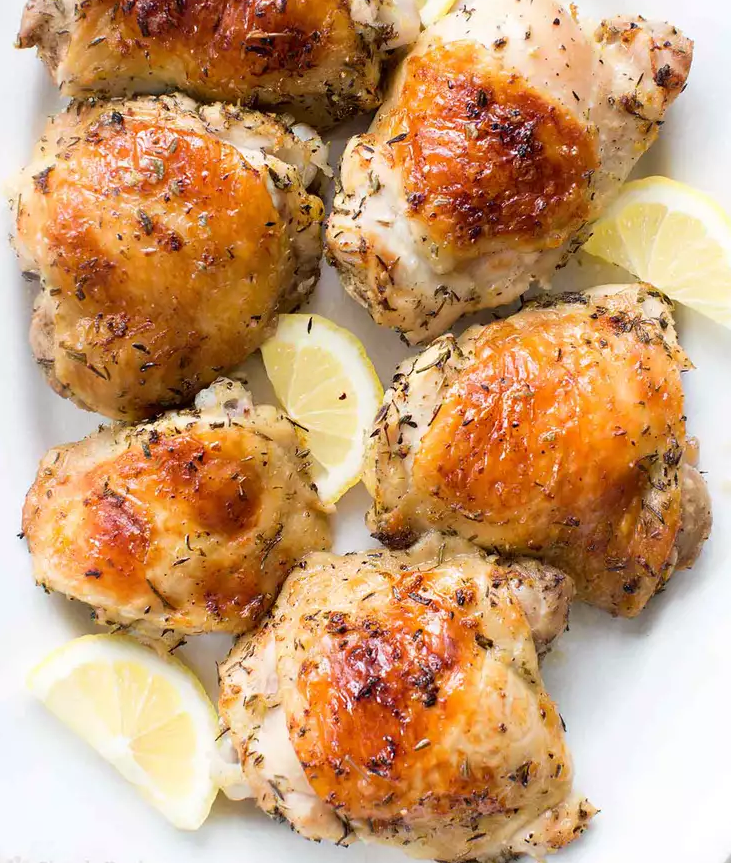
If you want lemon chicken that actually tastes like lemon, has crisp skin, and stays juicy even if you look away from the oven for a minute, this is the version you want. It uses bone in, skin on dark meat roasted in a hot oven with a bright lemon and herb marinade and plenty of pan juices you can spoon over at the table.
This recipe is friendly for busy weeknights, family dinners, and guests. We will walk through every step so you can avoid dry chicken, too sharp lemon flavor, or the worry of undercooked meat. Think of this as having a calm cooking friend in the kitchen with you, talking you through the process.
Time and Serving
Prep time
About 20 minutes
Includes trimming visible fat, patting the chicken dry, zesting and juicing the lemons, mixing the marinade, and arranging the pieces in the pan.
Marinating time
At least 1 hour, ideally 1 to 2 hours in the refrigerator.
Because this marinade contains lemon juice, most culinary and food safety sources advise keeping acidic marinades on chicken under about 4 hours to avoid mushy texture.
Cook time
About 40 to 45 minutes of oven time, depending on the size of your chicken pieces.
Total time
Approximately 2 to 2 and a half hours, including marinating time, but only about 30 to 40 minutes of active work.
Yield
Serves 4 to 6, depending on appetite and side dishes.
Insight of the Lemon Chicken
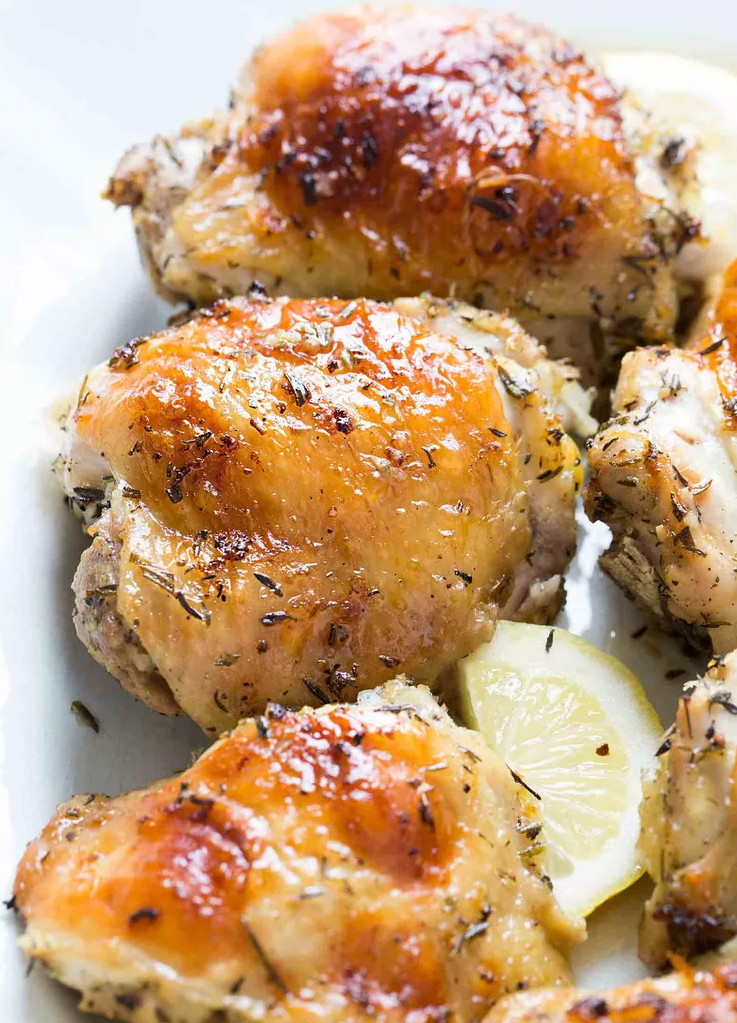
In this recipe, lemon chicken means oven baked chicken thighs and drumsticks, bone in and skin on, soaked in a lemon and herb mixture and then roasted at a fairly high heat. The lemon juice and zest, garlic, and herbs cling to the skin, while the heat renders the fat and crisps everything up. Inside, the meat stays moist and tender.
The flavor is bright but rounded. Lemon zest gives a fragrant citrus aroma without harshness, lemon juice adds gentle acidity, garlic and herbs bring savory depth, and the chicken fat and a little butter or oil create a rich base. The goal is a balanced sauce in the pan that you want to spoon over rice, potatoes, or bread, not a sour, mouth puckering marinade.
Dark meat shines here. Thighs and legs have more fat and connective tissue than breasts. That extra fat carries flavor and makes the meat more forgiving if the timing is not perfect. They stay juicy even if they cook a few minutes longer than planned. Lean chicken breasts are delicious too, but they dry out faster, so we treat them differently and shorten the cooking time.
You can still use this method for chicken breasts, boneless thighs, or a mix of pieces. The marinade stays the same. The differences are oven time and how closely you watch the internal temperature so white meat does not overcook.
Ingredients
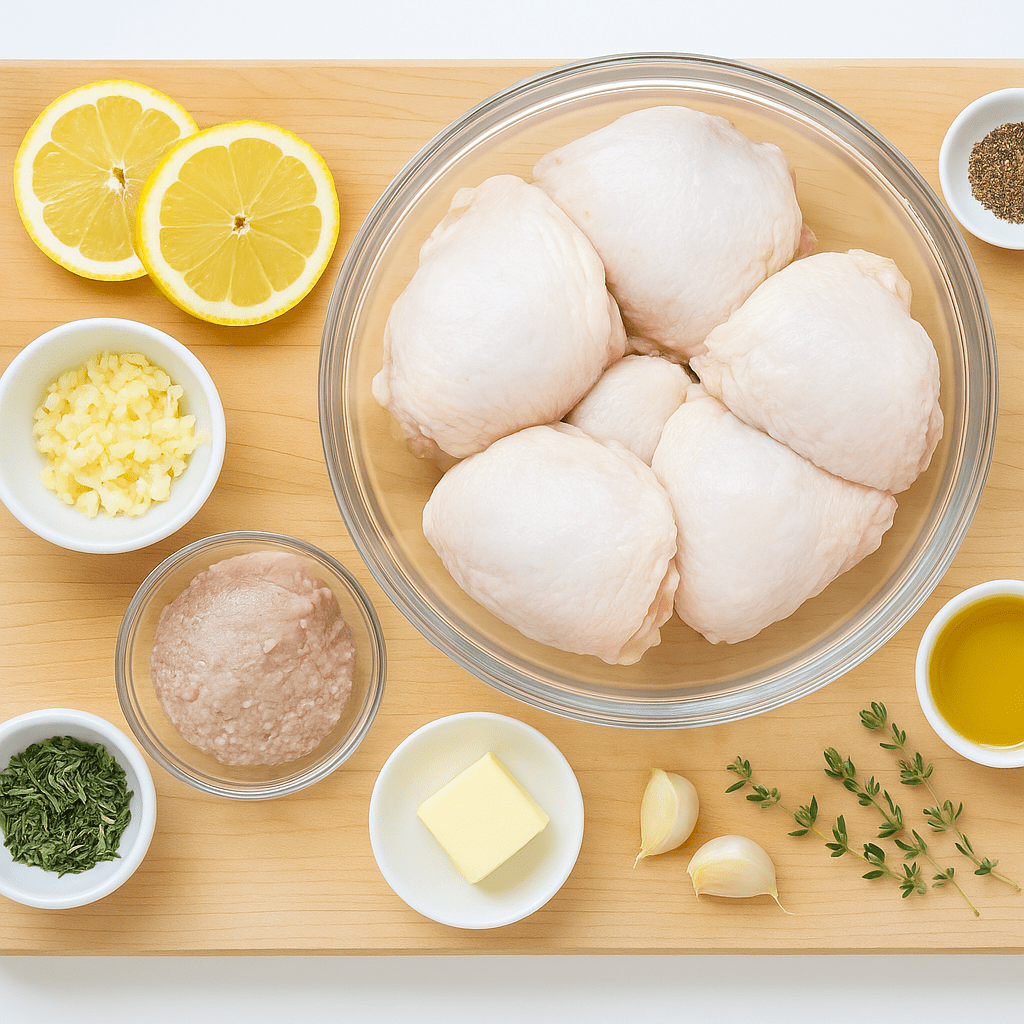
For the chicken
- 1 and a half to 1 and three quarter kilograms bone in, skin on chicken thighs and or drumsticks
This is usually 8 medium pieces. You can use all thighs, all drumsticks, or a mix. - 1 tablespoon neutral oil for the baking dish if it is not nonstick
If using chicken breasts instead
- About 1 and a half kilograms bone in skin on chicken breasts, or
- About 1 and a quarter kilograms boneless skinless chicken breasts
You will follow the same marinade but shorten the cooking time. Details are in the method section.
For the lemon herb marinade
- 4 teaspoons finely grated lemon zest
From about 2 medium lemons, washed and dried - One third cup fresh lemon juice, about 80 milliliters
- 3 tablespoons olive oil
- 3 to 4 garlic cloves, finely minced or grated
- 2 tablespoons fresh thyme leaves, chopped, or 2 teaspoons dried thyme
- 2 teaspoons fresh rosemary, finely chopped, or half teaspoon dried rosemary
- 1 to one and a half teaspoons kosher salt, plus more to taste at the table
- 1 teaspoon freshly ground black pepper
Optional flavor boosters
Use these if they match your taste and who is eating.
- 1 teaspoon honey or sugar, for a slightly rounded, less sharp lemon flavor
- One quarter teaspoon red pepper flakes, for gentle heat
- Extra lemon wedges or thin slices for the pan and for serving
- Chopped fresh parsley or additional thyme leaves for garnish
For finishing and serving
- 2 tablespoons melted butter or olive oil to brush over the top before baking
- Cooked rice, couscous, buttered noodles, roasted potatoes, or crusty bread to soak up the pan juices
- Simple green salad or steamed vegetables to balance the richness
Required Tools for Making the Recipe
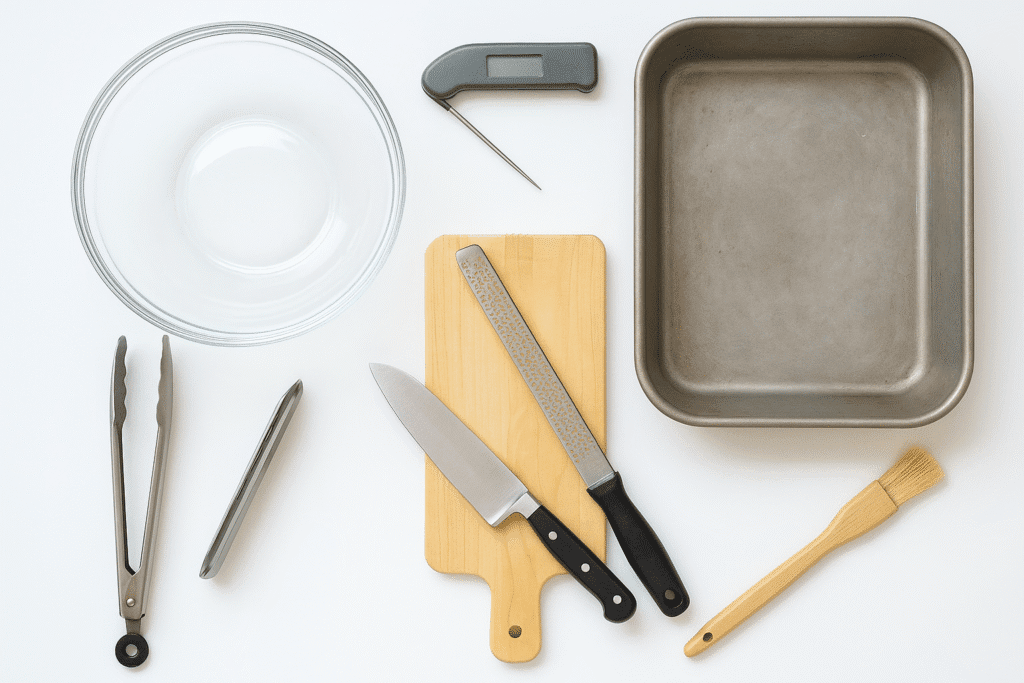
You do not need fancy equipment, but a few tools make this lemon chicken much easier and safer.
- Large non reactive mixing bowl or a heavy duty zip top bag
Glass, ceramic, or food grade plastic are best for acidic marinades. Reactive metals like plain aluminum can react with lemon juice and give off flavors. - Medium bowl and whisk for mixing the marinade
- Sharp chef knife and cutting board
- Microplane or fine grater for lemon zest
- Measuring spoons and measuring cup
- Large baking dish or roasting pan with sides, about 23 by 33 centimeters or similar
A pan that is too small will crowd the chicken and make it steam instead of crisp. - Tongs for turning and serving the chicken
- Instant read meat thermometer
Food safety authorities recommend checking chicken with an accurate thermometer and cooking all poultry to an internal temperature of 165 degrees Fahrenheit, about 74 degrees Celsius. Food Safety and Inspection Service - Aluminum foil for resting the chicken
- Small heatproof bowl and spoon for skimming fat from pan juices, if you wish
Method: Step by Step Preparation Guide
Step 01: Prepare the chicken
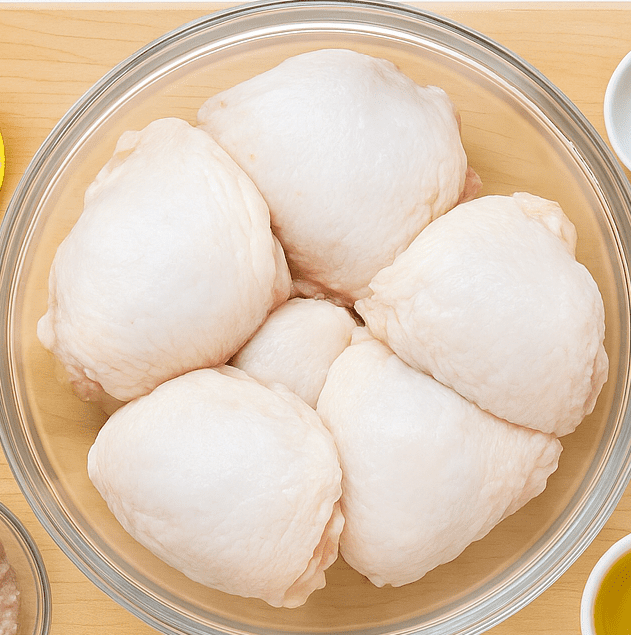
- Remove the chicken from its packaging and place it on a tray or plate.
- Pat each piece very dry with paper towels, especially the skin. Dry skin browns and crisps better and helps the marinade cling instead of sliding off.
- Trim any large flaps of fat or loose skin from the edges with a sharp knife. Leave most of the skin in place, since it protects the meat and gives flavor.
- On the flesh side, use the tip of your knife to make one or two shallow cuts, about one centimeter deep, in the thickest part of each piece. This helps the lemon and herbs move into the meat without cutting all the way through.
Food safety note: current guidance from food safety agencies does not recommend rinsing raw chicken in the sink because this can spread bacteria around your kitchen. Instead, pat it dry and clean surfaces well. Wikipedia
Step 02: Zest and juice the lemons
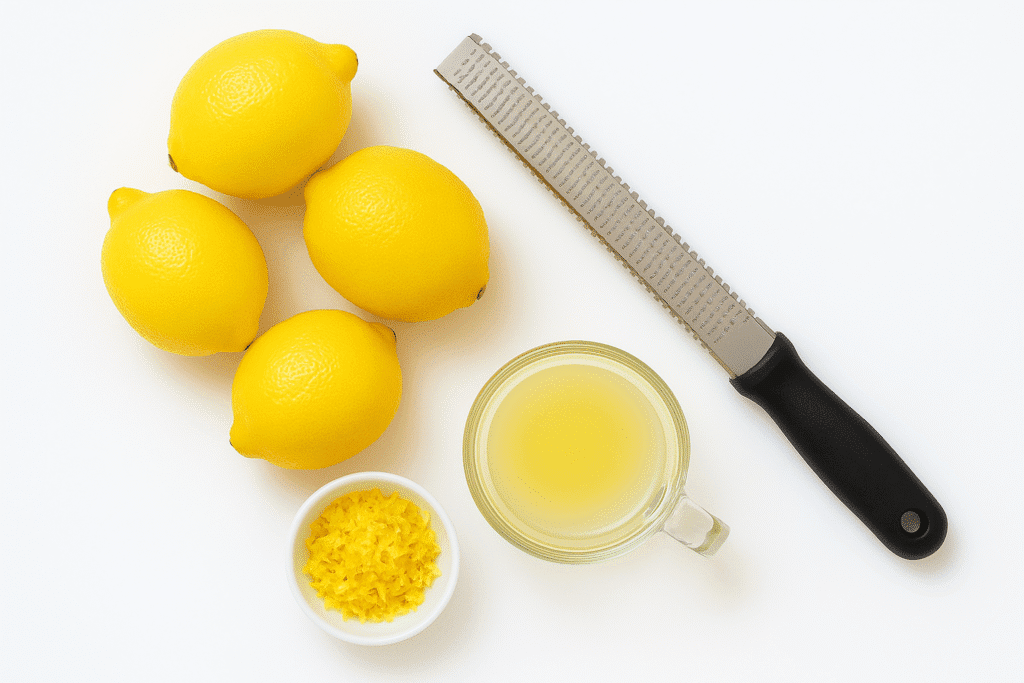
- Wash and dry your lemons.
- Using a microplane or fine grater, remove only the bright yellow zest from the surface of the lemons. Avoid the white pith underneath, which is bitter.
- Cut the lemons in half and squeeze out the juice through your fingers or a small strainer to catch the seeds. Measure out one third cup of juice.
You will notice the zest smells floral and intense, while the juice smells bright and sharp. Using both gives layered lemon flavor without needing a huge amount of juice.
Step 03: Mix the lemon herb marinade
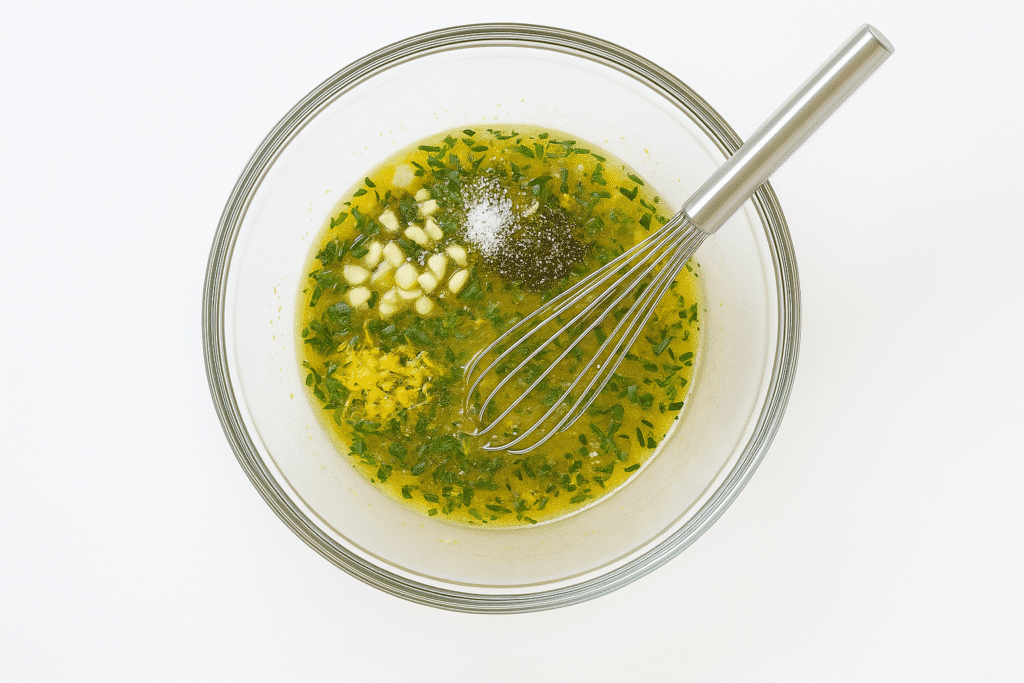
- In a medium bowl, combine the lemon zest, lemon juice, olive oil, minced garlic, thyme, rosemary, salt, pepper, and any optional honey or red pepper flakes.
- Whisk until the mixture looks slightly thick and emulsified.
- Taste a small drop before adding the chicken. It should taste pleasantly salty and lemony, but not harsh. Remember that the flavor will soften when it coats the chicken.
If it tastes too sharp, whisk in another tablespoon of olive oil or a small pinch of sugar. If it tastes flat, add a small pinch of salt.
Step 04: Marinate the chicken safely
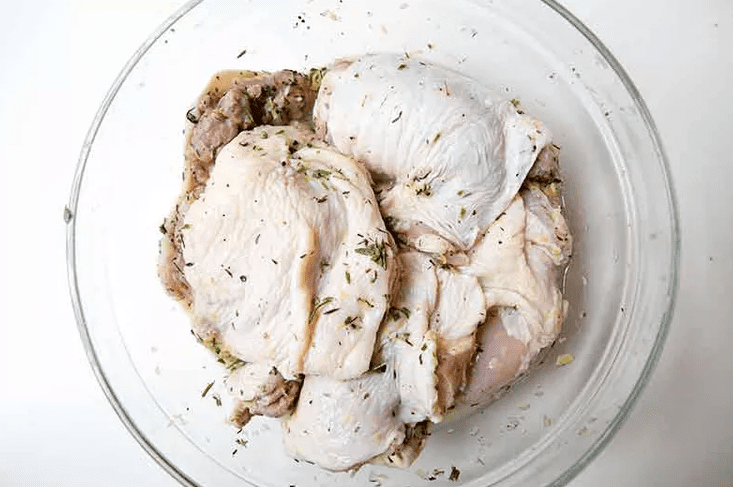
- Place the chicken pieces in a large bowl or zip top bag.
- Pour the marinade over the chicken. Use clean hands or tongs to coat each piece, making sure some marinade gets into the shallow cuts on the flesh side.
- Cover the bowl or seal the bag, pressing out excess air.
- Refrigerate for 1 to 2 hours. Turn the pieces once or twice during that time so the marinade reaches all sides.
Because this marinade contains a good amount of lemon juice, many recipe developers and food safety educators suggest keeping citrus based marinades on chicken under about 4 hours. Longer times can start to soften the outer texture and make it slightly mushy.
If you only have 30 minutes, still marinate. The surface will still pick up noticeable flavor. If you want an overnight option, use less lemon juice and more olive oil or switch to a yogurt based marinade, which tenderizes more gently.
Step 05: Heat the oven and prepare the pan
- About 20 minutes before you want to bake, take the chicken out of the refrigerator so it can lose some of its chill.
- Arrange an oven rack in the middle position.
- Preheat the oven to 425 degrees Fahrenheit, about 220 degrees Celsius.
This relatively high temperature helps render the fat quickly and brown the skin. - Lightly oil your baking dish if needed.
Step 06: Arrange the chicken and add butter or oil
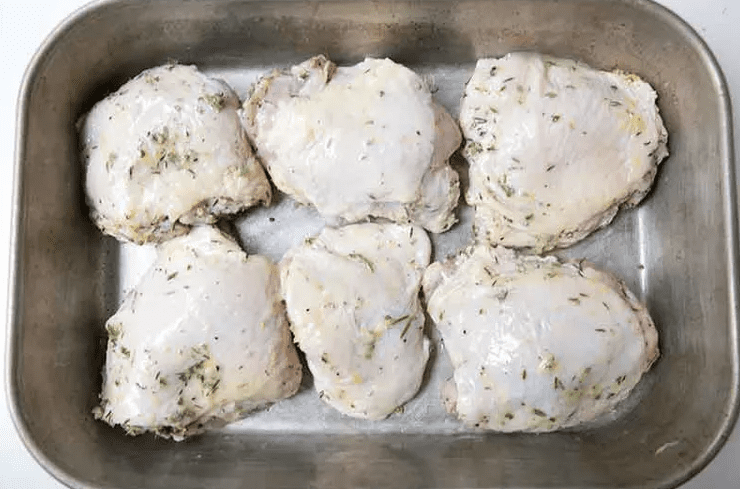
- Lift the chicken pieces out of the marinade, letting excess drip back into the bowl. Place them skin side up in a single layer in the baking dish. Do not crowd the pan. Leave a little space between each piece if you can.
- Do not pour the remaining raw marinade over the chicken yet. Set it aside in a small saucepan if you plan to boil it for later use as a sauce, or simply discard it when you are done marinating. USDA and university extension guidance advise that any marinade that has touched raw poultry should be boiled before using as a sauce, to destroy harmful bacteria.
- Brush the tops of the chicken pieces with melted butter or olive oil. This helps with browning and adds a rich flavor on top of the bright lemon.
Scatter a few lemon slices in the pan if you like. They will soften and flavor the juices.
Step 07: Roast the lemon chicken
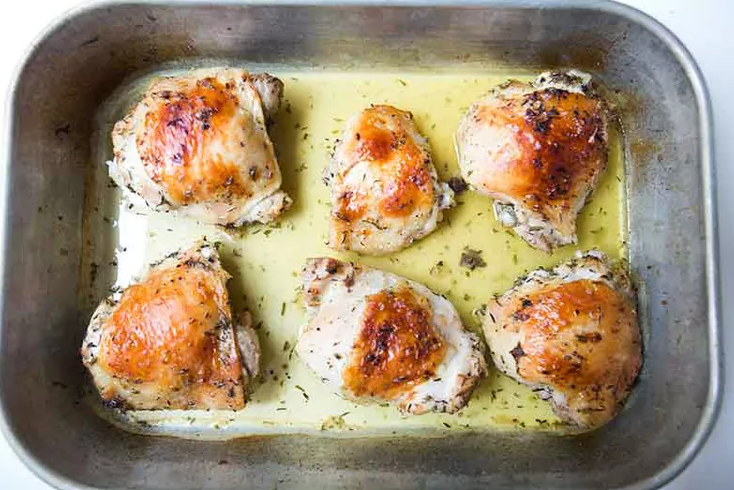
- Place the pan in the preheated oven.
- Roast for about 20 minutes without opening the oven. During this time the skin should begin to render, the edges will turn light golden, and the kitchen will start to smell like warm lemon and garlic.
- After 20 minutes, carefully rotate the pan if your oven has hot spots. If you have boiled the reserved marinade for at least one full minute in a small saucepan, you can spoon a little over the chicken at this halfway point.
- Continue roasting for another 20 to 25 minutes, checking for doneness near the end.
Step 08: Check for doneness with a thermometer and visual cues
The safest and most reliable way to know chicken is done is to use an instant read thermometer. Food safety agencies recommend cooking all poultry to an internal temperature of at least 165 degrees Fahrenheit, about 74 degrees Celsius, measured in the thickest part of the meat without touching the bone.
- Begin checking around the 35 minute mark for average sized thighs.
- Insert the thermometer into the thickest part of a thigh. When it reaches 165 degrees Fahrenheit or slightly higher, that piece is safe to eat.
- The juices should run mostly clear, the skin should look deep golden brown and crisp at the edges, and the meat should feel firm but still springy when pressed with tongs. Do not rely only on the color of the juices, since this can be misleading, but use it as a secondary cue along with the thermometer.
If some pieces are done before others, remove the finished pieces to a plate and return the rest to the oven for a few more minutes.
If using chicken breasts
Bone in, skin on breasts are thicker but leaner than thighs. For them:
- Start checking at 25 to 30 minutes.
- Pull them from the oven when they reach 160 to 165 degrees Fahrenheit and let carryover heat finish the last couple of degrees while they rest.
Boneless skinless breasts cook even faster. In a hot oven they may reach 165 degrees Fahrenheit in about 20 to 25 minutes, depending on thickness. Always rely on the thermometer rather than the clock.
Step 09: Rest the chicken
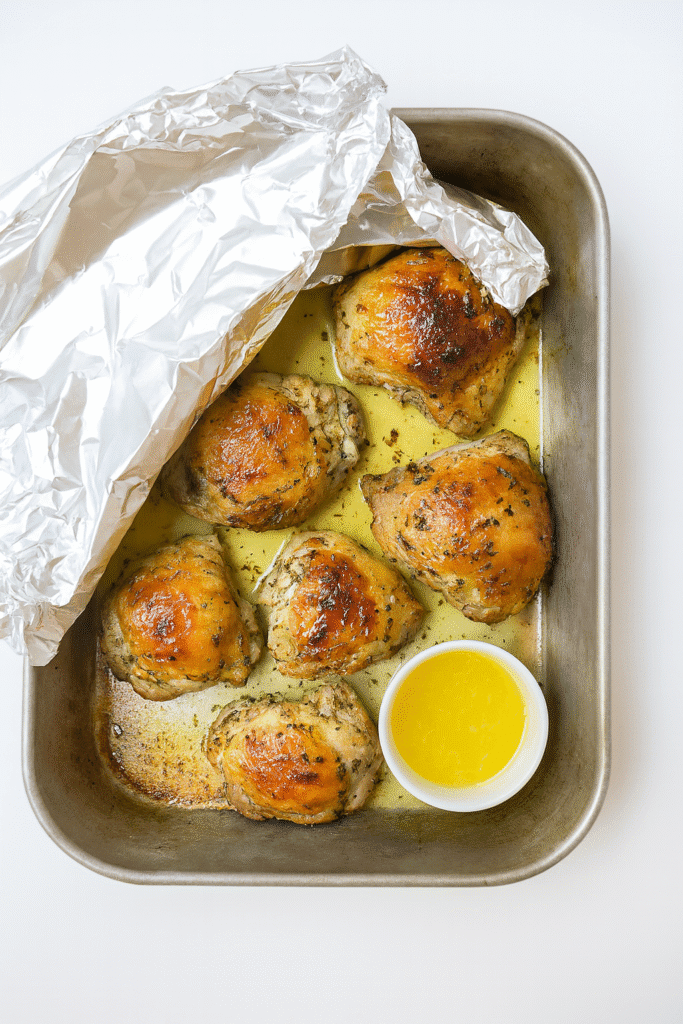
- Transfer the cooked chicken pieces to a warm platter.
- Tent them loosely with foil and let them rest for about 10 minutes.
Resting allows the hot juices inside the meat to redistribute. If you cut in immediately, those juices rush out onto the plate and the meat can taste dry. After a short rest, the meat stays noticeably juicier and more tender.
Step 10: Use the pan juices
- While the chicken rests, tilt the baking dish and spoon the pan juices into a small bowl.
- Let them stand for a minute, then skim some of the clear fat from the top if you prefer a lighter sauce. You can save the fat to cook potatoes or vegetables another day.
- Taste the juices and adjust with a squeeze of fresh lemon or a pinch of salt if needed.

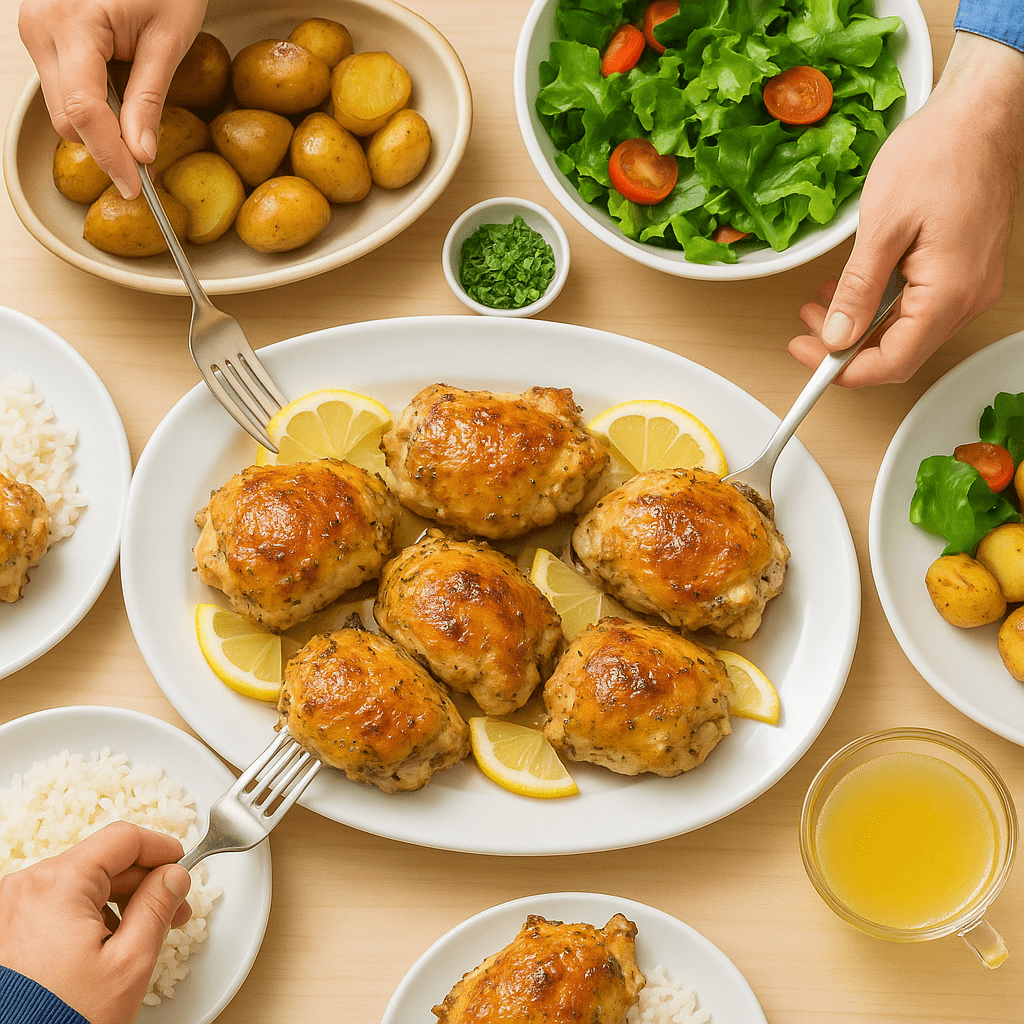
Serve the chicken with the warm pan juices spooned over the top or offered on the side. This is where a lot of the lemon garlic flavor lives, so do not throw it away.
Key Advantages of Making Lemon Chicken
- Very forgiving and juicy
Dark meat with skin stays moist, even if dinner is delayed by a few minutes, making this a low stress main dish. - Oven baked and mostly hands off
After a short prep and marinating, the oven does the work. You are free to make sides, set the table, or tidy the kitchen. - Flexible for different cuts
The same lemon herb mixture works for thighs, drumsticks, bone in breasts, boneless breasts, and boneless thighs with simple timing tweaks. - Budget friendly and pantry based
Chicken thighs and legs are often less expensive than breasts. The other ingredients are simple fridge and pantry items such as lemons, garlic, and common herbs. - Great for meal prep and leftovers
Cold lemon chicken slices are excellent on salads, in wraps, or on top of grain bowls later in the week. Leftover cooked chicken that is refrigerated at 4 degrees Celsius or below is generally safe to eat for about 3 to 4 days, according to USDA guidance. - Balanced flavor
The combination of zest, juice, herbs, and a bit of fat gives bright lemon chicken that still tastes rich and comforting, not sour.
Mistakes to Avoid
Over marinating in lemon juice
Leaving chicken in a strong lemon marinade for many hours can start to change the texture, making the outside soft or stringy. Try to keep acidic marinating under about 4 hours, and 1 to 2 hours is usually enough for good flavor.
Crowding the baking pan
If the pieces are packed tightly together, they steam in their own juices instead of roasting. The skin will stay pale and soft. Use a wide pan or two smaller ones so hot air can move around each piece.
Skipping the pat dry step
Wet skin does not brown well. Taking a minute to dry the chicken before marinating and again before baking can be the difference between flabby and crisp.
Ignoring the thermometer
Guessing by time or color alone is risky. Undercooked chicken is unsafe, and overcooked chicken is dry. A thermometer gives you confidence and aligns with food safety recommendations for poultry at 165 degrees Fahrenheit. Food Safety and Inspection Service
Reusing raw marinade without boiling
Marinade that has touched raw chicken contains bacteria. Authorities advise that you either discard it or bring it to a full boil before using it as a sauce.
Skipping the resting time
If you serve the chicken the moment it leaves the oven, the juices end up on the cutting board. Resting for ten minutes under loose foil makes a noticeable difference in moisture.
Expert Tips and Real Life Examples
- Choosing good pieces
Look for thighs and drumsticks of similar size so they cook evenly. The skin should be intact and pale, not gray. If the package has a lot of liquid, pat extra carefully so the skin can crisp. - Balancing lemon for kids versus adults
For a family with small children who prefer milder flavors, use the full amount of zest but start with one quarter cup of lemon juice and a teaspoon of honey in the marinade. For adults who love tangy flavor, keep the zest and increase the juice slightly or finish the dish with extra lemon wedges at the table instead of making the marinade much more acidic. - Make ahead option
You can zest and juice the lemons, chop the herbs, and measure the dry seasonings earlier in the day. Keep them covered in the refrigerator. Combine with olive oil and garlic and marinate the chicken about 1 to 2 hours before you plan to cook, staying within safe marinating times for acidic mixtures. - What if the skin is browning too fast
If the skin is getting dark while the internal temperature is still below 165 degrees Fahrenheit, tent the pan loosely with foil. This shields the surface from direct heat while the inside finishes cooking. - What if the skin is not browning enough
If the chicken is fully cooked but the skin looks pale, move the pan to a higher rack and use the oven broiler for 1 to 3 minutes, watching very closely. Do not walk away during this step. The skin should take on a deeper golden color and crisp edges. - Side dish ideas that really work
Roasted potatoes tossed in a little of the chicken fat and salt, buttered egg noodles with a squeeze of lemon, simple steamed green beans, or a crisp green salad with olive oil and lemon all pair beautifully with lemon chicken. - Rescuing slightly dry pieces
If a breast or thinner thigh cooked a little too long, slice it and toss the slices in the warm pan juices before serving. The juices soak in and improve the perception of moisture.
Nutrition Facts (Per Serving)
Exact nutrition will depend on the size of your chicken pieces, how much skin you eat, and how much fat you skim from the pan juices. The following is an estimate for one sixth of the recipe, using bone in, skin on roasted chicken thighs with a modest amount of added fat.
Nutrition databases for roasted chicken thigh with skin report roughly 180 to 250 calories per 100 grams, with about 20 to 25 grams of protein and 8 to 15 grams of fat, and virtually no carbohydrates.
For a typical serving of this lemon chicken, that translates approximately to:
- Calories: about 500 to 650
- Protein: about 40 to 55 grams
- Total fat: about 30 to 40 grams
- Carbohydrates: very low, usually under 5 grams, mainly from lemon juice and any honey used
If you remove the skin before eating and skim more fat from the pan juices, both calories and fat will be lower. Serving with lighter sides such as salad or steamed vegetables will also keep the overall meal moderate in calories.
These numbers are estimates based on standard ingredient databases and should be used as a general guide only, not as medical or dietary advice.
Frequently Asked Questions
Q1: Can I make this lemon chicken with boneless, skinless chicken breasts or thighs?
Yes. Use the same lemon herb marinade and oven temperature. For boneless, skinless breasts or thighs, start checking internal temperature around 18 to 20 minutes. Pull them from the oven when they reach 165 degrees Fahrenheit in the thickest part. Because there is no skin to protect the meat, avoid very long marinating times with strong lemon juice and consider brushing with a little oil before baking for moisture and browning. FoodSafety.gov
Q2: How long can cooked lemon chicken be stored in the refrigerator, and how should I reheat it?
Store leftover lemon chicken in shallow, airtight containers in the refrigerator within 2 hours of cooking. According to USDA and foodsafety.gov guidance, cooked chicken and other leftovers are best used within about 3 to 4 days when kept at or below 4 degrees Celsius. Reheat gently in the oven at about 175 degrees Celsius until the chicken reaches at least 165 degrees Fahrenheit again in the center, or use the stovetop with a splash of water or broth and a lid to keep it moist.
Q3: Can I cook this recipe in a skillet or on the grill instead of in the oven?
You can. For a skillet version, brown the marinated chicken pieces skin side down in an oven safe pan until the skin is nicely colored, then finish in a medium hot oven until the internal temperature reaches 165 degrees Fahrenheit. For grilling, use indirect heat after an initial sear over direct heat, and watch for flare ups from dripping fat. In all cases, keep the safe internal temperature target the same.
Q4: How do I make the lemon flavor milder or stronger without ruining the balance?
For a milder lemon chicken, keep the zest but reduce the lemon juice slightly and add a teaspoon of honey or sugar to round the acidity. For a stronger lemon note, use all of the zest from 2 lemons and finish the cooked chicken with extra fresh lemon wedges at the table instead of dramatically increasing the juice in the marinade, which can affect texture if used for long marinating.
Q5: Is this recipe suitable for meal prep and freezing?
Yes. Cooked lemon chicken keeps well in the refrigerator for about 3 to 4 days. For longer storage, you can freeze cooled portions in airtight containers for about 3 to 4 months for best quality, according to food safety cold storage charts. Thaw overnight in the refrigerator and reheat until hot throughout and at least 165 degrees Fahrenheit before serving.
Conclusion
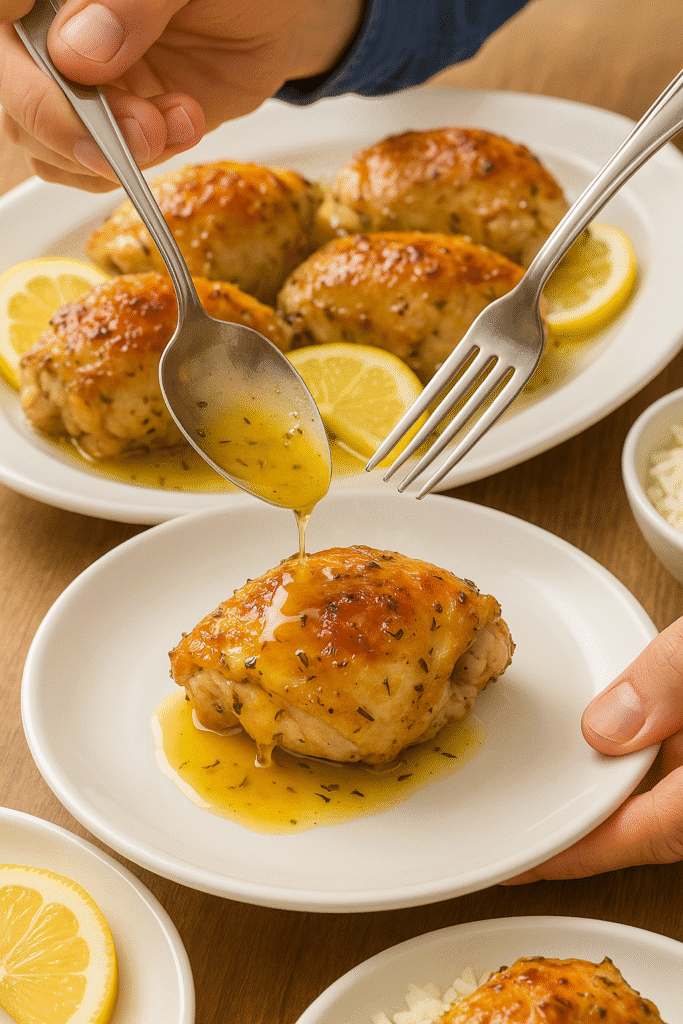
This lemon chicken recipe gives you crisp skin, juicy meat, and a pan full of bright, savory juices without guesswork. By choosing forgiving dark meat, using a balanced lemon herb marinade, watching the internal temperature, and giving the chicken a short rest, you avoid the most common problems that make home cooked chicken dry or bland.
Once you have made it once, you can easily adjust the lemon level, heat, and side dishes to suit your family. Keep a few notes on what you liked best, and you will quickly have a go to lemon chicken that feels like your own signature recipe.
Oven Baked Lemon Chicken Thighs with Juicy Meat