
This Rosemary Lemon Rhubarb Spritzer is a bright pink mock-tail that tastes like spring in a glass. You make a fragrant rhubarb and rosemary syrup, sharpen it with lemon juice, then top it with very cold soda water or carbonated water. In this guide I will walk you through exactly how to get the color, flavor, and bubbles you want, plus how to scale it up into an easy sparkling punch for a gathering.
Time and Yield
- Prep time: about 15 minutes to trim rhubarb, strip rosemary, and measure ingredients
- Cook time: about 15 minutes for the syrup to simmer and the rhubarb to break down
- Cooling and chilling time: about 1.5 hours for the syrup to reach refrigerator cold
- Total time: about 2 hours from starting the syrup to pouring cold spritzers
- Syrup yield: about 3 cups which is about 710 milliliters
- Suggested serving size per drink: about 1 quarter cup 60 milliliters syrup plus 3 quarters to 1 cup 180 to 240 milliliters soda water
What This Spritzer Is and Why It Works
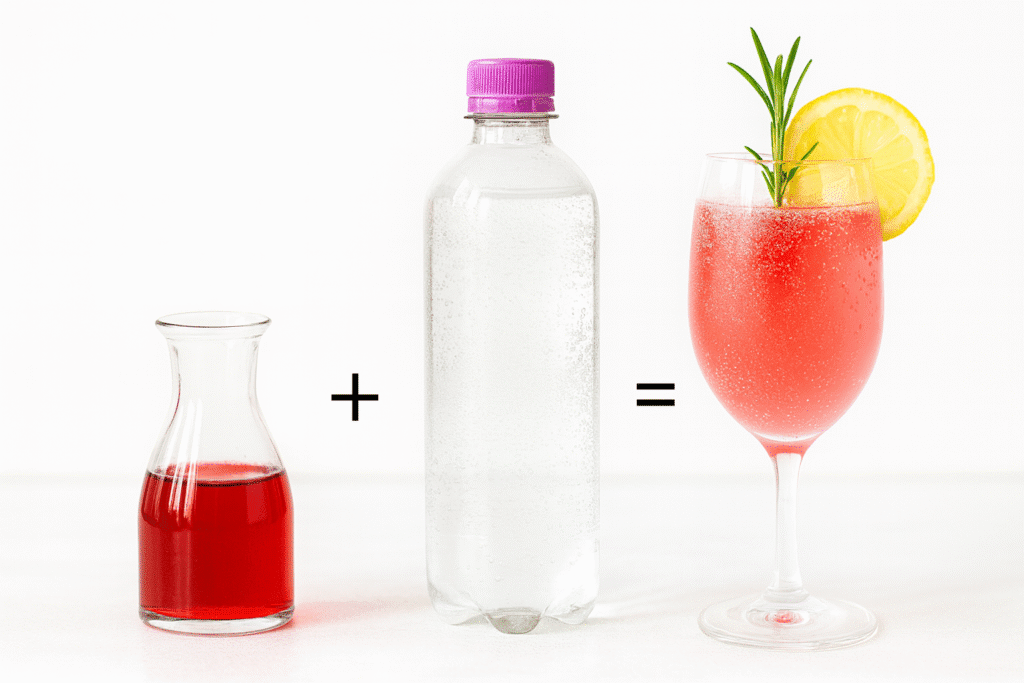
At its core, this drink is a flavored simple syrup plus bubbles. You simmer chopped rhubarb with sugar, water, and rosemary to make a pink syrup, strain it, brighten it with lemon juice, then mix that base with chilled soda water or other carbonated water. The result is a refreshing rhubarb spritzer with gentle rosemary aroma and lemony tang that works as a mock-tail or a base for a light cocktail.
Rhubarb brings tart, fruity flavor and the pretty pink color, while sugar and lemon juice balance that tartness. Rhubarb stalks are the only edible part of the plant and the leaves should be discarded because they contain higher levels of oxalic acid and other compounds that are not safe to eat.
Fresh rosemary works almost like a background perfume in this spritzer. A short steep gives a soft pine and citrus aroma that plays nicely with lemon juice. A longer steep pushes the flavor toward more resinous and woody, which some people love and others find too strong. We will build in tasting checkpoints so you can stop when it tastes right to you.
Because the base is a syrup, this recipe is very friendly for spring brunches, baby or bridal showers, birthdays, and any punch for a gathering. You can make the syrup a day or two ahead, keep it cold, then combine it with sparkling water right before guests arrive so the bubbles stay lively.
Ingredients
For the Rhubarb Rosemary Lemon Syrup
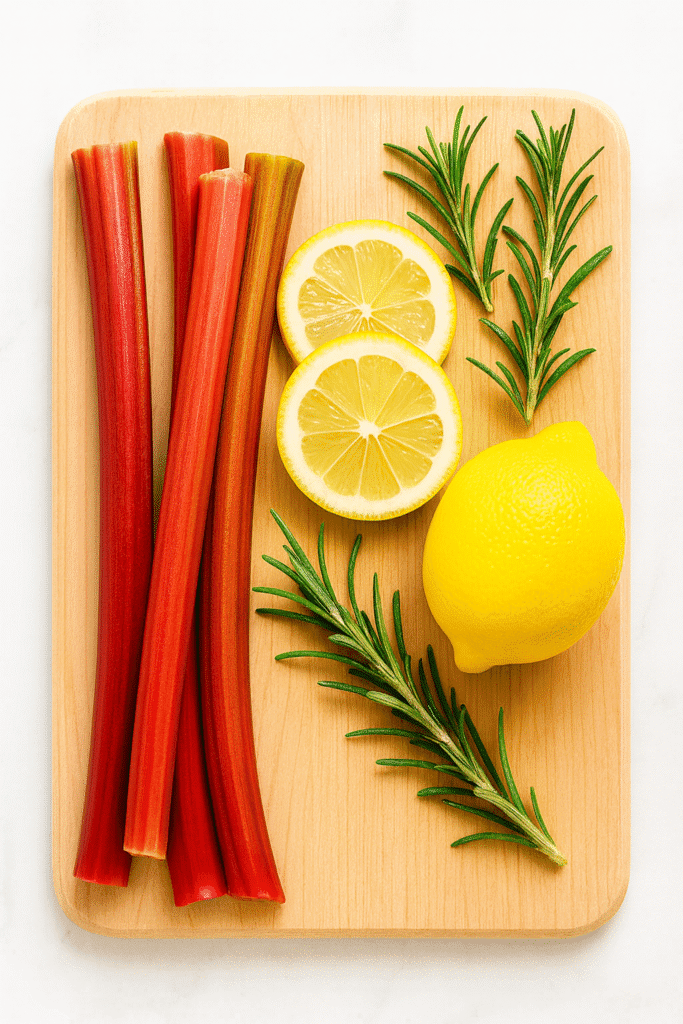
- Fresh rhubarb stalks 1 pound about 450 grams
- Choose firm, crisp stalks with good color. Red stalks usually give a deeper pink color but both green and red stalks work and taste similar once sweetened. Always discard the leaves.
- Water 2 cups about 480 milliliters
- Granulated sugar 1 and one half cups about 300 grams
- This creates a standard simple syrup strength which dissolves easily and gives enough sweetness to balance tart rhubarb.
- Fresh rosemary leaves 3 tablespoons loosely packed about 5 to 6 grams, plus extra sprigs for garnish
- Strip leaves from the woody stems and chop them so they infuse evenly.
- Freshly squeezed lemon juice one half cup about 120 milliliters
- Fresh lemon juice has brighter flavor and more aroma than bottled juice and provides acidity that keeps the spritzer from tasting flat.
For Serving
- Soda water or plain carbonated water, very cold
- Plan on 6 to 8 cups about 1.4 to 1.9 liters for a full batch of syrup, depending on how strong you pour.
- Ice cubes
Optional Garnishes
- Thin lemon slices or small wedges
- Short rosemary sprigs
- Rhubarb ribbons made by shaving a stalk with a vegetable peeler and curling them in cold water
These garnishes are visual and aromatic rather than essential, so you can skip them if you are in a rush.
Required Tools For Making The Recipe
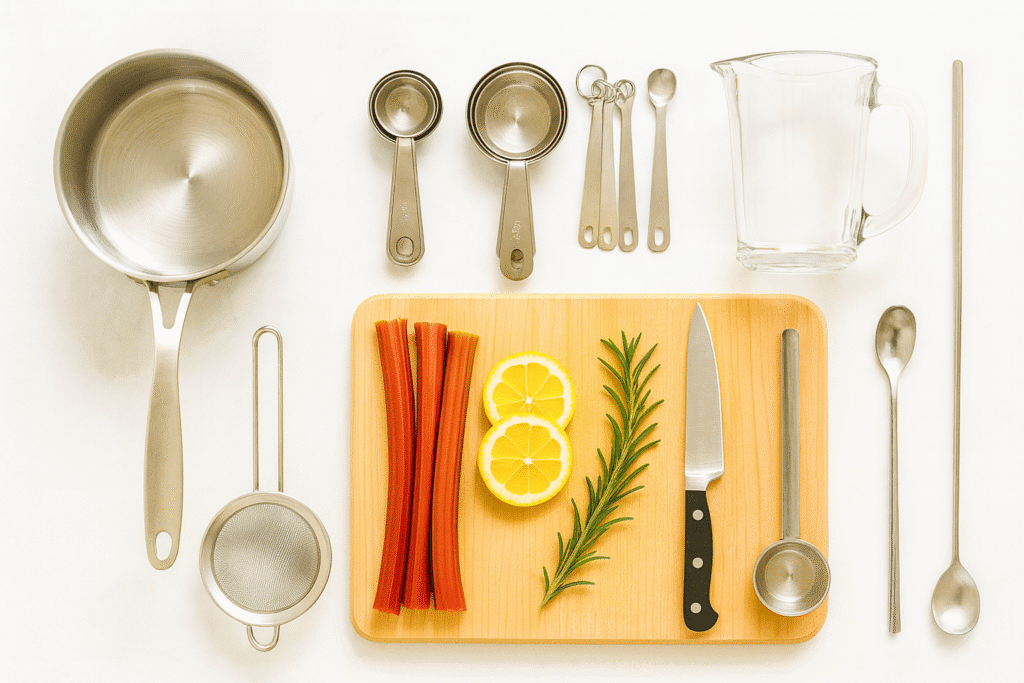
- Medium saucepan, about 2 to 3 quart size
- Cutting board and chef knife
- Measuring cups and spoons plus a kitchen scale if you like more precise weights
- Heat safe spoon for stirring
- Fine mesh strainer or strainer lined with cheesecloth for a clearer syrup
- Heatproof jug or large measuring cup for catching the strained syrup
- Pitcher for serving punch style
- Long spoon for stirring the pitcher
- Drinking glasses for serving by the glass
Method: Step by Step Preparation Guide
Step One: Prep the rhubarb and rosemary
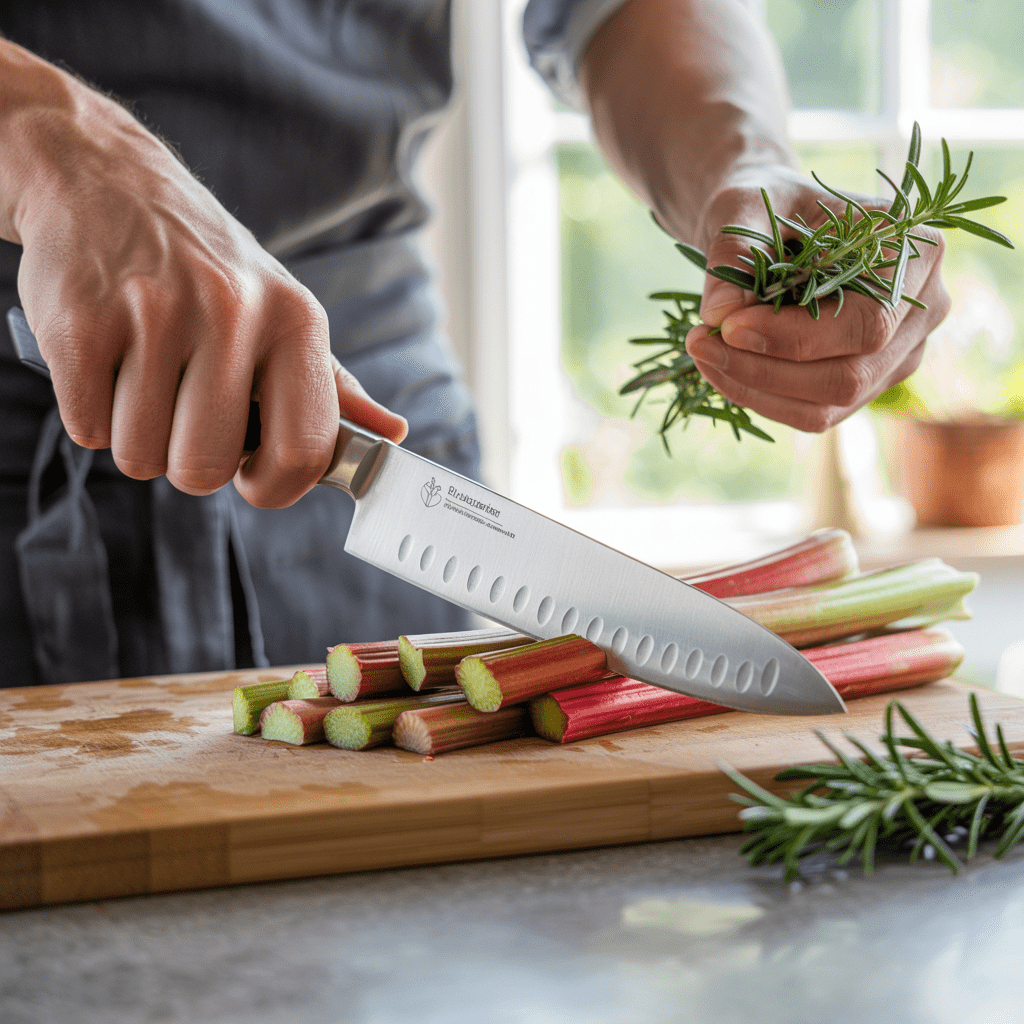
- Rinse the rhubarb stalks under cool running water to remove any grit. Pat them dry. Trim away any leaves completely and discard them. Slice the stalks crosswise into pieces about half an inch or about one and a quarter centimeters thick so they soften quickly and release their color.
- Strip rosemary leaves from the woody stems. Measure out about three tablespoons of leaves, then roughly chop them.
Step Two: Cook the rhubarb rosemary syrup
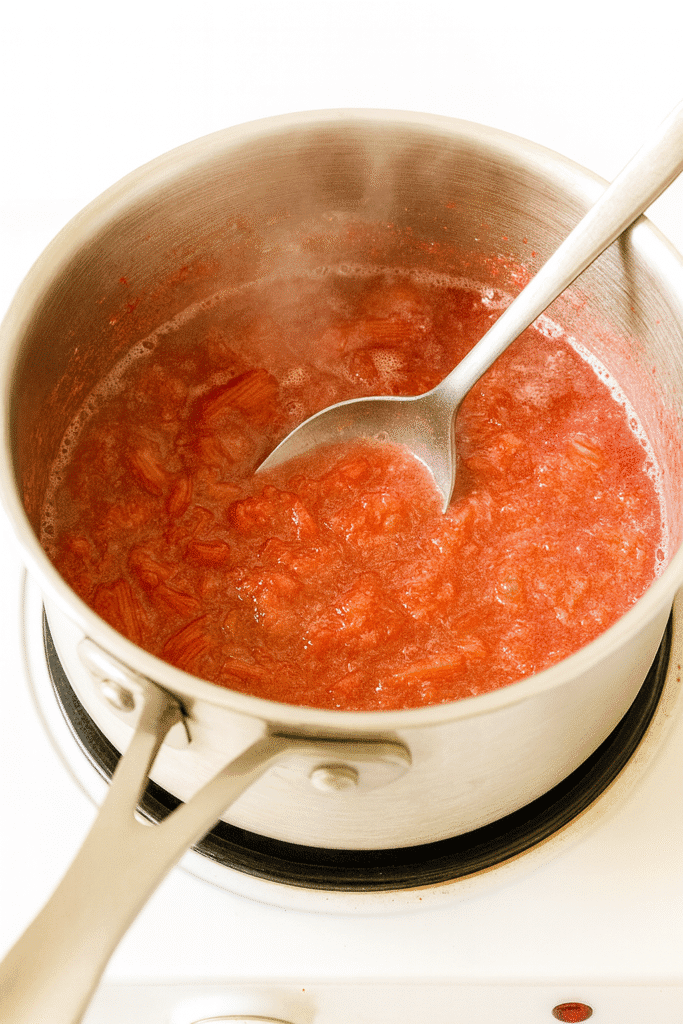
- Add the sliced rhubarb, water, sugar, and chopped rosemary to the saucepan.
- Place the pan over medium heat and stir occasionally until the sugar dissolves and the mixture just reaches a gentle boil. You should see steam and steady bubbles around the edges.
- Reduce the heat to maintain a steady but gentle simmer. Cook for about ten to fifteen minutes, stirring now and then, until the rhubarb pieces have collapsed into soft strands and the liquid looks cloudy and deep pink. A spoonful of liquid on a white plate should look rosy, not pale.
Step Three: Control the rosemary strength
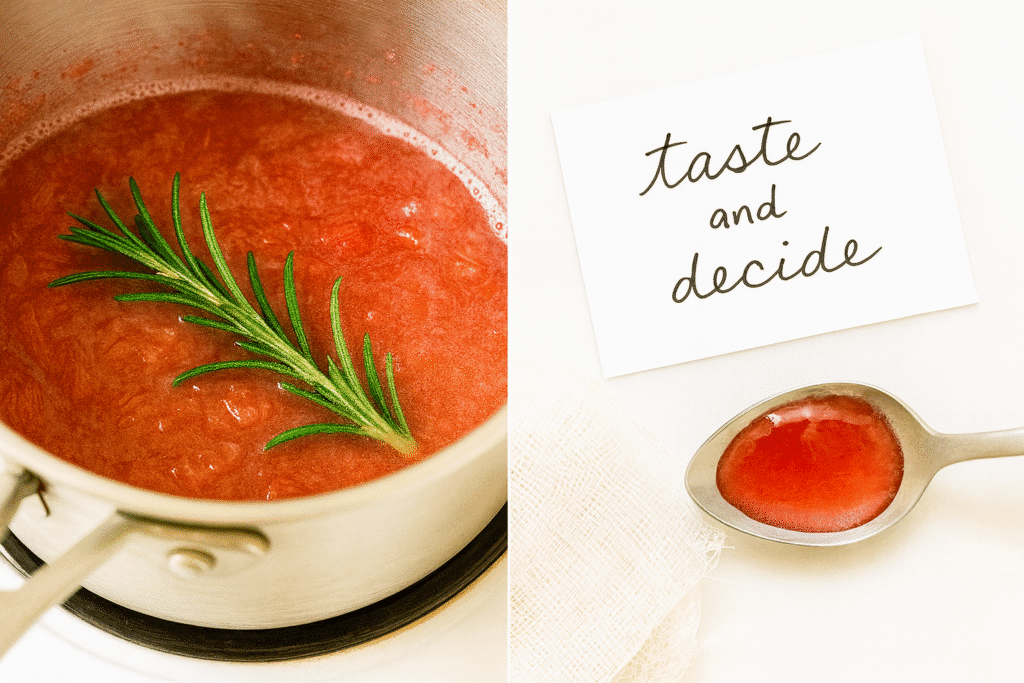
- Start tasting the liquid carefully once the rhubarb has softened. Use a clean spoon to taste a small amount of the hot liquid and blow on it first so you do not burn your mouth. If the rosemary flavor is already where you want it, you can turn off the heat. If you want a stronger herbal note, turn off the heat and let the mixture sit for another ten to twenty minutes so the rosemary continues to infuse as it cools slightly. Stir once or twice during this resting time and taste again before you decide to steep longer.
Step Four: Strain for a smooth syrup

- Set your fine mesh strainer over a heatproof jug or large measuring cup. Carefully pour the hot mixture through the strainer.
- Use the back of a spoon to press gently on the soft rhubarb to extract more liquid and color, but stop if you see the pulp beginning to push through the mesh. Pressing too hard can make the syrup cloudy and thicker than you might want, while a gentle press keeps it silky.
- Discard the solids or save them to stir into yogurt or oatmeal, keeping in mind that they are sweetened.
Step Five: Add lemon juice and chill the syrup
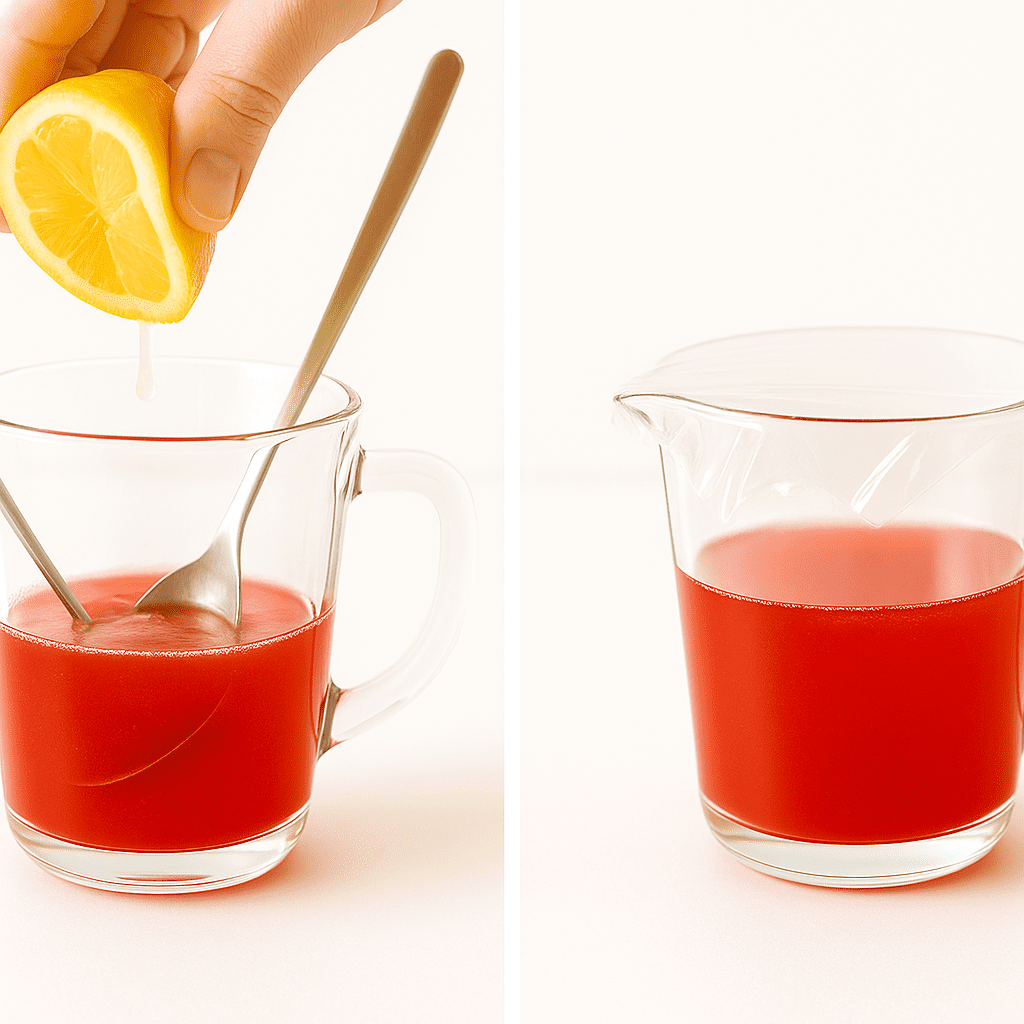
- While the syrup is still warm but not boiling hot, stir in the freshly squeezed lemon juice. Taste a spoonful and note the balance of sweet and tart. If you like a sharper drink you can add up to two extra tablespoons of lemon juice, stirring and tasting between additions.
- Let the syrup sit at room temperature until it is no longer hot, usually about thirty to forty minutes in a normal kitchen. Then cover the container and refrigerate until thoroughly chilled, at least one hour. For best bubbles in the final drink, you want the syrup to be refrigerator cold before you mix it with soda water.
Step Six: How to serve by the glass
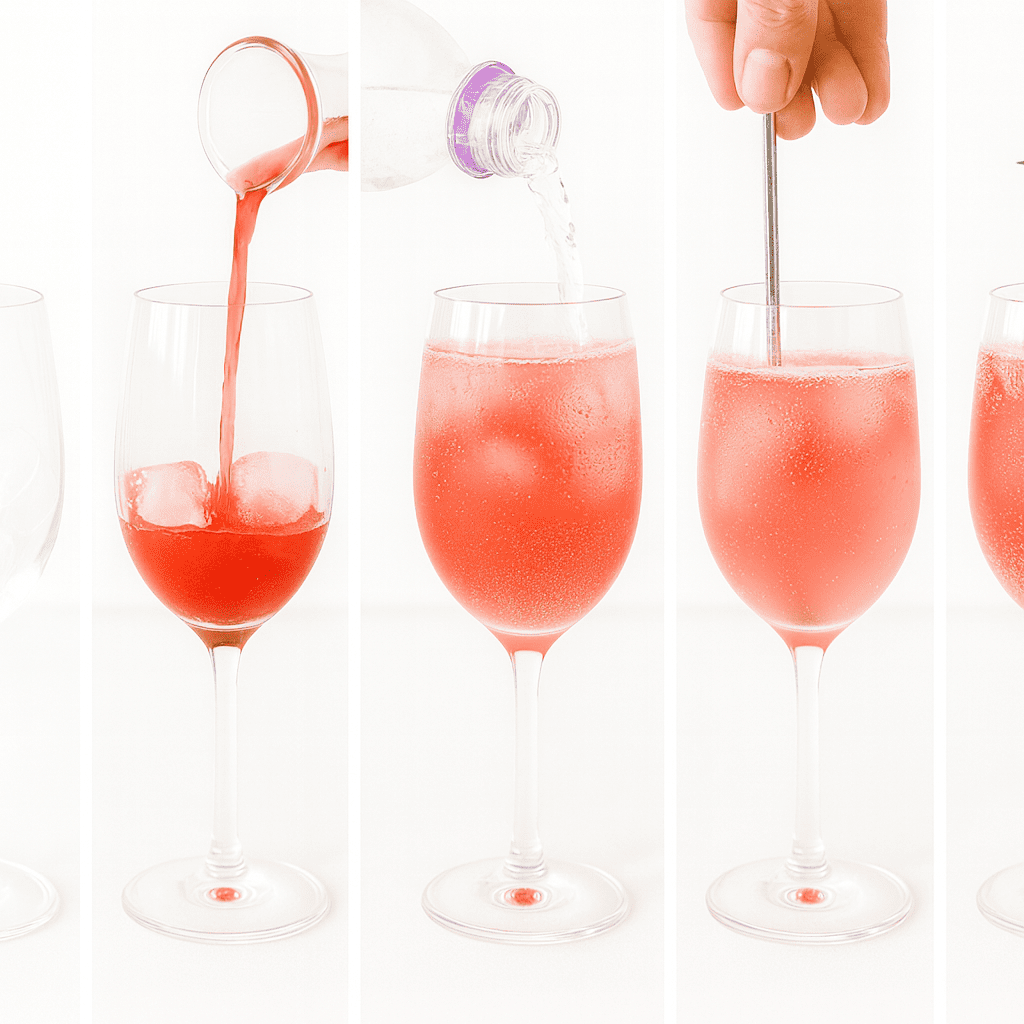
- Fill a tall glass halfway with ice.
- Pour in about one quarter cup or sixty milliliters of cold rhubarb rosemary lemon syrup.
- Top with three quarters to one cup about one hundred eighty to two hundred forty milliliters of very cold soda water or other carbonated water. The more soda water you use, the paler and less sweet the drink will taste.
- Stir gently once or twice to combine without knocking all the bubbles out. Taste and adjust by adding a splash more syrup for sweetness or a squeeze of lemon for brightness.
- Garnish with a thin lemon slice and a short rosemary sprig if you like.
Step Seven: How to make it as a pitcher punch
For a simple pitcher of sparkling punch for a gathering, start with this ratio and adjust to taste.
- 2 cups about 480 milliliters cold rhubarb rosemary lemon syrup
- 6 cups about 1.4 liters very cold soda water or carbonated water
- Add ice to the pitcher only if you plan to serve it immediately. Otherwise, chill the syrup and soda water separately and keep the pitcher in the refrigerator, adding ice to individual glasses instead so the punch does not dilute too fast.
- Combine the syrup and soda water in the pitcher and stir gently until blended. Taste a small sample with a clean spoon or small glass. If you want a stronger spritzer for this group, add up to one half cup more syrup. If you would like a lighter sparkling punch, add up to one cup more soda water.
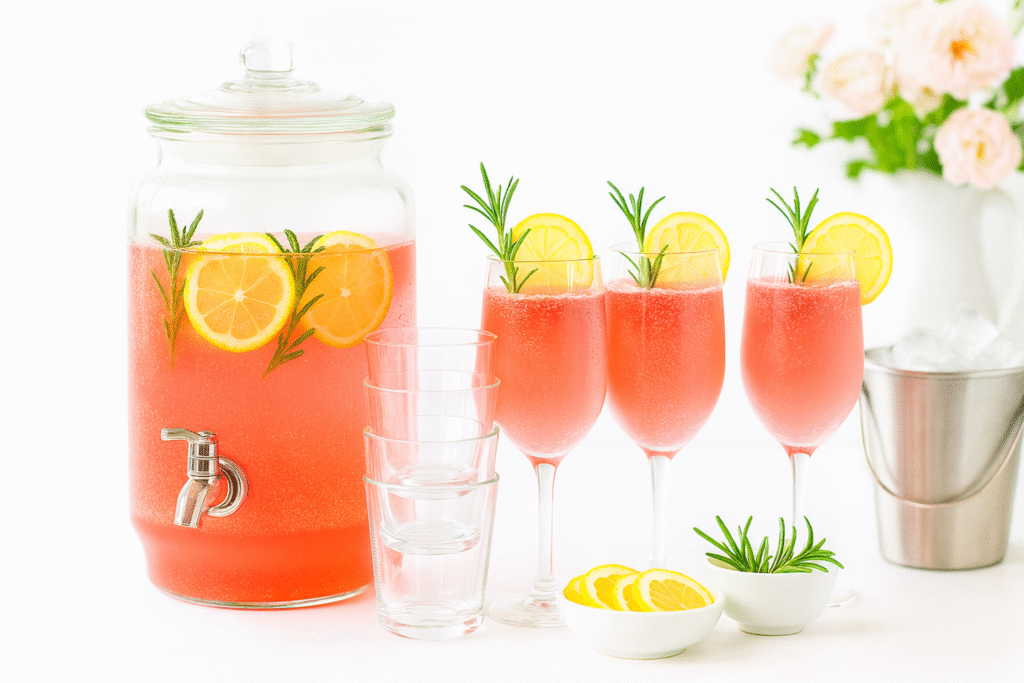
- Float lemon slices and rosemary sprigs in the pitcher for garnish.
Step Eight: Ice and dilution guidance
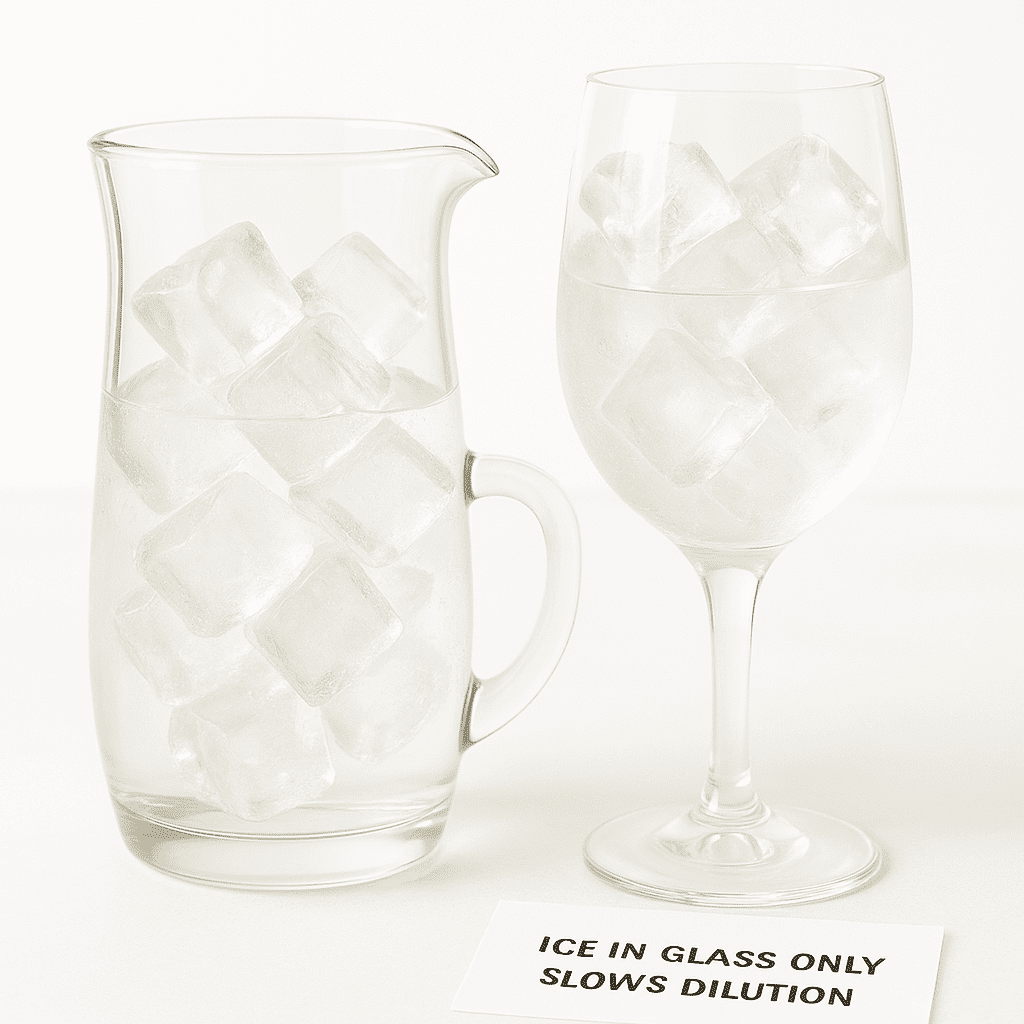
Ice keeps the drink refreshing but also slowly waters it down. In testing, a tall glass filled halfway with ice and topped with cold spritzer will taste slightly sweeter at first and more balanced after a few minutes as the ice melts. If your guests sip slowly, you may want to use slightly less soda water so the drink still tastes flavorful as it dilutes.
Variations
Each variation below assumes you start with the base syrup recipe above unless a change is listed.
- Soft rosemary version
- Use the same ingredients but shorten the rosemary contact time. Add the chopped rosemary in the last five minutes of simmering, then strain the syrup as soon as the rhubarb is soft, without extra steeping. The rosemary will read as a light background note instead of a main flavor.
- Mixed herb garden spritzer
- Replace half of the rosemary with fresh mint or basil. For example use one and one half tablespoons rosemary leaves and one and one half tablespoons mint leaves. Proceed with the recipe as written. This keeps the character of rosemary while adding a softer herbal top note.
- Honey sweetened rhubarb spritzer
- Instead of granulated sugar use one and one quarter cups 300 milliliters honey and one and one quarter cups about 300 milliliters water. Warm the water and honey together until dissolved, then add rhubarb and rosemary and simmer as directed. Honey adds floral notes and a slightly richer mouthfeel.
- Ginger rhubarb spritzer
- Add a one inch about two and a half centimeter piece of fresh ginger, sliced, to the pan along with the rhubarb and sugar. Strain it out with the rhubarb solids. This gives a gentle heat that works well for cooler spring days.
- Citrus twist version
- Replace one quarter cup about sixty milliliters of the lemon juice with orange juice or grapefruit juice. This softens the sharpness of lemon while still keeping the drink bright and refreshing. Taste and adjust, adding a little extra lemon if it becomes too sweet.
- Optional adult version
- For a light cocktail, pour about two tablespoons thirty milliliters of vodka, gin, or dry sparkling wine into the glass before adding the rhubarb syrup and soda water. Stir gently. Keep the proportions modest so the drink still feels like a refreshing spritzer, not a heavy cocktail.
- No rosemary, pure rhubarb lemon spritzer
- If someone at your spring brunch is unsure about herbs, omit the rosemary completely. Proceed with rhubarb, sugar, water, and lemon juice. The result is a simple rhubarb lemon spritzer that is still bright pink and tart.
Benefits and Use Cases
- Flexible for beginners. The syrup is forgiving. You can adjust sweetness, tartness, and rosemary strength during cooking and even in the glass.
- Spring brunch friendly. The colors and flavors fit spring brunch, Easter, and baby or bridal showers, and it looks good in a clear pitcher or drink dispenser.
- Punch for a gathering. One batch of syrup comfortably serves ten to twelve people as a sparkling punch, and the batches scale easily.
- Make ahead friendly. You can cook and chill the syrup one or two days before your event so you are only opening bottles of soda water and adding garnish on the day.
- Works as a mocktail or cocktail base. Start with a non alcoholic spritzer and let guests add a splash of spirit to their glass if appropriate for your group.
- Uses seasonal produce. Rhubarb is a cool season crop, so this is a way to enjoy its flavor in drinks when stalks show up at markets in spring.
Mistakes to Avoid
- Using rhubarb leaves by accident
- Only the stalks are edible. Leaves contain higher levels of oxalic acid and should not be eaten. Always trim and discard leaves before slicing the stalks.
- Over steeping rosemary until it tastes medicinal
- Leaving rosemary in very hot syrup for a long time can push the flavor toward bitter and resinous instead of fresh and herbal. Taste the syrup after the first ten to fifteen minutes and stop steeping once it tastes pleasantly aromatic to you.
- Adding lemon juice before the rhubarb has softened
- Adding a lot of acid early can slightly slow softening, and you also risk losing some brightness during the longer simmer. Cook rhubarb with sugar and water first, then add lemon after the heat is off.
- Pouring warm syrup into cold soda water
- Warm syrup will knock the bubbles out of soda water quickly and can make the spritzer taste flat. Always chill the syrup until refrigerator cold before mixing with carbonated water.
- Letting syrup sit too long in the refrigerator
- Fruit and herb syrups are not shelf stable. Many beverage and herb syrup references suggest that simple syrups with plant infusions are best used within about one to two weeks under refrigeration and discarded earlier if you see any mold, cloudiness, or off smells.
Expert Tips and Real Life Examples
- In my kitchen tests, the biggest swing in flavor came from the rosemary steep time. At about ten minutes steeping off heat, the spritzer tasted softly herbal. At around thirty minutes, the rosemary became more assertive and slightly piney, which works well if you like bold herbs but can overpower the rhubarb for some palates. Start with less time, taste, then decide if you want more.
- When I tested serving this as a brunch punch, I noticed that the first glasses poured from a pitcher full of ice were perfectly balanced, but later glasses were lighter because of melting ice. Now I chill the syrup and soda water well, keep the pitcher in the refrigerator, and only add ice to individual glasses.
Sample hosting timeline for a spring brunch
- One to two days before
- Shop for rhubarb, lemons, and rosemary. Trim and chop rhubarb if you like, then refrigerate stalk pieces wrapped loosely in a towel.
- Make the rhubarb rosemary syrup, chill completely, and store it in a clean jar in the refrigerator. Label it with the date.
- Morning of the brunch
- Taste the cold syrup. If it seems too sweet, stir in an extra tablespoon or two of lemon juice. If it tastes too tart for your group, you can stir in a few tablespoons of sugar and gently warm the mixture until dissolved, then chill again.
- Chill bottles of soda water or carbonated water.
- Just before guests arrive
- Garnish the pitcher with lemon slices and rosemary sprigs.
- Stir together the syrup and soda water in the pitcher using the ratio above.
- Set out a tray with glasses, ice, and extra lemon wedges so guests can customize.
Nutrition Facts
These numbers are estimates and will vary with your exact syrup yield, how much syrup you pour into each glass, and whether you add alcohol or use sweeter flavored sparkling water.
For the full batch of syrup made with 1 pound about 450 grams rhubarb, 1 and one half cups about 300 grams sugar, and one half cup about 120 milliliters lemon juice, the total energy comes mostly from the sugar. Three hundred grams sugar contribute roughly 1160 calories based on USDA figures for granulated sugar. Rhubarb and lemon juice add only small amounts of energy, roughly one hundred calories combined for the whole batch.
If you divide the syrup into twelve servings of about one quarter cup each and top each with soda water, each non alcoholic spritzer will have roughly 100 to 110 calories, almost entirely from added sugar. Sodium and fat are negligible. There will be small amounts of vitamin C from the lemon juice and vitamin K from the rhubarb, but this drink is best treated as a sweet treat rather than a major source of nutrients.
Because home measurements, simmer time, and straining can all change how much sugar remains in the finished syrup, treat these numbers as a helpful ballpark, not an exact label.
FAQs
Q1: How long can I keep the rhubarb rosemary syrup in the refrigerator
For best quality and a cautious safety margin, plan to use this fruit and herb syrup within about one to two weeks when stored in a clean, tightly closed container in the refrigerator. Always check for any signs of mold, off smells, or gas bubbles, and discard the syrup immediately if you notice anything unusual, even if it has been stored for a shorter time.
Q2: Can I freeze the syrup
You can freeze this syrup for longer storage by pouring it into ice cube trays, freezing until solid, then storing the cubes in a freezer safe container. Thaw as many cubes as you need in the refrigerator and dilute with soda water as usual. Freezing will not make the syrup sterile but it slows quality loss and can extend practical storage.
Q3: Can I use frozen rhubarb instead of fresh
Yes. Use the same weight of frozen rhubarb as fresh. There is no need to thaw completely before cooking. Add the frozen pieces straight to the pan with water, sugar, and rosemary, and simmer until they have broken down and the liquid is pink. You may need a few extra minutes of simmering because the mixture starts colder.
Q4: How do I adjust sweetness or tartness
If your finished spritzer tastes too sweet, first add a little more soda water, then consider stirring an extra tablespoon or two of lemon juice into the cold syrup. If it tastes too tart, you can stir a few tablespoons of sugar into the syrup, gently warm it until dissolved, and chill again before serving. Adjusting at the syrup stage lets you correct the whole batch.
Q5: How can I make this less vegetal if my rhubarb tastes too green
If the syrup tastes slightly green or vegetal, try adding a teaspoon or two of extra lemon juice and a pinch of salt, which can soften bitter edges. You can also mix in a small amount of vanilla extract after the syrup has cooled, which rounds out the flavor. These adjustments change the flavor balance without needing more sugar.
Q6: How do I scale this for a larger party
For a crowd, you can double the syrup recipe to make about six cups of syrup. That will comfortably serve roughly twenty to twenty four people using about one quarter cup syrup plus soda water per drink. Keep the same one part syrup to three parts soda water ratio and mix in pitchers as needed instead of all at once so the bubbles stay lively.
Q7: What are some garnish ideas that make this feel special for a spring brunch
Try twisting long rhubarb ribbons into curls, floating thin lemon wheels in the pitcher, and tucking a small rosemary sprig into each glass. Edible flowers that are safe to eat, such as un-sprayed pansies or violas, can be floated on top for a spring brunch, but only if you are sure they are edible and pesticide free.
Conclusion
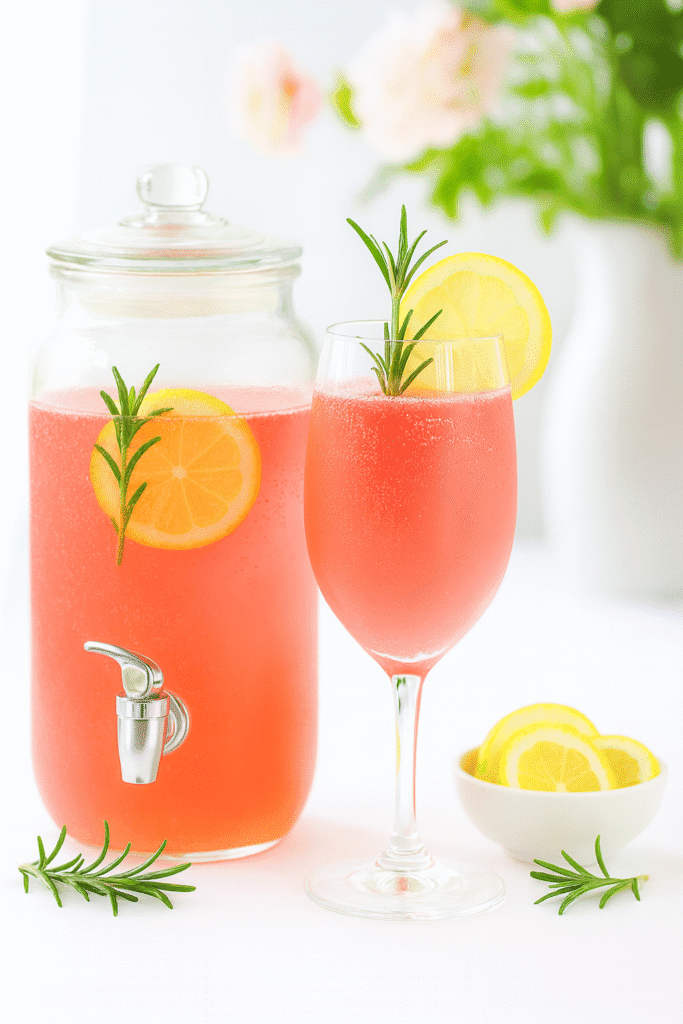
This Rosemary Lemon Rhubarb Spritzer is a flexible template more than a single fixed drink. Once you understand how the rhubarb rosemary syrup works, you can nudge the rosemary up or down, change the citrus, and play with your favorite sparkling water without losing the spirit of the recipe. My suggestion is to make a small test batch first, take notes on your ideal syrup strength and spritzer ratio, then confidently scale it up as a sparkling punch for your next spring brunch or gathering.
Rosemary Lemon Rhubarb Spritzer for Easy Spring Brunch Punch