
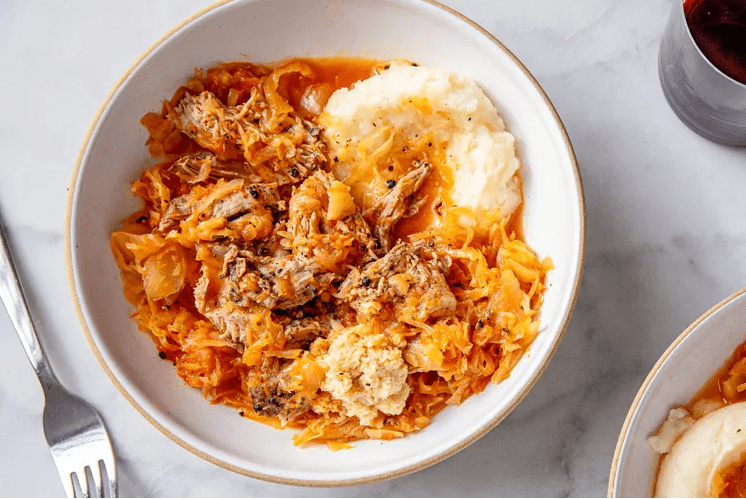
Braised pork roast and sauerkraut is the kind of meal that makes the whole house smell warm and comforting long before you sit down to eat. Tender pork shoulder melts into tangy sauerkraut, the cabbage softens and sweetens, and the juices pool together in the pan just waiting for a scoop of mashed potatoes. It is humble food, but it feels like a celebration.
For many Midwestern and Central or Eastern European families, pork and sauerkraut for New Year’s Day is a good luck tradition as well as a delicious dinner. Long strands of cabbage are said to hint at longevity, and the richness of pork stands in for prosperity. Whether you believe in the symbolism or you simply want a reliable make ahead pork and sauerkraut recipe, this guide will walk you through every step with beginner friendly detail.
By the end, you will know how to choose the right cut of pork shoulder roast, which sauerkraut to buy, how to braise without stress, and how to serve the dish with sides like mashed potatoes or egg noodles so the whole meal feels complete.
Time and Serving
- Prep time: about 20 to 30 minutes
- Cook time: about 2 and one half to 3 and one half hours for a two to three pound bone in pork shoulder at 350 degrees Fahrenheit, depending on shape and thickness
- Rest and shredding time: about 15 minutes
- Total time: about 3 to 4 hours, mostly unattended oven time
- Servings: 4 to 6 generous portions, perfect for a small New Year’s Day gathering or a family Sunday dinner
Insight of the Braised Pork Roast and Sauerkraut
At its heart, braised pork roast and sauerkraut is a simple one pot dish. You season a well marbled piece of pork shoulder, nestle it into a bed of sauerkraut and a few vegetables, cover the pot, and let gentle heat and time do the work. The pork slowly relaxes in the moist environment, the collagen turns silky, and the sauerkraut’s sharp acidity softens into a mellow tang.
What braising means here
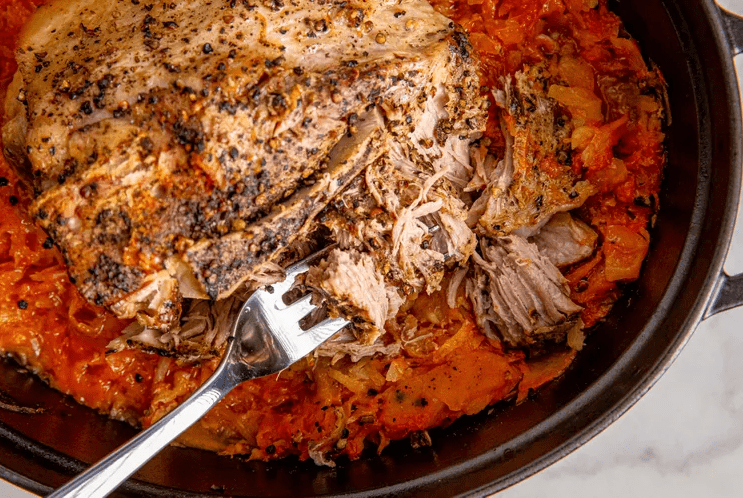
Braising is a slow cooking method where food cooks in a small amount of liquid in a covered pot. It is ideal for slightly tougher cuts such as pork shoulder, which contain enough connective tissue and fat to become tender and juicy when cooked for a long time at moderate heat. Many professional cooks recommend bone in pork shoulder or shoulder butt for braising because the bone and marbling add flavor and keep the meat moist. Pork.org
In this recipe, the sauerkraut and its brine, along with tomato juice and a touch of sweetness from grated carrot and apple, form both the flavor base and most of the braising liquid. The pork sits right on top and slowly sinks into this flavorful bed as it cooks.
Why sauerkraut works so well
Sauerkraut is fermented cabbage, so it brings both acidity and savory depth. The acidity helps balance the richness of pork and can gently tenderize the surface of the meat during the long cook. A little tomato juice, shredded carrot, apple, and a small amount of brown sugar round out the flavor, adding natural sweetness and color so the dish tastes layered rather than sharply sour.
Why this dish matters to a home cook
For a beginner, this meal checks many boxes:
- It is a true one pot main course that is easy to make ahead.
- The ingredients are budget friendly, especially pork shoulder, which is usually less costly than leaner cuts.
- It is forgiving. Overcook it slightly and the pork is still tender. In fact, this style of braise often tastes even better on the second day.
- It carries a sense of tradition. Serving sauerkraut for New Year’s Day good luck connects you to long standing customs in Midwestern and Central or Eastern European communities.
Ingredients
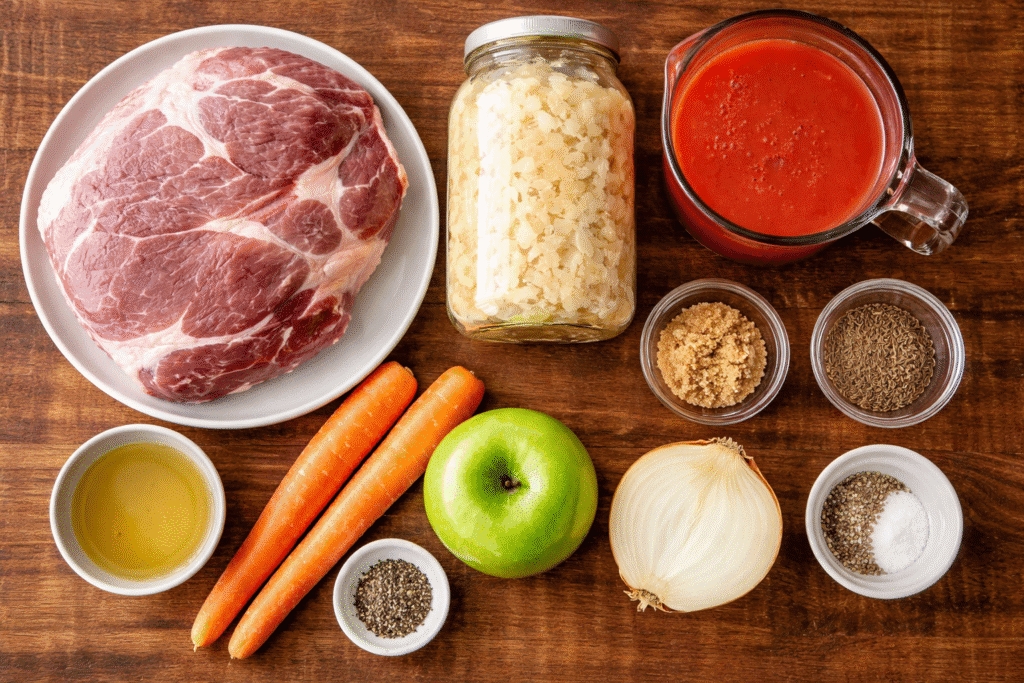
The amounts below are written for about four to six servings.
Pork and braising base
- One bone in pork shoulder roast, about two to three pounds, untrimmed or lightly trimmed
- One quarter teaspoon freshly ground black pepper
- One small pinch salt, optional and used very lightly, because the sauerkraut and tomato juice already contain salt
- One tablespoon neutral cooking oil, for optional browning
Sauerkraut mixture and flavor boosters
- One jar or bag sauerkraut, about four to five cups, with its brine, not rinsed and not drained
- One and one half cups tomato juice
- Two medium carrots, peeled and coarsely grated
- One tart apple such as Granny Smith, peeled, cored, and chopped
- Two tablespoons packed brown sugar
- One half teaspoon caraway seeds, optional but traditional with sauerkraut
- One small onion, thinly sliced, optional
- One half to one cup low sodium chicken broth or water, as needed, if the sauerkraut seems dry
Leaving the sauerkraut mostly un-rinsed gives you a savory, tangy braising liquid and removes the need for additional salt in most cases. If the sauerkraut you have is extremely sharp or salty, you can briefly taste it and very lightly rinse only part of it, then mix it back with some un-rinsed kraut to keep good flavor.
For serving
Pick two or three of the following sides for a classic plate:
- Mashed potatoes with plenty of butter and enough milk or cream to make them spoon friendly
- Egg noodles tossed with a little butter
- Boiled baby red potatoes
- Prepared horseradish, for those who like some heat
- A simple green vegetable such as steamed green beans or roasted Brussels sprouts
Mashed potatoes with pork and sauerkraut are the traditional favorite because they soak up every drop of the savory juices.
Required Tools for Making the Recipe
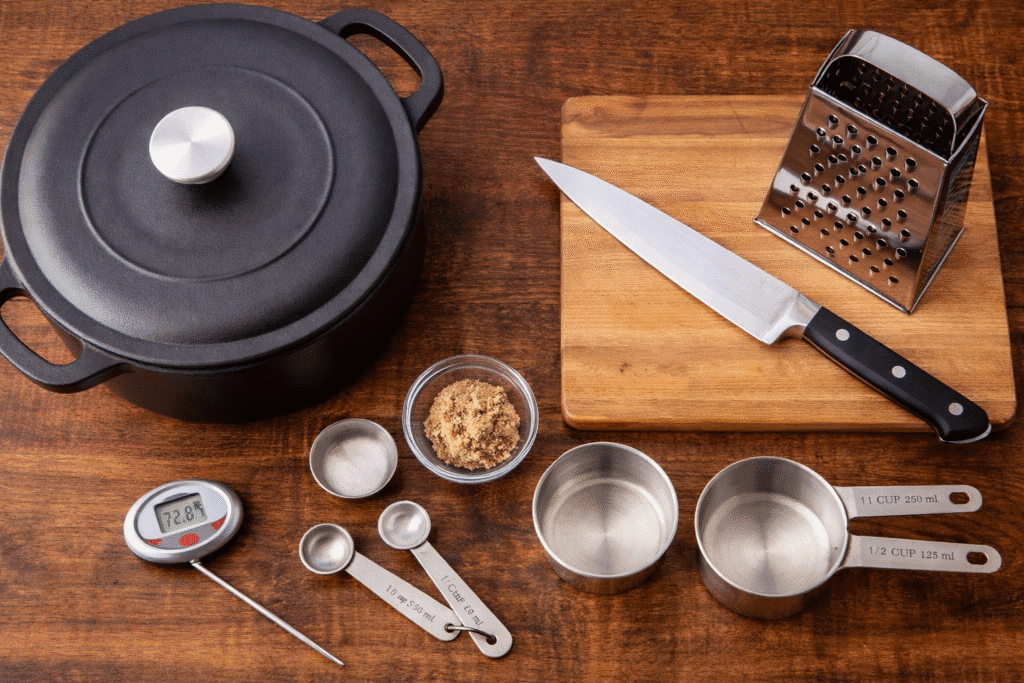
You do not need specialty gear for this recipe, but a few pieces make a big difference.
- Heavy Dutch oven or lidded roasting pan that holds about five to six quarts. The thick walls and tight lid help maintain steady heat and moisture during the long braise.
- Sharp chef’s knife and sturdy cutting board
- Box grater or coarse grater for carrot
- Measuring cups and spoons
- Long handled spoon or spatula for stirring the sauerkraut mixture
- Meat thermometer to check the internal temperature of the pork for both safety and tenderness. The United States Department of Agriculture recommends a minimum internal temperature of about 145 degrees Fahrenheit for whole cuts of pork, followed by a short rest. Food Safety and Inspection Service
- Large fork or tongs for shredding the cooked pork
- Ladle or large spoon for serving the sauerkraut and juices
Method: Detail Step by Step Preparation Guide
This method is written for a nervous beginner who wants a calm, predictable process.
Step 1. Bring the pork out and preheat the oven
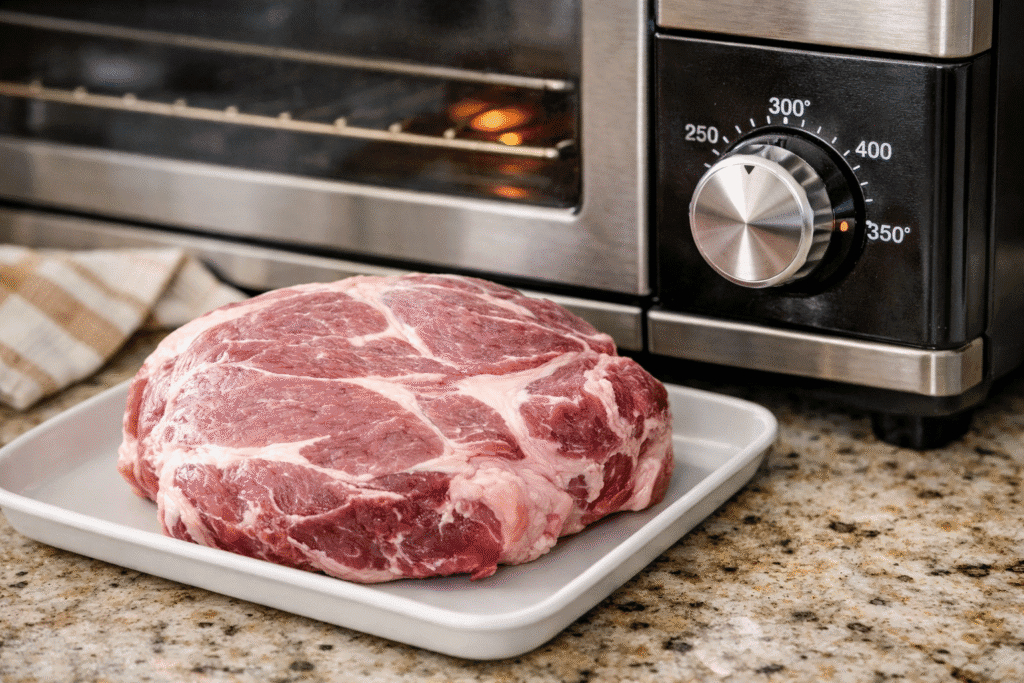
- Take the pork shoulder roast out of the refrigerator about 30 minutes before you plan to cook so the chill comes off slightly.
- Adjust your oven rack to the lower middle position.
- Preheat the oven to 350 degrees Fahrenheit.
Step 2. Assemble the sauerkraut mixture
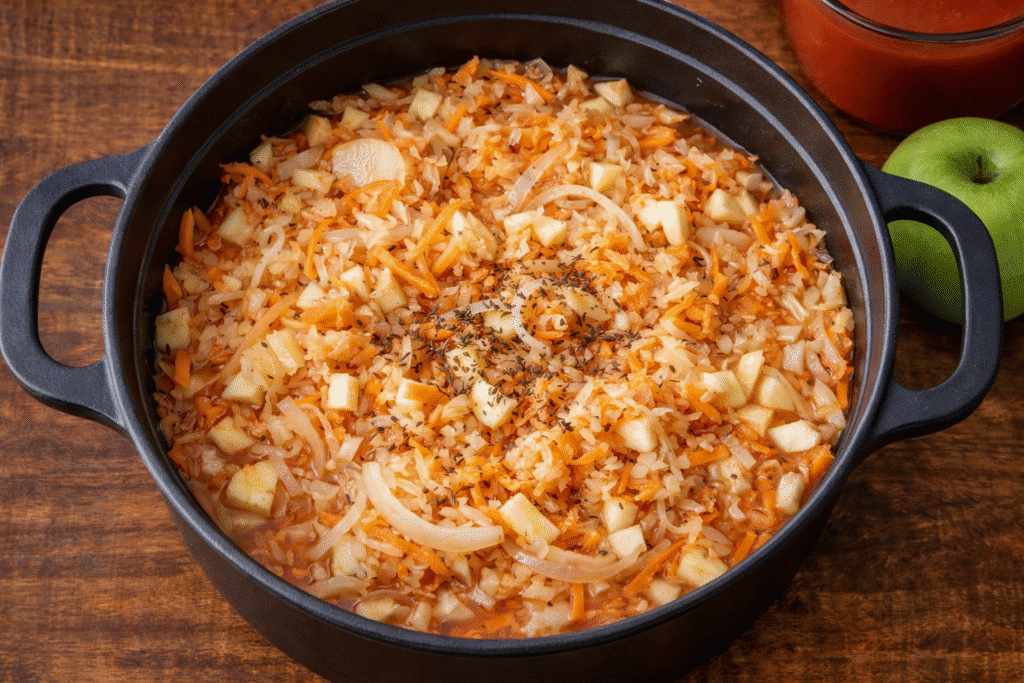
- Place the sauerkraut and all of its liquid in the bottom of your Dutch oven.
- Add the tomato juice, grated carrot, chopped apple, brown sugar, optional onion slices, and caraway seeds.
- Stir everything together so the vegetables, apple, and sauerkraut are evenly combined.
- If the mixture looks very dry, add one half cup of broth or water. You want a moist mixture, not a soup.
The mixture will seem quite sharp and salty at this stage. That is expected. Long cooking will mellow the acidity and bring the ingredients together.
Step 3. Season and optionally brown the pork
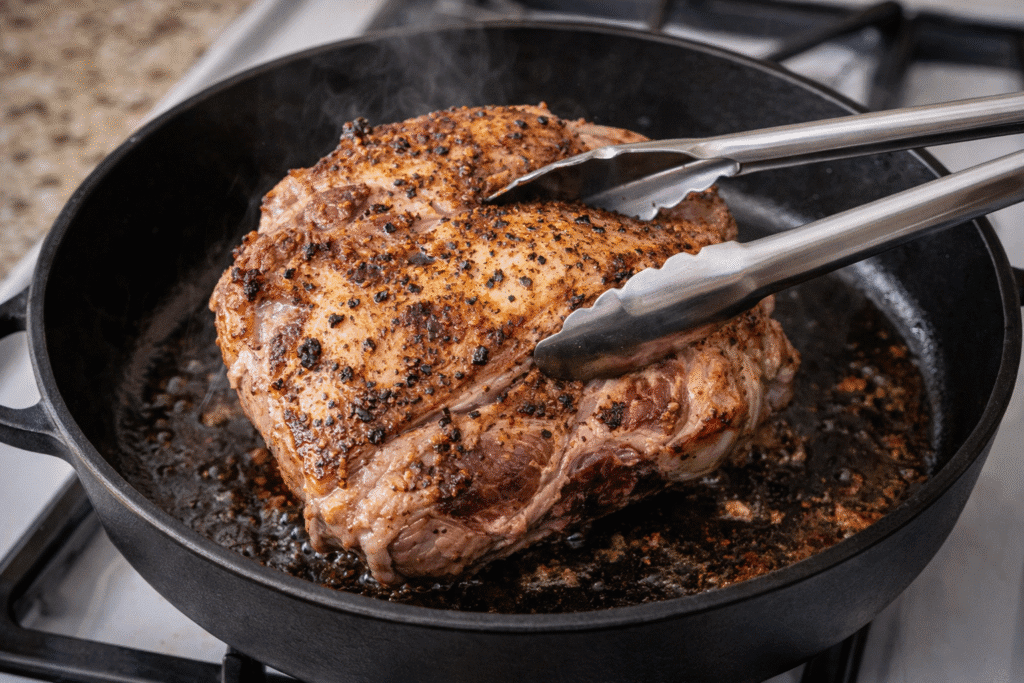
- Pat the pork roast dry with paper towels.
- Season all over with the black pepper and a very light sprinkle of salt if using.
- Optional but recommended for deeper flavor:
a) Warm the tablespoon of oil in a large skillet over medium high heat.
b) Sear the pork shoulder on all sides until nicely browned, about three to four minutes per side.
c) Transfer the browned roast on top of the sauerkraut mixture in the Dutch oven.
If you skip browning, the recipe still turns out tasty. Browning simply adds a deeper roasted flavor and more color.
Step 4. Nestle the pork into the sauerkraut
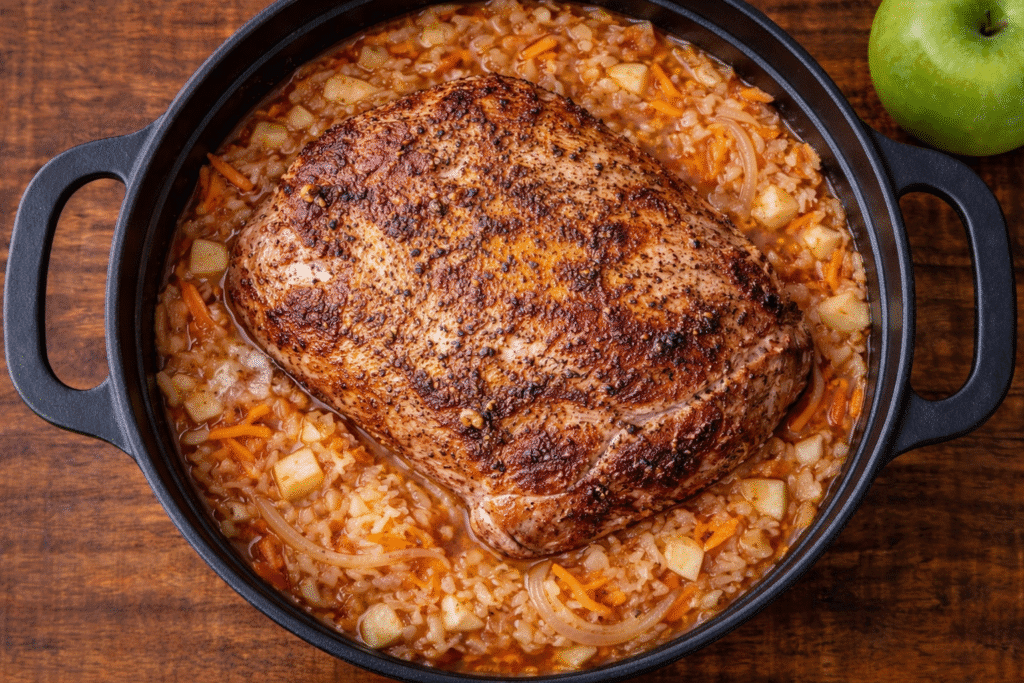
Browned pork roast nestled into sauerkraut mixture in a Dutch oven before slow cooking
- Place the seasoned or browned pork roast on top of the sauerkraut mixture.
- Press gently so that the meat sits partly inside the sauerkraut and partly exposed on top. About half of the roast should be above the surface.
- Cover the pot securely with its lid. If you are using a roasting pan without a lid, cover it tightly with heavy duty foil.
Step 5. Braise in the oven

- Place the covered pot in the preheated oven.
- Braise for about two and one half hours before you first check it. The exact time depends on the size and shape of your roast.
- After two and one half hours, carefully remove the lid. The kitchen should smell richly savory, with the initial sharpness of sauerkraut much reduced.
- Insert a meat thermometer into the thickest part of the roast, away from bone. The reading should be at least 145 degrees Fahrenheit for food safety, but for shreddable, very tender pork shoulder many cooks prefer to continue braising until the internal temperature reaches around 185 to 195 degrees Fahrenheit and the meat is truly fork tender.
- If the roast is not yet tender enough to pull apart easily with a fork, re cover the pot and return it to the oven. Check again every 20 to 30 minutes.
If the pot ever looks too dry while you check for doneness, stir a little broth or water into the sauerkraut at the edges. You want plenty of juicy kraut to spoon over mashed potatoes later.
Step 6. Rest, skim, and shred
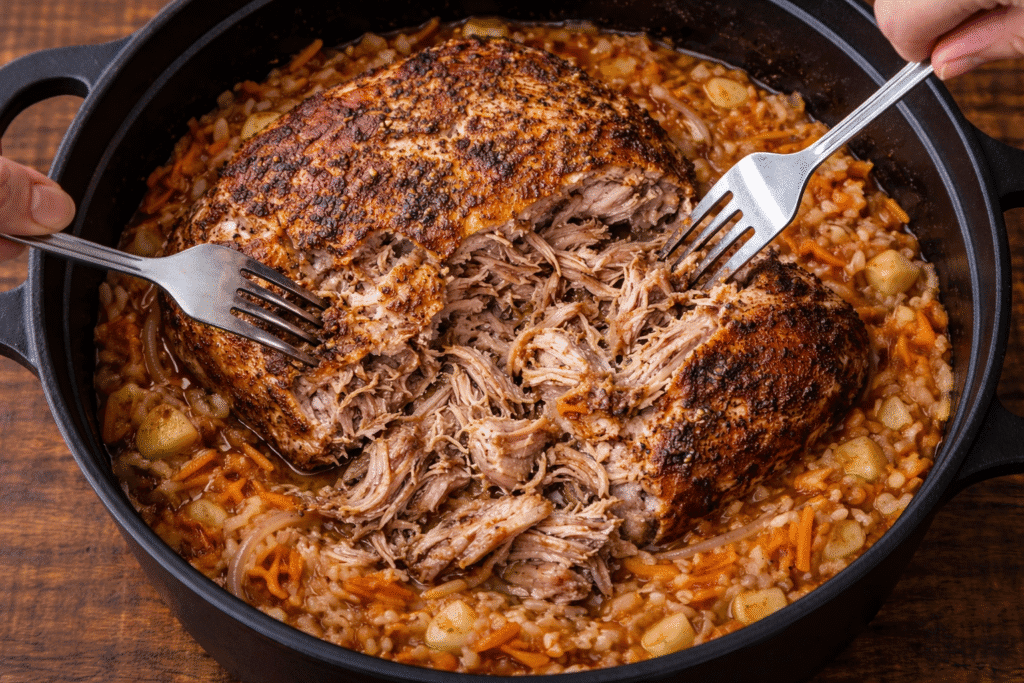
- When the pork is fork tender and easily pulls away from the bone, remove the pot from the oven.
- Tilt the lid slightly and let the roast rest for about 10 to 15 minutes. This rest helps the juices settle.
- If there is a thick layer of fat on the surface of the sauerkraut, use a spoon to gently skim some of it away. Leave enough to keep the dish flavorful.
- Use a large fork or tongs to pull the pork into large chunks or shreds right in the pot, discarding the bone and any large pieces of fat. Mix some of the sauerkraut and juices into the pork so every bite is moist.
Step 7. Serve and plate

- Spoon a generous bed of sauerkraut onto each plate or shallow bowl.
- Top with chunks or shreds of pork roast.
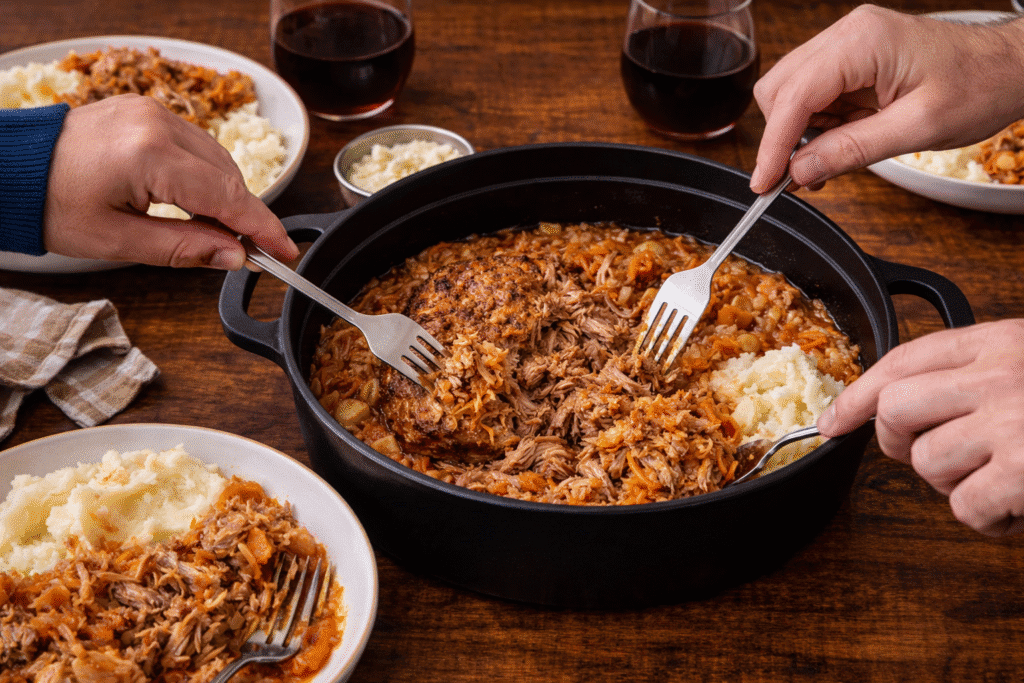
- Add a scoop of mashed potatoes on the side, then ladle some of the pan juices over both the pork and potatoes.
- Offer horseradish at the table for those who enjoy an extra kick.
On a cold New Year’s Day afternoon, serving this to a table of hungry family members feels almost ceremonial. The steam fogs the windows a little, people lean over their plates to breathe in the savory smell, and someone always reaches for a second spoonful of sauerkraut to soak up the juices with the last bit of potato.
Variations
- Boneless pork shoulder: Works well in the same recipe. Choose a roast with visible marbling and similar weight. Without the bone, cooking can be slightly faster, so start checking earlier.
- More vegetables: Add sliced onions, extra grated carrot, or even a few celery pieces to the sauerkraut mixture.
- Slightly sweeter: Increase the brown sugar to three tablespoons or add an extra half apple if your family prefers a rounder, less sour flavor.
- Less sour: Stir in a small knob of butter at the end or serve with plenty of mashed potatoes and a mild vegetable to soften the acidity.
- Alternative sides: Serve over egg noodles or beside boiled potatoes instead of mashed potatoes if you prefer a different texture.
Key Advantages of Making Braised Pork Roast and Sauerkraut
- One pot and mostly hands off: Once everything is in the pot, the oven does the work. You only need to check occasionally for tenderness.
- Very forgiving: Pork shoulder is rich in connective tissue and fat, so it stays moist through the long braise and even reheats well. Pork.org
- Budget friendly: Pork shoulder is usually one of the more economical pork cuts and sauerkraut is inexpensive, yet the finished meal feels special.
- Perfect for New Year’s Day: Serving sauerkraut for New Year’s Day good luck is a beloved pork and sauerkraut tradition in many Midwestern households.
- Great leftovers: The flavors have even more time to mingle in the refrigerator, and reheated pork and kraut often taste deeper and more harmonious the next day.
Mistakes to Avoid
Learning from common pitfalls helps you get tender meat and balanced flavor on the first try.
- Using a lean cut such as pork loin instead of pork shoulder. Lean cuts tend to dry out with long cooking and will not give you the same succulent texture.
- Rinsing all of the sauerkraut until it is bland. A quick taste is enough to decide whether a partial rinse is needed. You want tangy flavor in the finished dish.
- Rushing the braise. If you stop cooking as soon as the pork hits 145 degrees Fahrenheit, it will be safe to eat but may still be firm. For shreddable texture, keep cooking until it is truly fork tender and the internal temperature is higher.
- Choosing the wrong pot size. A very large pot can spread the ingredients too thin and cause the liquid to evaporate quickly. A pot that is too small can overflow. Aim for a Dutch oven that holds the roast and sauerkraut with a little room to spare.
- Forgetting how salty sauerkraut can be. Many sources note that one cup of sauerkraut can contain around 900 milligrams of sodium, which is close to forty percent of a full day’s recommended maximum for many adults. Nutrition Taste before adding any extra salt.
- Skipping the rest time. Shredding the pork while it is still bubbling hot can cause more juices to spill into the pan instead of staying in the meat.
Expert Tips and Real Life Examples
Plan your timing
Because the cooking time varies with the size and shape of the roast, it is smart to start earlier than you think you need. If the pork becomes tender an hour before dinner, simply reduce the oven to its lowest setting and keep the covered pot warm. Many cooks hold braised dishes like this gently in a low oven for up to two hours before serving without losing quality.
Make ahead pork and sauerkraut
Braised pork roast and sauerkraut might actually be better on the second day, which makes it perfect for busy holiday schedules. You can cook the dish completely, let it cool, and then refrigerate it in the same pot.
General food safety guidance from United States agencies suggests using cooked pork within about three to four days when kept refrigerated at or below about 40 degrees Fahrenheit. Ask USDA To reheat, bring the pot out of the refrigerator so the chill begins to fade, then warm it in a 325 degree oven until the pork and sauerkraut are steaming and very hot in the center. Leftovers should be reheated to at least 165 degrees Fahrenheit. FoodSafety.gov
Many home cooks like to make this dish one or two days before New Year’s Day, then simply reheat while they prepare mashed potatoes and clean up the house.
Balancing flavor if it tastes too sour or too bland
If your finished pork and sauerkraut tastes sharper than you like:
- Stir in a teaspoon of brown sugar at a time and taste.
- Add a small pat of butter and stir it into the sauerkraut to soften the edges.
- Serve with a larger portion of mashed potatoes, which naturally mellow acidity.
If it tastes flat or dull:
- Grind a little fresh black pepper over the top.
- Add a tiny splash of apple cider vinegar for brightness if the sauerkraut you used was very mild.
- Serve with prepared horseradish, which wakes up the flavors.
A simple family style serving moment
Imagine placing the Dutch oven in the center of the table on a cold evening. Someone lifts the lid and a cloud of fragrant steam curls out, smelling of slow cooked pork, sweet cabbage, and tomato. One person scoops a spoonful of sauerkraut onto their plate, another pulls off a piece of pork that practically falls apart on the fork. A bowl of mashed potatoes passes from hand to hand, everyone pouring some of the rich juices over their portion. It is the kind of meal that encourages people to linger and talk, and traditions like New Year’s Day pork and sauerkraut tend to grow from evenings just like that.
Nutrition Facts (per serving)
The numbers below are estimates for one sixth of the recipe, without mashed potatoes or other sides. Actual values vary with the exact ingredients and portion size.
- Calories: about 570
- Protein: about 40 to 45 grams
- Fat: about 35 to 40 grams
- Carbohydrates: about 15 to 20 grams
- Fiber: about 3 to 4 grams
- Sodium: can be around 900 to 1100 milligrams, largely from sauerkraut and tomato juice
In plain language, this is a hearty, high protein meal with a notable amount of fat from the pork shoulder and a significant amount of sodium from the fermented cabbage. To make the plate feel more balanced, you can:
- Serve a slightly smaller portion of pork and a larger portion of vegetables.
- Choose a lower sodium sauerkraut if available, or lightly rinse part of the sauerkraut before cooking.
- Add a bright side salad or a green vegetable to bring more fiber and freshness to the meal.
Frequently Asked Questions
Q1: Can I use boneless pork shoulder for braised pork and sauerkraut?
Yes. Boneless pork shoulder works very well in this recipe. Look for a roast with good marbling and a similar weight to the bone in version. Cooking time may be a little shorter, so start checking for tenderness slightly earlier.
Q2: Do I need to rinse sauerkraut before cooking it with pork?
You usually do not need to rinse sauerkraut for this style of dish. The brine adds flavor and provides much of the braising liquid. If your sauerkraut tastes extremely salty or sharp straight from the jar, you can lightly rinse part of it and then mix the rinsed and un-rinsed sauerkraut together to keep some tang without overwhelming the dish.
Q3: How long does pork and sauerkraut last in the fridge and can I freeze it?
Cooked pork and sauerkraut can generally be kept in the refrigerator for about three to four days when stored in a shallow, covered container at or below about 40 degrees Fahrenheit. Ask USDA You can also freeze the pork and sauerkraut together for longer storage. For best quality, aim to use frozen portions within about three to four months.
Q4: What is the best side dish to serve with pork and sauerkraut?
Mashed potatoes are the classic choice because they soak up the savory juices from the pork and kraut. Egg noodles, boiled potatoes, or a simple piece of crusty bread also work well. A green vegetable on the side helps balance the richness of the main dish.
Q5: Is pork and sauerkraut really a New Year’s good luck food?
In many Midwestern households with German, Hungarian, or Polish roots, pork and sauerkraut for New Year’s Day is part of a long standing good luck tradition. The richness of pork is associated with prosperity, and the long strands of cabbage are said to symbolize longevity and a year of plenty. Whether you follow the superstition or not, it makes a memorable and comforting first meal of the year.
Conclusion
Braised pork roast and sauerkraut works so well because it combines the right cut of pork, a patient braise, and a smart balance of savory and tangy flavors. A bone in or well marbled pork shoulder roast stays juicy through long cooking, the sauerkraut and tomato base mellow into something deep and complex, and the whole dish becomes more than the sum of its simple parts.
If you are a beginner, the key is to give yourself enough time and to trust the process. Season the pork, build the sauerkraut bed, cover the pot, and let gentle heat work on your behalf. As long as you cook the pork until it is both safe and fork tender, you will be rewarded with a dish that feels impressive without being fussy. Food Safety and Inspection Service
Try this braised pork roast and sauerkraut for New Year’s Day good luck or on any cold weekend when you want the oven to warm the house and dinner to take care of itself. Once you have the base recipe down, you can play with side dishes, sweetness level, and extra vegetables until it feels like your own family tradition.
Braised Pork Roast and Sauerkraut for Cozy New Year Comfort