
If you have ever walked past a New York street food cart at midnight and smelled smoky chicken, buttery yellow rice, and grilled pita, you already know the magic of Chicken Over Rice. This recipe brings that exact feeling into a home kitchen: marinated halal cart style chicken, turmeric basmati rice, cool white sauce, fiery hot sauce, crisp salad, and soft pita, all in one overflowing bowl.
This version is inspired by the classic NYC street food platter, but written for real weeknight cooking. The chicken is marinated in pantry spices, the yellow rice simmers in one pot, the white sauce stirs together in minutes, and the whole dish can be prepped ahead for lunches. You control the heat level, the portion size, and the toppings.
Think of this as a flexible, beginner friendly guide. You will see exact times, temperatures, visual cues, and troubleshooting tips so you can get that halal cart flavor at home, even if you have never cooked basmati rice or marinated chicken before.
Time and Serving
These times assume you are working at a comfortable home cook pace.
- Prep time: 30 to 40 minutes
- Cook time: 40 to 50 minutes
- Inactive or marinating time: 1 to 4 hours
- Total time: About 2 to 3 hours (mostly hands off once marinating starts)
- Servings: 4 to 6 bowls
Insight of the Chicken Over Rice
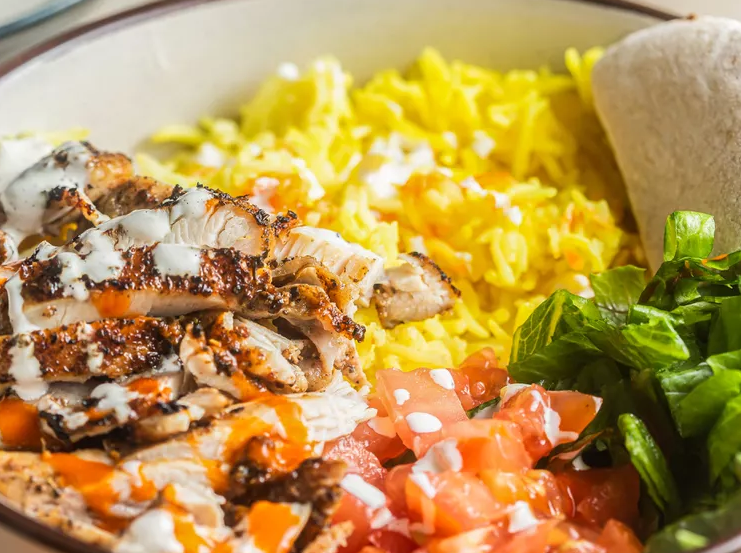
New York style Chicken Over Rice is a street food platter built in layers. At the base is a mound of yellow turmeric rice. On top goes chopped marinated chicken, seared until browned and juicy. Then comes a generous drizzle of creamy white sauce, a streak of hot red sauce, crunchy shredded lettuce, chopped tomato, and usually a wedge of warm pita on the side.
Halal carts gained popularity in New York in the nineteen nineties, when immigrant vendors began selling halal platters to Muslim taxi drivers who needed quick, affordable meals that met religious dietary rules. The Halal Guys, for example, started as a hot dog cart in 1990, then pivoted to halal platters in the early nineteen nineties when they saw the demand. At the same time, other carts such as Trini Paki Boys and many Egyptian, Bangladeshi, and Afghan owned carts were helping shape what “halal cart chicken over rice” tastes like today.
There is no single “official” version, but most carts share a few elements in common:
- Marinated chicken: Often boneless thighs, seasoned with lemon, garlic, and a mix of Mediterranean and Middle Eastern spices.
- Golden rice: Long grain rice tinted with turmeric and warmed with aromatics like onion or shallot.
- White sauce: A creamy, tangy sauce, frequently mayonnaise based, sometimes with yogurt. Different carts guard their own secret versions. Wikipedia
- Red hot sauce: Intense, chile based, usually inspired by harissa or similar chili pastes. Wikipedia
- Salad and pita: Shredded lettuce, chopped tomato, sometimes cucumber, and warm pita bread.
This home version keeps all of those pillars while staying practical. The marinade uses spices you can find in most supermarkets. The turmeric rice is cooked in one pot with chicken stock for more flavor. The white sauce uses Greek yogurt and mayonnaise for body and tang. You can dial the heat up or down and prep components ahead, which makes it ideal for busy families, meal prep boxes, or feeding a crowd.
Ingredients
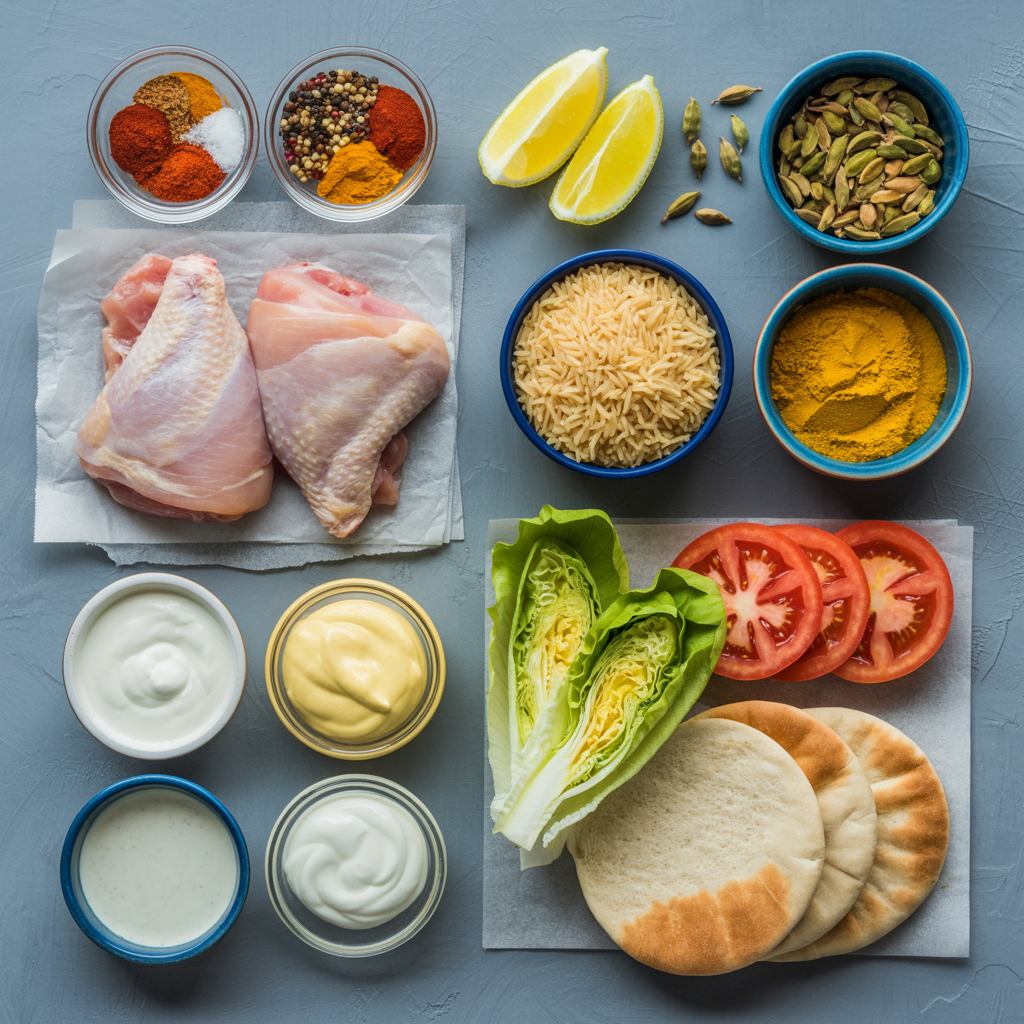
For the spiced chicken
- 3 tablespoons freshly squeezed lemon juice (from about 1 medium lemon)
- 1 quarter cup neutral oil, such as canola or grapeseed, plus extra for cooking
- 2 tablespoons finely grated or minced garlic
- 2 teaspoons kosher salt (use a little less if your brand is very salty)
- 1 tablespoon dried oregano
- 1 and 1 half teaspoons ground coriander
- 1 half teaspoon ground allspice
- 1 and 1 half teaspoons ground cumin
- 1 and 1 half teaspoons freshly ground black pepper
- 2 pounds boneless skinless chicken thighs, trimmed of excess fat
For the yellow turmeric rice
- 2 tablespoons unsalted butter or neutral oil
- 4 whole green cardamom pods (or 1 quarter teaspoon ground cardamom)
- 1 small shallot or half a medium onion, finely diced
- 1 half teaspoon ground turmeric
- 2 cups uncooked long grain basmati rice, preferably aged
- 3 cups chicken stock or broth, low sodium if possible
- 2 teaspoons kosher salt (adjust to taste depending on your stock)
For the white sauce
- 1 third cup plain Greek yogurt
- 1 half cup mayonnaise
- 1 tablespoon freshly squeezed lemon juice
- 1 small garlic clove, very finely grated or minced
- 1 quarter to 1 half teaspoon kosher salt, to taste
- 1 half teaspoon freshly ground black pepper
- 1 teaspoon granulated sugar or honey, optional, to balance acidity
- 1 to 3 tablespoons cold water, as needed to thin the sauce
For the red hot sauce
Choose one of these simple options:
- 2 to 3 tablespoons bottled harissa paste, thinned with a little water or oil, or
- 2 to 3 tablespoons Sriracha or another favorite hot sauce
You will not need much per serving. Start with a light drizzle if you are heat sensitive.
For serving and toppings
- 3 to 4 cups shredded iceberg or romaine lettuce
- 2 medium tomatoes, diced
- 1 small cucumber, diced or sliced, optional
- 4 to 6 wedges or rounds of warm pita bread
- Fresh parsley or cilantro leaves, optional
- Lemon wedges, optional, for extra brightness
Required Tools
You do not need restaurant equipment. A basic home kitchen setup is enough.
- Heavy skillet or cast iron pan: Holds heat well so the marinated chicken can brown without stewing.
- Medium or large saucepan with tight fitting lid: For cooking the turmeric rice so steam stays trapped and the grains cook evenly.
- Fine mesh sieve: For rinsing and draining basmati rice without losing grains down the drain.
- Cutting board and sharp knife: For trimming chicken and chopping vegetables.
- Mixing bowls: One large bowl for marinating chicken, smaller bowls for white sauce and salad.
- Whisk or fork: To combine the white sauce until smooth.
- Instant read thermometer (recommended): To check that the thickest part of the chicken reaches at least 165 degrees Fahrenheit, which is the safe minimum internal temperature for poultry according to USDA and food safety guidance.
Method: Detail Step by Step Preparation Guide
Step 01. Marinate the chicken
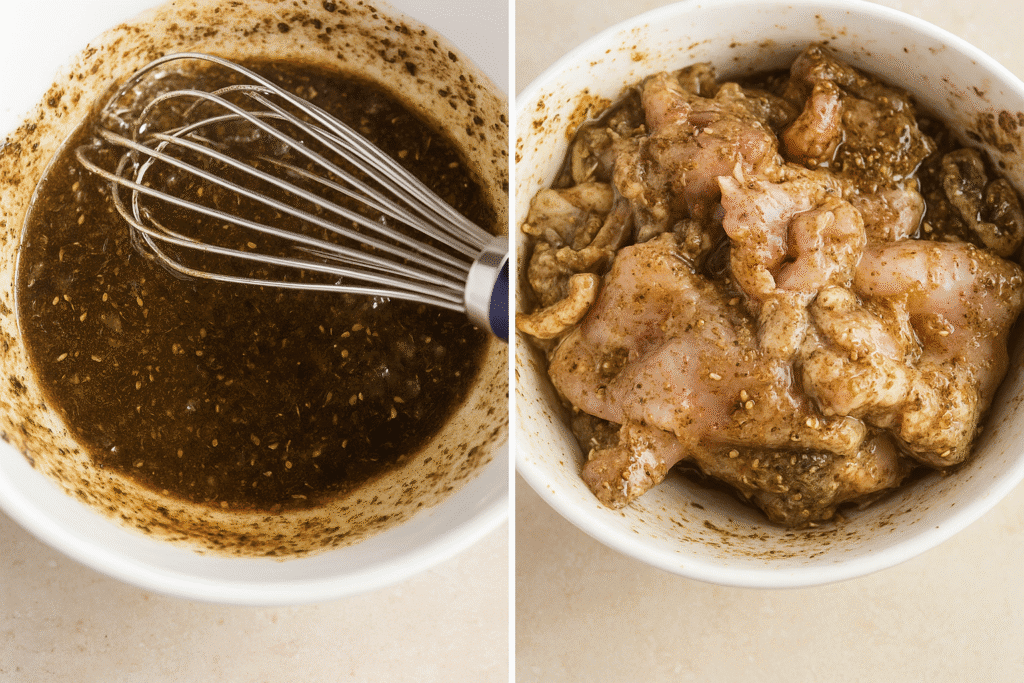
- In a large bowl, whisk together the lemon juice, neutral oil, grated garlic, salt, oregano, coriander, allspice, cumin, and black pepper until you have a loose paste.
- Add the chicken thighs and turn them several times so every surface is coated. Work the marinade into the meat with your hands or tongs.
- Cover the bowl and refrigerate for at least 1 hour. For deeper flavor, aim for 2 to 4 hours.
- When the chicken is well marinated, it will look evenly coated with a slightly thick, oily spice layer and will smell garlicky, citrusy, and warm from the spices.
If you are short on time, even 30 minutes helps, but more time builds better halal cart style flavor.
Step 02. Rinse and soak the rice
- Place the basmati rice in a fine mesh sieve. Rinse under cold running water. Use your fingers to gently stir and rub the grains while the water runs.
- Continue rinsing until the water that drains from the sieve is mostly clear rather than very cloudy. This removes excess surface starch that can make the rice gummy.
- Transfer the rinsed rice to a bowl and cover with plenty of cold water. Soak for at least 20 to 30 minutes while the chicken marinates or while you prepare other components.
- Drain the rice well in the sieve just before you cook it.
Soaking helps the grains hydrate and cook more evenly, which leads to fluffy turmeric rice instead of broken, sticky rice.
Step 03. Make the white sauce

- In a medium bowl, whisk together the Greek yogurt, mayonnaise, lemon juice, garlic, salt, pepper, and sugar or honey if using.
- Add 1 tablespoon of cold water and whisk again. The sauce should be thick but pourable, like a loose salad dressing. Add more water a tablespoon at a time if needed until you reach a drizzleable consistency.
- Taste and adjust. You want a balance of creamy, tangy, slightly garlicky, and gently sweet, with enough salt that it tastes alive rather than flat.
Cover and refrigerate the white sauce so the flavors can meld while you cook the rice and chicken.
Step 04. Cook the turmeric rice
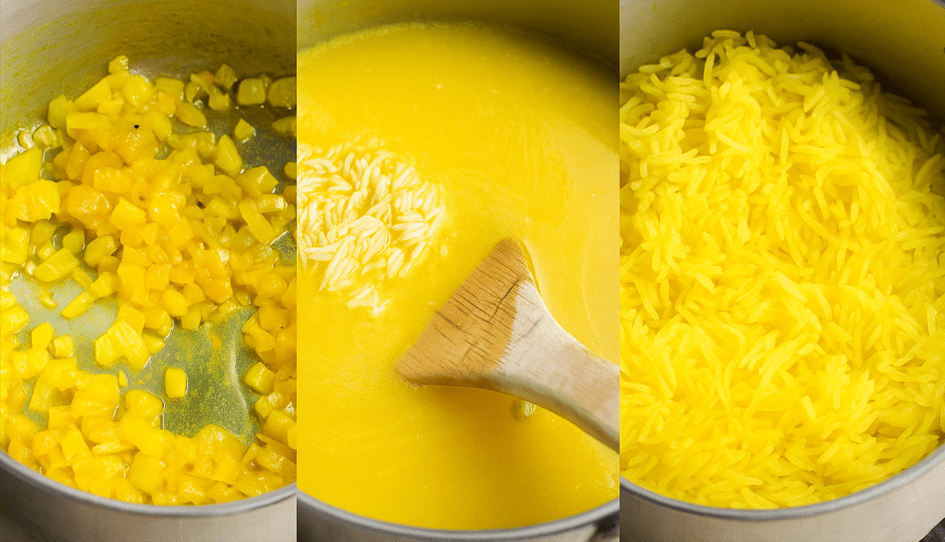
- In a medium or large saucepan, melt the butter over medium heat. Add the cardamom pods and cook for 1 to 2 minutes, stirring frequently, until fragrant.
- Add the diced shallot or onion with a pinch of salt. Cook for about 4 to 6 minutes, stirring often, until softened and lightly translucent.
- Sprinkle in the turmeric. Stir for about 1 minute. The mixture will turn bright yellow and smell warm and earthy.
- Add the drained basmati rice. Stir gently for 1 to 2 minutes to coat the grains in the buttery spice mixture.
- Pour in the chicken stock and add the salt. Stir once, bring the pot to a gentle boil, then cover with a tight fitting lid.
- Reduce the heat to low. Cook, covered, for about 15 to 20 minutes, until most of the liquid is absorbed and the rice is tender.
Electric stove tip: Electric burners hold heat longer and can scorch the bottom of the rice. One practical trick is to bring the rice to a boil on a higher setting, then move the covered pot to a neighboring burner already set to low for the remaining 15 to 20 minutes.
- Turn the heat off and let the pot sit, covered, for another 10 minutes.
- Remove the lid. Use a fork to gently fluff the turmeric rice, lifting and separating the grains instead of stirring vigorously. The rice should look steamy, bright yellow, and fluffy, with distinct long grains.
Keep the lid partially on to retain warmth until you are ready to assemble.
Step 05. Cook the chicken
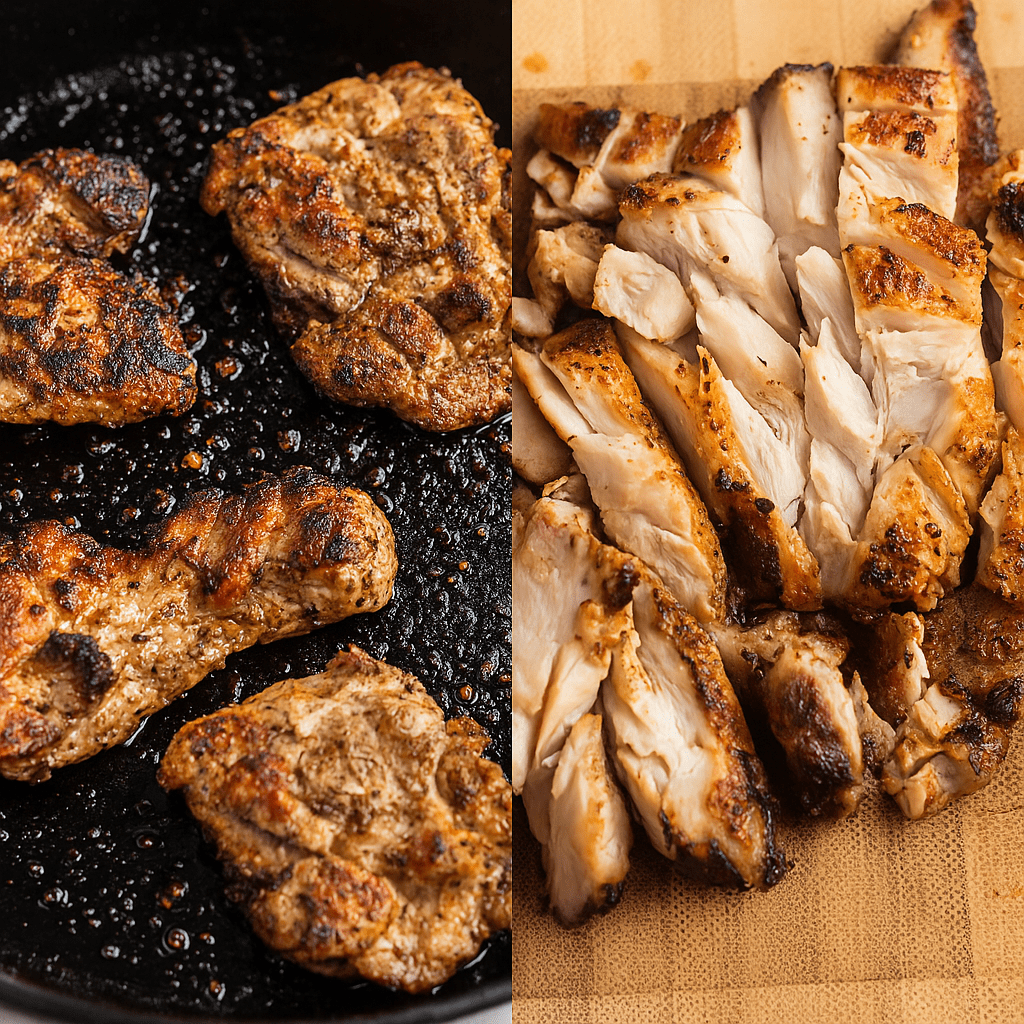
- Remove the marinated chicken from the refrigerator about 15 to 20 minutes before cooking so it is not ice cold.
- Set a large cast iron or heavy skillet over medium to medium high heat. Add a thin coating of oil.
- When the oil is hot and shimmering, add a few pieces of chicken in a single layer. Do not overcrowd the pan or the chicken will steam instead of sear.
- Let the chicken cook undisturbed for about 5 to 6 minutes on the first side. You should hear a steady sizzle and see browning around the edges.
- Flip and cook another 5 to 6 minutes, or until the thickest part of each thigh reaches at least 165 degrees Fahrenheit on an instant read thermometer. USDA and food safety resources recommend this internal temperature for safe poultry.
- Transfer the cooked chicken to a plate and let it rest for about 5 minutes. Resting lets the juices redistribute so the meat stays moist.
- Repeat with remaining chicken in batches, adding more oil if the pan looks dry.
Once all the chicken has rested, slice it into strips or bite sized chunks. You want pieces small enough to sit nicely on top of the rice but large enough that you still get juicy texture.
Step 06. Assemble the bowls
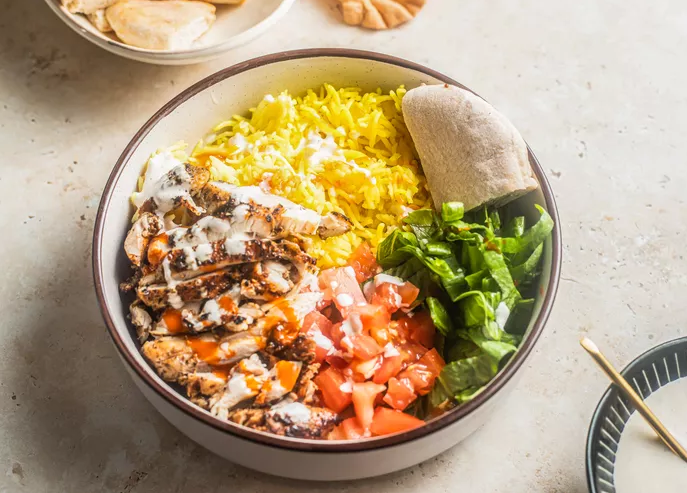
Now build your NYC style chicken over rice platters.
- Place a generous scoop of turmeric rice into each bowl or plate.
- Top with sliced chicken, letting some pieces fall next to the rice like the big halal cart platters.
- Add a big handful of shredded lettuce and a spoonful or two of diced tomato and cucumber on the side.
- Drizzle the white sauce over the chicken and rice. Start with a few spoonfuls and add more at the table.
- Add a small streak or drizzle of hot sauce. Err on the side of less if you are not sure about the heat level and let everyone add more on their own.
- Tuck a piece of warm pita into the side of each bowl.
- Finish with a sprinkle of fresh herbs and a squeeze of lemon, if you like.
Serve immediately, with extra white sauce and hot sauce at the table.
Step 07. Make ahead and storage
Food safety guidance for leftovers generally suggests cooling and refrigerating cooked food within 2 hours and reheating leftovers to at least 165 degrees Fahrenheit. Food Safety and Inspection Service
Practical guidelines for this recipe:
- Chicken: Cool completely, then refrigerate in an airtight container for 3 to 4 days. Reheat in a covered skillet over low to medium heat with a splash of water or stock, or microwave in short bursts, just until steaming.
- Turmeric rice: Refrigerate in an airtight container for 3 to 4 days. Reheat with a sprinkle of water, covered, in the microwave or on the stovetop so it steams and softens again.
- White sauce: Store in a jar or container in the fridge for up to 4 days. Stir before serving.
- Vegetables and pita: Keep salad veggies separate so they stay crisp. Warm pita just before serving.
Variations within the method
- Oven baked chicken: Instead of pan searing, arrange marinated thighs on a parchment lined sheet pan and roast at 400 degrees Fahrenheit for about 20 to 25 minutes, until browned and at least 165 degrees inside.
- Chicken breast option: You can use boneless skinless chicken breasts instead of thighs. Pound them to an even thickness and start checking temperature after 5 to 6 minutes per side so they do not dry out.
- Salad style bowl: For a lighter meal, reduce the rice portion, add more lettuce and cucumber, and treat it like a warm salad bowl with chicken, rice, and lots of vegetables.
Key Advantages of Making Chicken Over Rice
- Budget friendly: A platter from a famous NYC cart can feel like a splurge, especially if you are feeding several people. Making halal cart chicken over rice at home uses basic ingredients like rice and chicken thighs, which are usually more affordable per serving.
- Perfect for meal prep: The components keep well and reheat nicely. You can pack rice, chicken, salad, and sauces into containers for grab and go lunches.
- Customizable heat level: Because the hot sauce is added at the end, mild eaters can stick to white sauce while spice lovers load up their bowls.
- High protein, satisfying meal: Between the chicken and yogurt based sauce, each bowl delivers a good amount of protein with enough carbs and fat to feel like a complete meal.
- Flexible toppings: Use up fridge vegetables like shredded cabbage, bell peppers, or pickled jalapeños. The basic formula of rice, chicken, and sauces welcomes many toppings.
- Taste of NYC street food at home: Even if you are nowhere near Midtown Manhattan, you still get the aroma of lemony marinated chicken, turmeric rice, and creamy white sauce drifting through your kitchen.
Mistakes to Avoid
- Skipping or rushing the marinade: A quick five minute toss is better than nothing, but without at least 1 hour of marinating time the chicken will taste more like plain grilled chicken over rice than halal cart style chicken over rice.
- Overcrowding the pan: If you cram too many chicken pieces into the skillet, they release moisture and steam instead of searing. Cook in batches so you get browned, flavorful edges.
- Not rinsing or soaking the rice: Basmati rice has surface starch that can make it clump. Rinsing until the water runs mostly clear and soaking briefly helps you avoid sticky or gummy turmeric rice.
- Heat too high under the rice: Cranking the burner up can scorch the bottom layer while the top stays undercooked. Keep the heat low once it boils and respect the resting time with the lid on.
- Underseasoned white sauce: The white sauce carries a lot of the platter flavor. Taste and adjust salt, lemon, and sweetness so it tastes vibrant, not dull.
- Adding too much hot sauce at once: Halal style red sauce, especially harissa based versions, can be much spicier than it looks. Start with a narrow streak and add more after you taste.
Expert Tips
- Stagger the prep: On a Sunday, you can marinate the chicken and cook the turmeric rice. Store both in the fridge. On Monday night, you only need to sear the chicken, whisk the white sauce, chop some lettuce and tomato, and dinner comes together fast.
- Adjusting spice tolerances: For families with mixed heat preferences, keep the marinade mild and rely on hot sauce for spice. You can also add a pinch of cayenne to just part of the white sauce for the spice lovers.
- Leftover transformations:
- Wrap leftover chicken, rice, lettuce, and white sauce in a warm pita or tortilla for a handheld lunch.
- Build a big salad bowl with chopped romaine, cucumbers, tomato, warmed chicken and rice, and a generous drizzle of white sauce as the dressing.
- Use the rice and chicken as a base for a grain bowl with roasted vegetables from another dinner.
- Small flavor upgrades: A tiny squeeze of lemon over each bowl right before serving brightens everything. Toasting the rice in butter and spices, even for 1 or 2 minutes, adds a subtle nutty flavor that feels very restaurant like.
- Respecting rest and fluff times: Letting the chicken rest before slicing and letting the rice sit, covered, off the heat both sound like fussy steps, but they make a big difference in moisture and texture.
A realistic at home example: When I batch cook, I will often double the rice, cook the full amount of chicken, and make a slightly larger jar of white sauce. The first night we eat halal cart chicken over rice in bowls. The next day, I load leftovers into meal prep containers with extra lettuce and call it lunch. On the third day, any remaining chicken becomes wraps with extra hot sauce for whoever wants the spice.
Nutrition Facts (Per Serving)
These values are approximate and will vary with portion size, exact ingredients, and toppings.
For one typical serving of chicken over rice with white sauce, salad, and pita:
- Calories: about 700 to 750
- Protein: about 40 to 45 grams
- Fat: about 35 to 45 grams
- Carbohydrates: about 45 to 50 grams
- Fiber: about 2 to 4 grams
- Sodium: highly variable, often in the 900 to 1200 milligram range depending on stock, salt, and sauces
These numbers are based on common ingredient databases and similar chicken over rice platters. They should be treated as estimates, not medical or dietary advice.
Frequently Asked Questions
Q1: Can I use chicken breasts instead of chicken thighs for Chicken Over Rice?
Yes. Boneless skinless chicken breasts work, but they cook faster and can dry out more easily. Pound them to an even thickness, marinate as directed, then start checking the internal temperature after 5 to 6 minutes per side. Pull them from the heat once they hit at least 165 degrees Fahrenheit and let them rest before slicing.
Q2: How can I make this recipe milder or spicier?
For a milder version, keep the marinade as written and go very light with the hot sauce, or skip it entirely and rely on the creamy white sauce. For more heat, add a pinch of cayenne or crushed red pepper to the marinade and use a spicier harissa or hot sauce on top.
Q3: Can I make this dairy free or lighter?
To make the white sauce dairy free, use a dairy free yogurt or skip the yogurt and make a thinner mayonnaise based sauce with lemon, garlic, and water. For a lighter version, use all yogurt with just a spoonful or two of mayonnaise for richness, and cut back slightly on the oil in the marinade.
Q4: How long can leftovers be stored and how should I reheat them safely?
Cool leftovers and refrigerate within 2 hours. Chicken and rice keep well for about 3 to 4 days in airtight containers. Reheat until steaming hot, ideally to at least 165 degrees Fahrenheit, either in the microwave or on the stovetop with a splash of water or stock. White sauce should stay chilled and not be reheated.
Q5: Is this an authentic version of halal cart Chicken Over Rice?
This is a home style recipe inspired by New York halal carts. Different carts and cooks have their own marinades, rice methods, and especially their own secret white sauces. Food writers and historians note that the exact “first” halal cart is debated, and flavors vary from vendor to vendor. This recipe aims to capture that general flavor profile in a practical way for home kitchens.
Q6: Can I cook the chicken in the oven or air fryer instead of on the stove?
Yes. For the oven, bake marinated chicken thighs on a lined sheet pan at around 400 degrees Fahrenheit for 20 to 25 minutes, until they reach at least 165 degrees inside. For an air fryer, cook at 375 to 390 degrees Fahrenheit in a single layer, usually 12 to 16 minutes depending on thickness, checking with an instant read thermometer near the end.
Conclusion
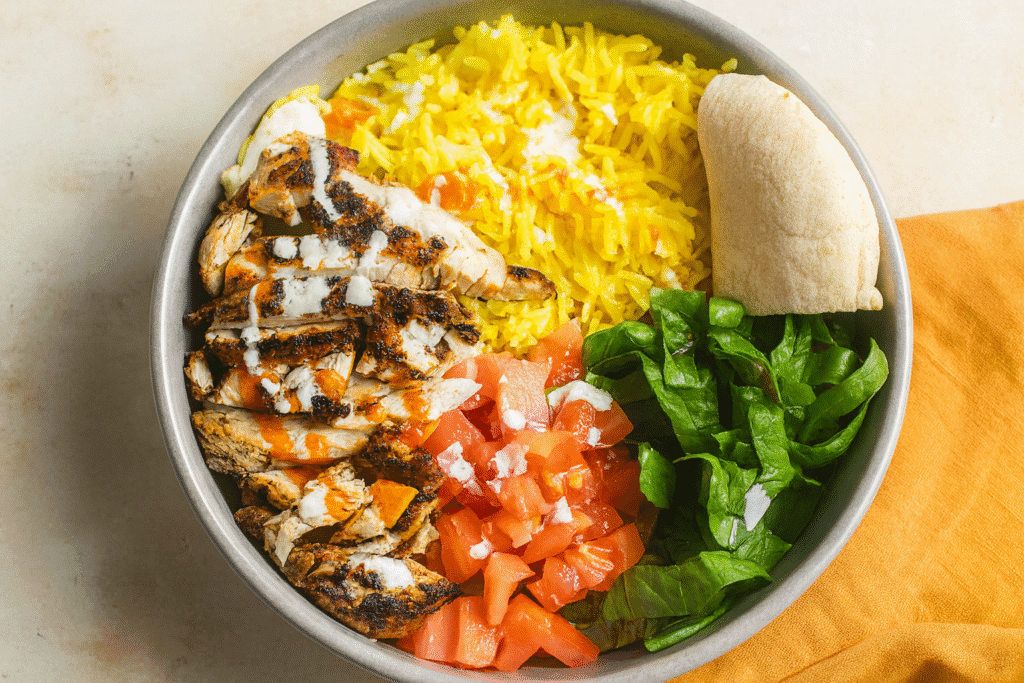
Chicken Over Rice is one of those rare meals that feels like street food, comfort food, and a practical weeknight dinner all at once. You get juicy marinated chicken, fluffy turmeric rice, cool white sauce, and spicy red sauce, plus the fresh crunch of lettuce and tomato, all in one bowl.
This version is written so a beginner can follow it, but it has enough detail and flexibility that experienced cooks can play with spice blends, toppings, and heat levels. Make it exactly as written the first time, then adjust the sauces, the seasoning, and the toppings until it tastes like your personal favorite NYC halal cart platter.
When you are ready, pull out a big bowl, pile in that yellow rice, add a mountain of chopped chicken, drizzle on more white sauce than you think you need, and finish with a streak of hot sauce. It is hard not to smile when you take that first bite.
Street Food Cart-Style Chicken Over Rice with White Sauce