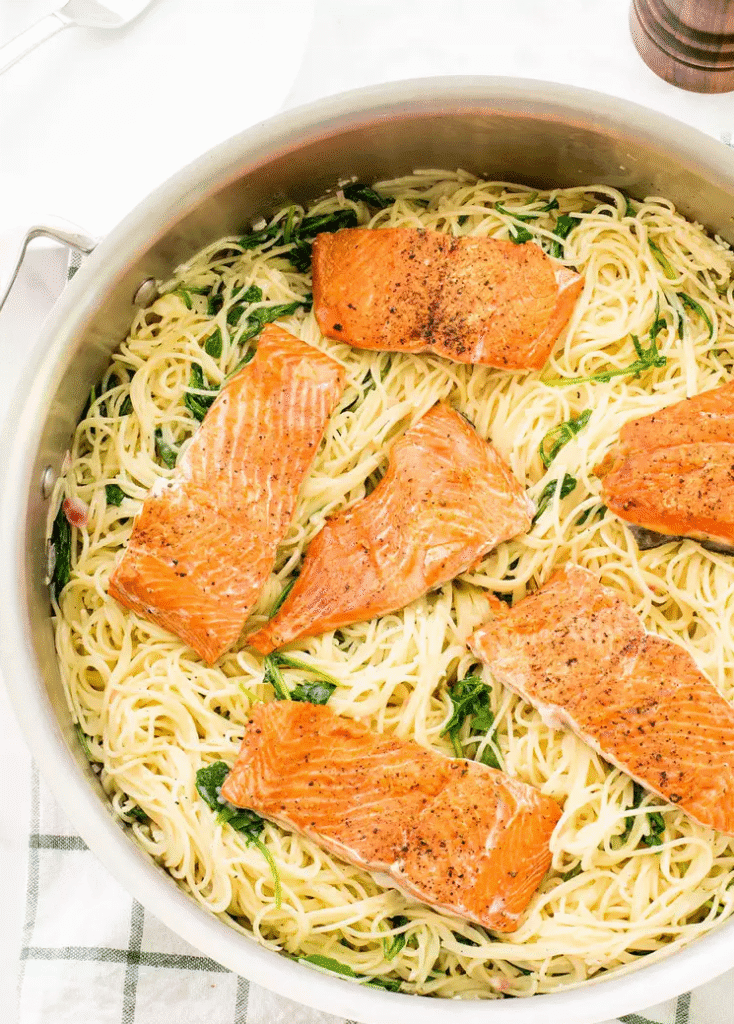
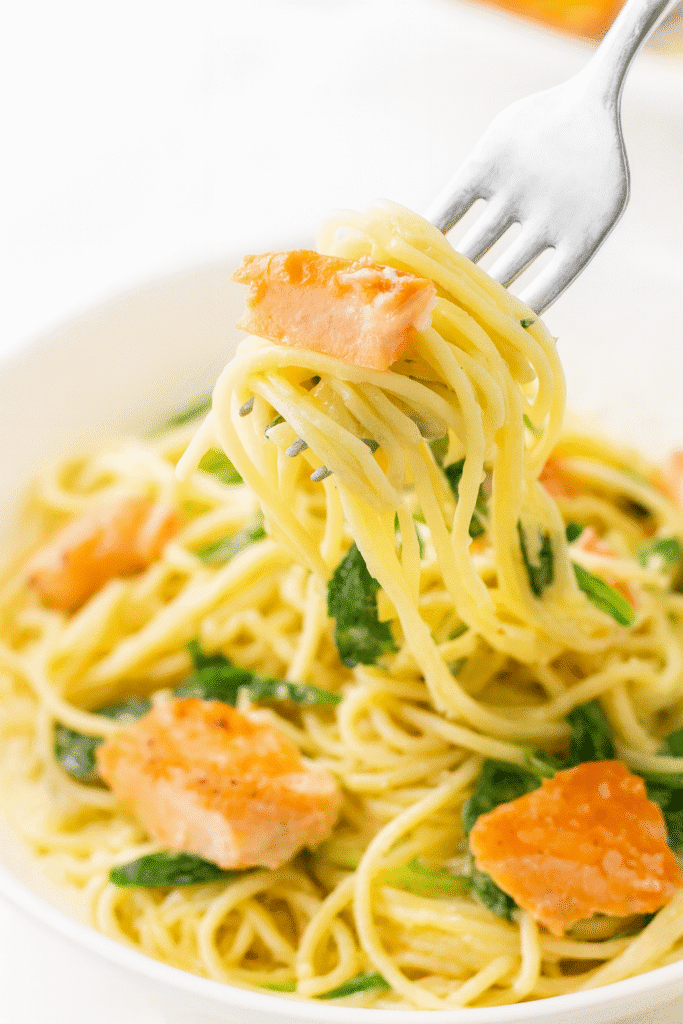
Angel Hair Pasta with Salmon, Arugula, and Creamy Lemon Parmesan Sauce is one of those dinners that feels restaurant ready but still fits comfortably into a busy weeknight. Tender angel hair pasta gets coated in a silky lemon Parmesan cream sauce, tossed with peppery arugula, and finished with golden seared salmon fillets on top.
Even if you are newer to cooking salmon or making cream sauces, this recipe walks you through each step with clear visual cues, from getting a good sear on the fish to timing the pasta so nothing sits around getting cold. One of my favorite parts of this dish is how quickly everything comes together once you start cooking, as long as you do a bit of smart prep up front.
By the end of this guide, you will know exactly how to season and sear salmon, how to build a bright but creamy lemon Parmesan sauce, and how to bring pasta, sauce, and greens to the table hot at the same time.
Time and Serving
Prep time: about 15 minutes
Cook time: about 20 minutes
Total time: about 35 minutes
Servings: 4 generous portions
These times assume you have your ingredients out and a reasonably efficient stovetop.
Insight into Angel Hair Pasta
What this dish is
At its core, this is a salmon pasta recipe built on a few simple ideas:
- Angel hair pasta cooks very quickly and absorbs a light sauce beautifully.
- A creamy lemon Parmesan sauce brings richness from cream and butter plus sharp, salty flavor from Parmesan.
- Fresh arugula wilts right into the hot pasta, adding a peppery bite and a hit of green.
- Seared salmon fillets sit on top so each person gets a clear portion of fish rather than little flakes mixed in.
It is a complete one plate meal: protein, carbs, and greens in one bowl.
Why the flavors work
- Rich salmon + bright lemon: Salmon is naturally fatty and full of flavor. According to nutrition experts, salmon is rich in heart friendly omega three fats and high quality protein, which makes it both satisfying and nutritious. The lemon juice and zest cut that richness so the dish tastes lively instead of heavy.
- Cream + Parmesan + pasta: Cream and butter create a smooth base, while Parmesan adds salt, umami, and body. The thin strands of angel hair pasta cling to that sauce in every bite.
- Arugula for balance: Arugula’s peppery, slightly bitter flavor keeps the sauce from feeling too rich and adds color and texture to the plate.
Why this recipe is helpful for you
- It uses salmon fillets in a way that feels special but still very doable on a weeknight.
- You can use fresh or previously frozen salmon, as long as it is thawed safely in the refrigerator.
- It is flexible: swap arugula for spinach, use stock instead of wine, or change the pasta shape if you like.
- You learn repeatable techniques: how to sear fish, how to reduce a pan sauce, and how to finish pasta in the pan with sauce like restaurants do.
Ingredients
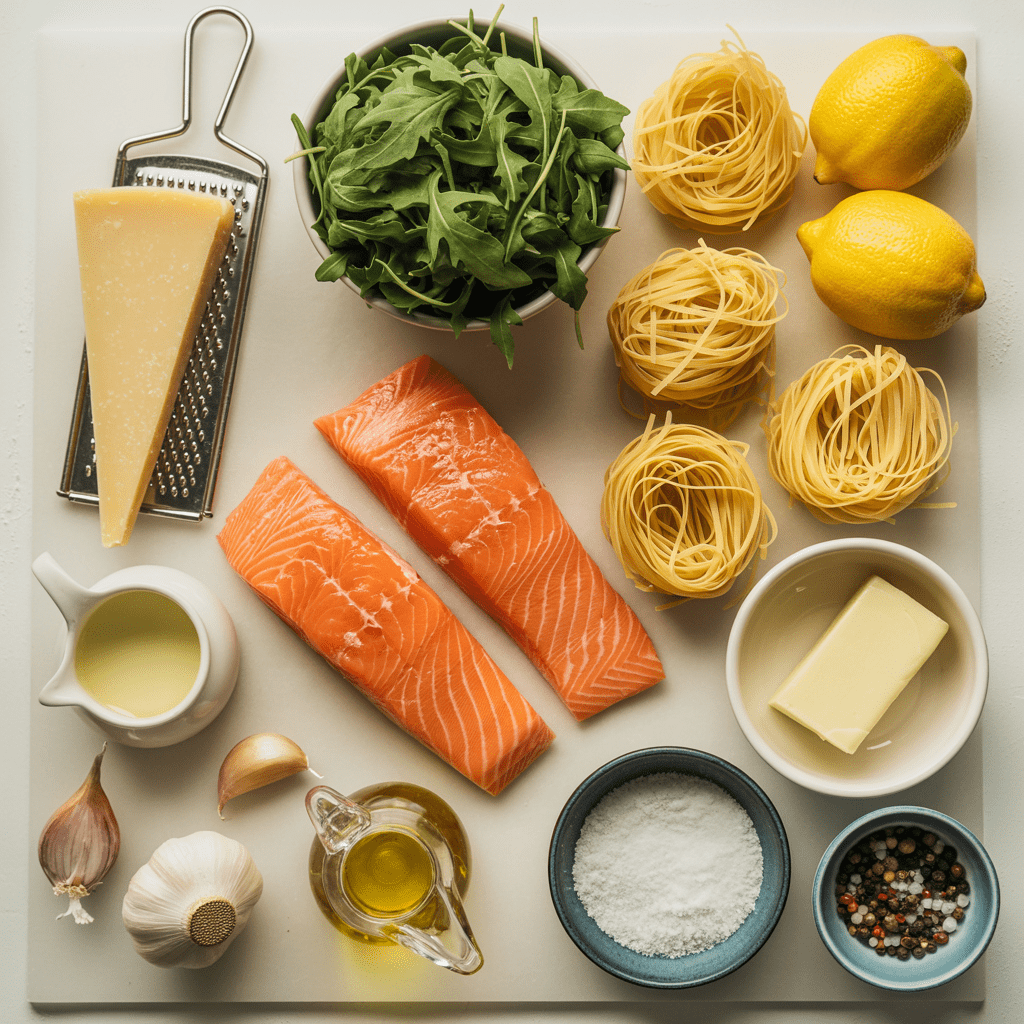
Serves 4 people
For the salmon
- 4 small salmon fillets, about 4 ounces each, skin on or skinless
- 1 teaspoon kosher salt
- ½ teaspoon freshly ground black pepper
- 1 tablespoon extra virgin olive oil
For the pasta and creamy lemon Parmesan sauce
- 12 ounces angel hair pasta
- 2 tablespoons unsalted butter
- 1 tablespoon extra virgin olive oil
- 1 medium shallot, finely minced (about 2 tablespoons)
- 3 garlic cloves, finely minced
- ½ cup dry white wine or low sodium seafood or chicken stock
- Juice of 2 medium lemons (about ⅓ to ½ cup), plus extra wedges for serving
- Finely grated zest of 1 lemon (optional but recommended)
- 1 and ½ cups heavy cream
- 2 cups lightly packed baby arugula (about 2 ounces)
- 1 cup freshly grated Parmesan cheese, more for serving
- ¾ teaspoon kosher salt, plus more to taste
- ½ teaspoon freshly ground black pepper
- ½ to 1 cup reserved starchy pasta cooking water, as needed
Optional finishing touches
- Extra lemon zest or thin lemon slices
- A pinch of red pepper flakes for gentle heat
- Chopped fresh parsley or chives
The amounts above give you generous bowls of pasta with a reasonable portion of salmon. The American Heart Association notes that a cooked fish serving is about 3 ounces, which makes a 4 ounce portion a satisfying dinner size for many adults.
Required Tools for Making the Recipe
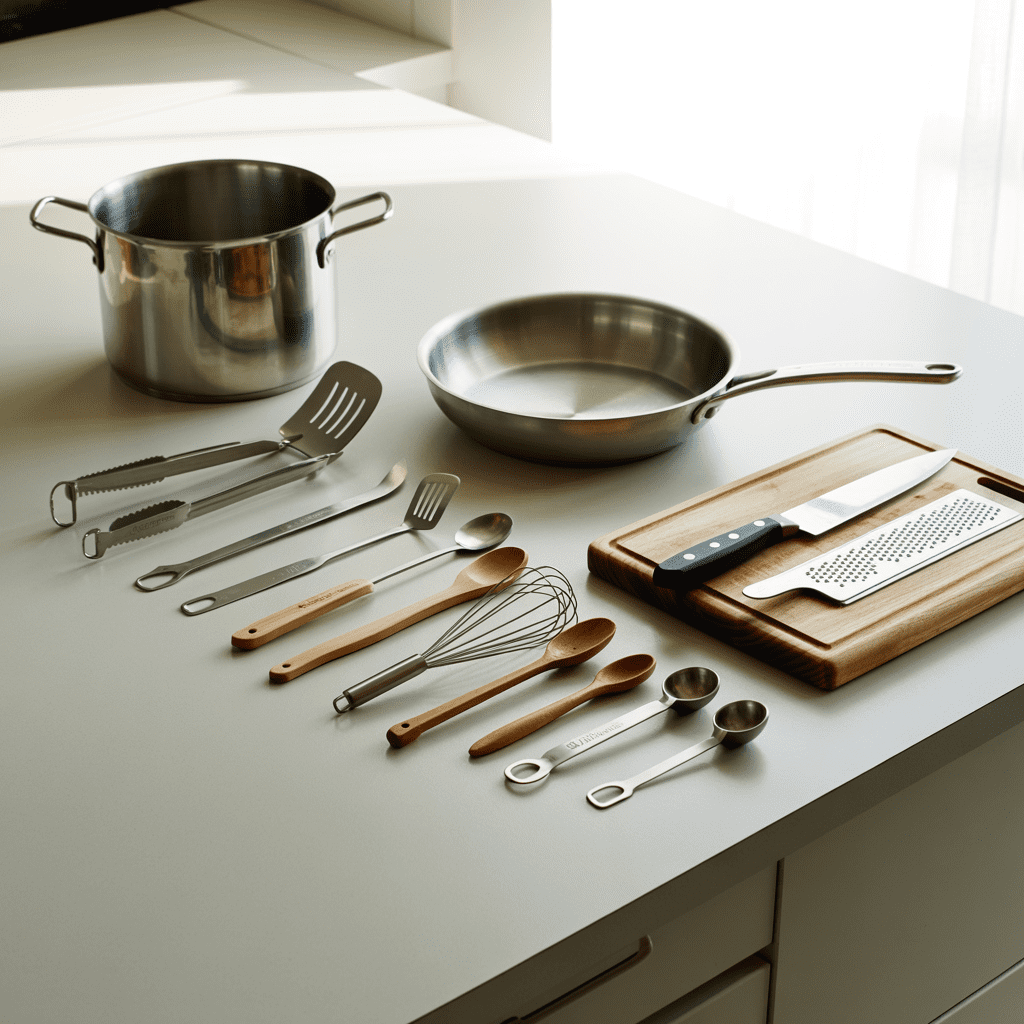
Gather your tools before you start so the cooking feels smooth and calm:
- Large pot for boiling the angel hair pasta
- Large wide sauté pan or skillet for searing salmon and making the sauce
- Tongs for turning salmon and tossing pasta
- Fish spatula or thin flexible spatula for flipping salmon
- Whisk for emulsifying the sauce
- Wooden spoon for scraping up browned bits from the pan
- Measuring cups and spoons
- Small sharp knife and cutting board
- Fine grater or microplane for Parmesan and lemon zest
- Optional: fish tweezers or clean needle nose pliers for removing pin bones
- Instant read thermometer (very helpful for checking salmon doneness)
A heavy pan that heats evenly, such as stainless steel or a well seasoned cast iron skillet, helps you get a good golden crust on the salmon. A nonstick pan is more forgiving for beginners and reduces the risk of fish sticking.
Method: Step by Step Preparation Guide
Step 01: Prep the ingredients
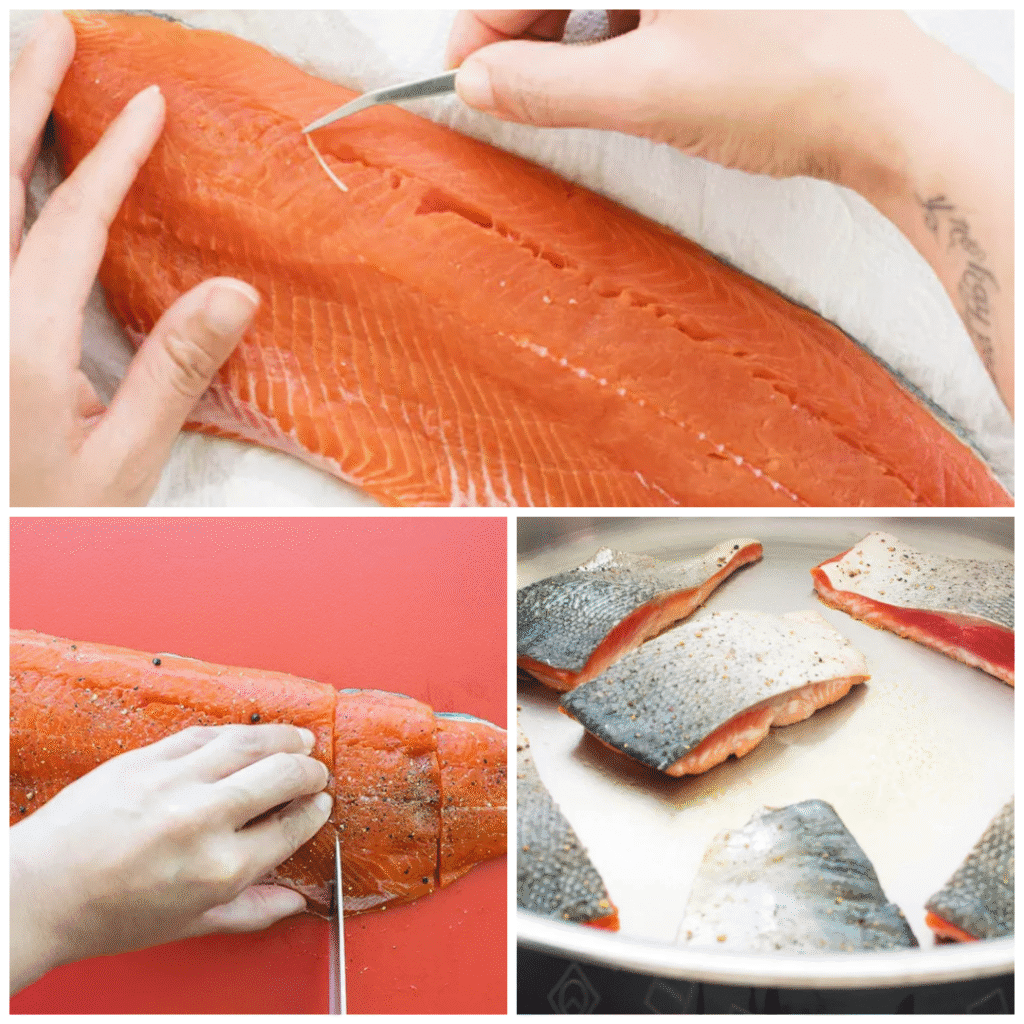
- Check the salmon for pin bones.
- Run your fingertips lightly along the surface of each fillet. If you feel a small hard bump, that is likely a pin bone.
- Use fish tweezers or clean kitchen tweezers to pull each bone out in the direction it is lying so you do not tear the flesh too much.
- Pat the salmon dry.
- Use paper towels to dry both sides well. Dry salmon browns more easily.
- Season both sides evenly with the 1 teaspoon of kosher salt and ½ teaspoon black pepper.
- Prep the aromatics and other ingredients.
- Finely mince the shallot and garlic.
- Zest one lemon, then juice both lemons and set the juice aside.
- Rinse and dry the arugula.
- Grate the Parmesan cheese just before cooking so it melts smoothly.
Taking ten minutes here makes the cooking portion feel relaxed. I have found that when everything is chopped and measured before turning on the heat, the sauce comes together without any panic.
Step 02: Start the pasta water
- Bring a large pot of water to a boil.
- Fill the pot with enough water so the angel hair pasta can move freely.
- Once the water is at a strong boil, add a generous tablespoon of salt. The water should taste pleasantly salty, like a mild broth.
You will wait to drop the pasta into the water until the sauce is partly reduced, but having the water hot and ready keeps the timing tight.
Step 03: Sear the salmon
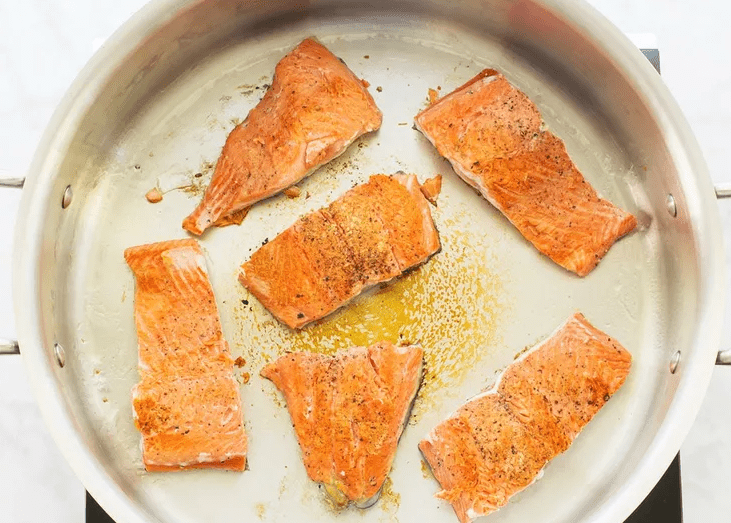
- Heat the pan.
- Place your large sauté pan over medium high heat.
- Add 1 tablespoon of olive oil and let it heat until it looks shiny and moves easily when you tilt the pan.
- Add the salmon fillets.
- Carefully lay the salmon in the hot pan, presentation side down if the skin is on (this is usually the smoother side).
- As soon as the fillets are in the pan, gently press each one with a spatula for a few seconds so the surface makes full contact with the pan. This helps prevent curling and encourages an even sear.
- Sear the first side.
- Let the salmon cook without moving it for about 3 to 4 minutes, depending on thickness.
- You are looking for a golden, lightly crisp crust and for the color to change from translucent to opaque about one third of the way up the sides. You should hear a steady sizzle but not violent popping.
- Flip and finish the salmon.
- Use a fish spatula to gently flip each fillet. Lower the heat slightly to medium.
- Cook the second side for another 3 to 4 minutes. The fish should be mostly opaque and flake easily at the thickest point.
According to USDA and FoodSafety.gov guidance, fish is safely cooked when it reaches an internal temperature of about 145 degrees Fahrenheit or 63 degrees Celsius and the flesh is opaque and flakes with a fork. Many chefs prefer to remove salmon a little earlier, around medium, and let it rest so it stays extra moist. If you do that, make sure your diners are comfortable with slightly less cooked fish.
- Rest the salmon.
- Transfer the fillets to a warm plate and tent loosely with foil. They will finish cooking slightly off the heat while you build the sauce.
At this point the kitchen smells like a seafood restaurant in the best way: rich salmon aroma and the faint nuttiness of browning protein.
Step 04: Build the lemon Parmesan cream sauce
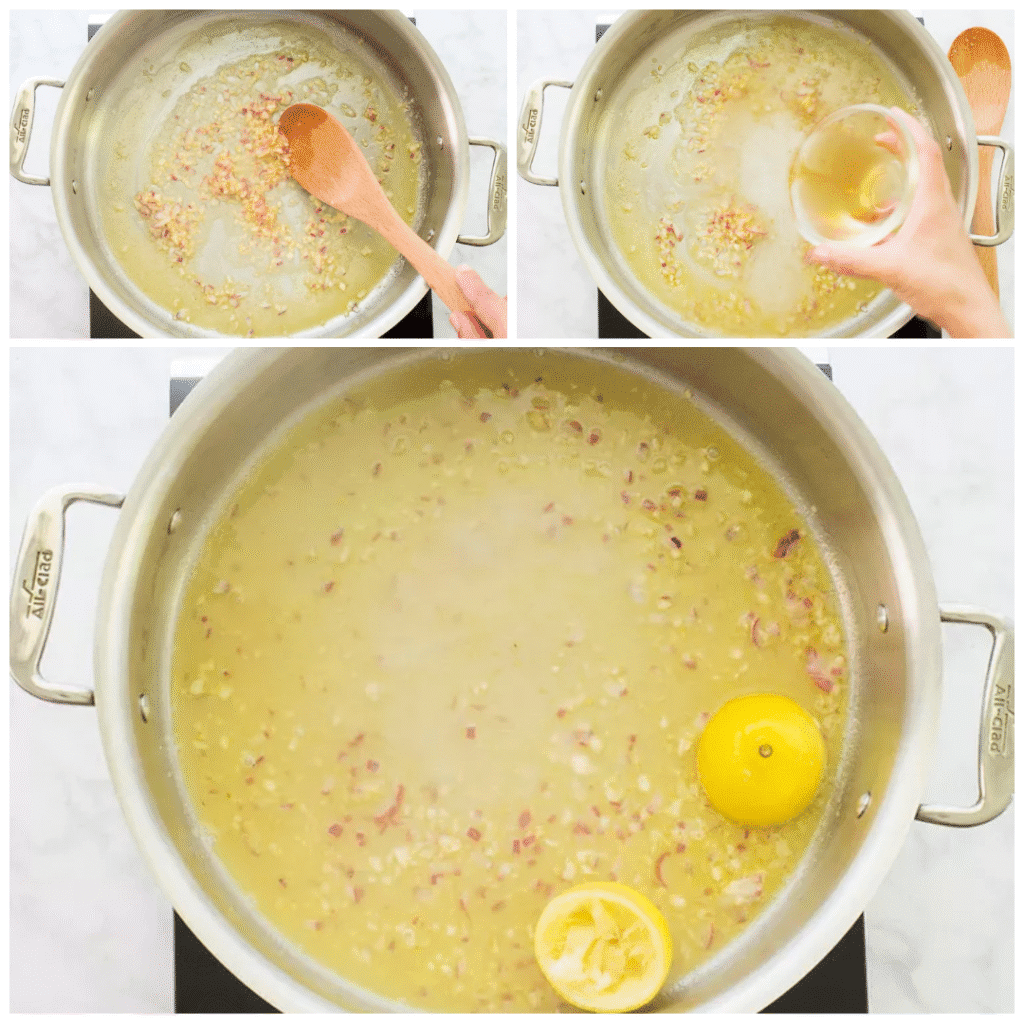
- Sauté the shallot and garlic.
- Lower the heat to medium. If the pan looks very dry, add the butter and 1 tablespoon of olive oil.
- Add the minced shallot and cook for about 2 to 3 minutes until it looks glossy and translucent, stirring often.
- Add the garlic and cook another 30 to 60 seconds, just until fragrant. If the garlic starts to brown deeply, lower the heat.
- Deglaze the pan.
- Pour in the white wine or stock and the lemon juice.
- Use a wooden spoon to scrape up any browned bits from the bottom of the pan. Those bits carry a huge amount of flavor from the salmon.
- Reduce the liquid.
- Let the liquid simmer briskly for about 3 to 5 minutes until the volume looks reduced by roughly half. The sauce should smell bright and slightly concentrated, not harshly alcoholic.
- If you are using wine, most of the alcohol will cook off during this step, leaving just its fruitiness and acidity.
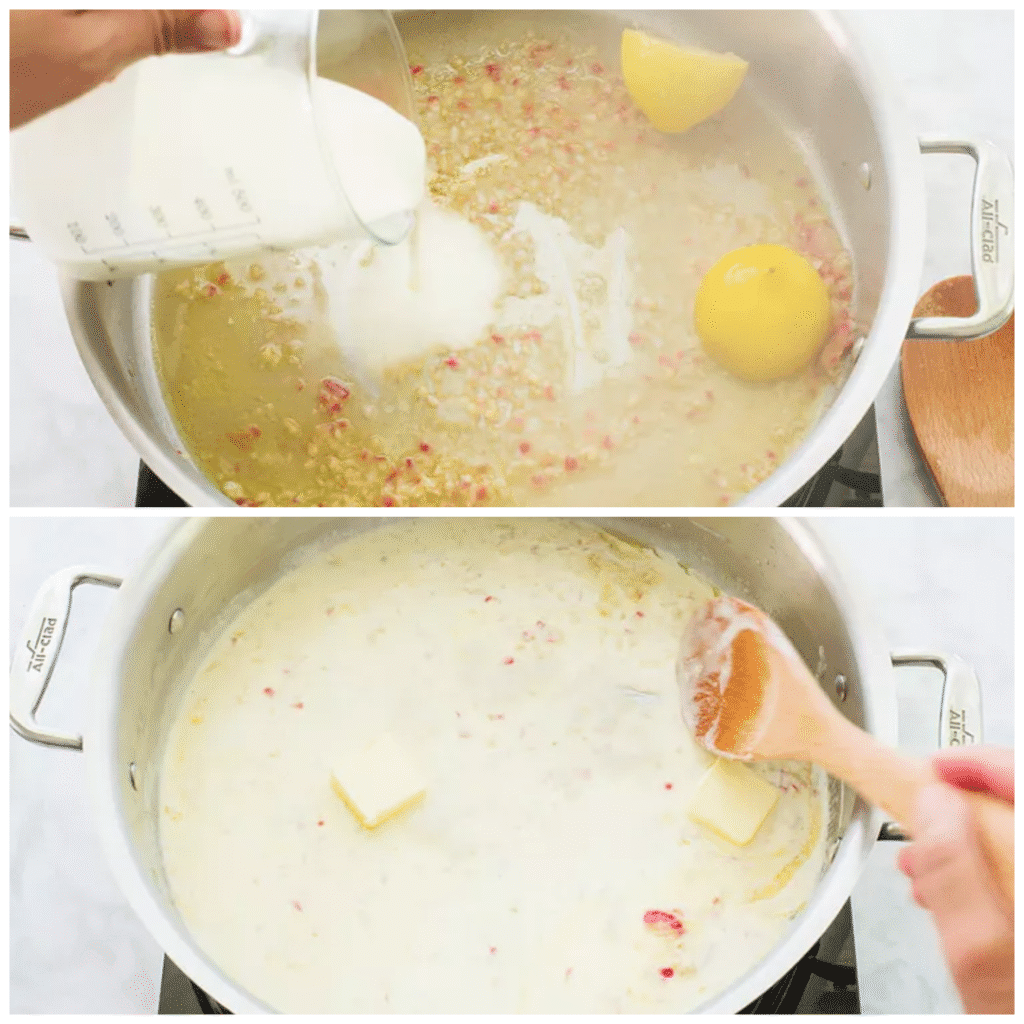
- Add cream and butter.
- Lower the heat to medium low.
- Whisk in the heavy cream and the 2 tablespoons of butter.
- Bring the mixture to a gentle simmer. It should have small, lazy bubbles around the edges, not a hard boil.
If cream boils vigorously for long, it can reduce too much or take on a slightly greasy texture, so keep the heat moderate.
Step 05: Cook the angel hair pasta
- Drop the pasta into the boiling water.
- While the cream sauce is gently simmering, add the angel hair pasta to the salted boiling water.
- Stir immediately to separate the strands so they do not clump.
- Cook until al dente.
- Angel hair usually cooks in about 3 to 5 minutes, depending on the brand. Check the package, but start tasting a minute early.
- The pasta should be tender with a slight bite in the center.
- Reserve pasta water and drain.
- Before draining, scoop out about 1 cup of the starchy cooking water and set it aside.
- Drain the pasta in a colander, but do not rinse it. The surface starch helps the sauce cling.
Step 06: Finish the sauce with arugula and Parmesan
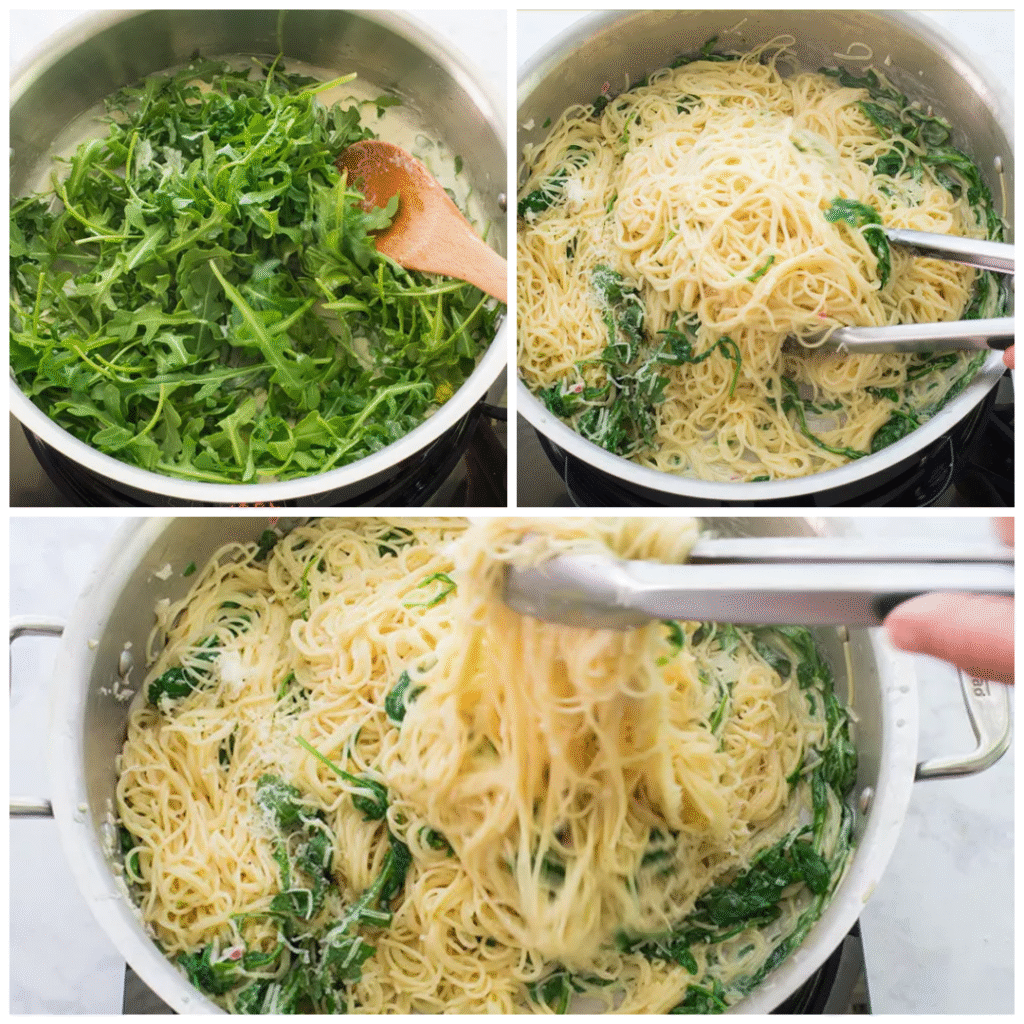
- Add arugula to the sauce.
- With the cream mixture still at a gentle simmer, add the arugula.
- Stir for about 30 to 60 seconds, just until the leaves wilt and turn a deeper green. They should still look vibrant, not dull or grayish.
- Stir in Parmesan and season.
- Reduce the heat to low.
- Add the grated Parmesan by handfuls, whisking after each addition until it melts and the sauce becomes smooth.
- Season the sauce with the ¾ teaspoon kosher salt, ½ teaspoon black pepper, and lemon zest if using. Taste and adjust, adding more salt, pepper, or lemon juice as needed.
If the sauce seems very thick at this point, you will loosen it with pasta water in the next step.
Step 07: Toss the pasta with the sauce
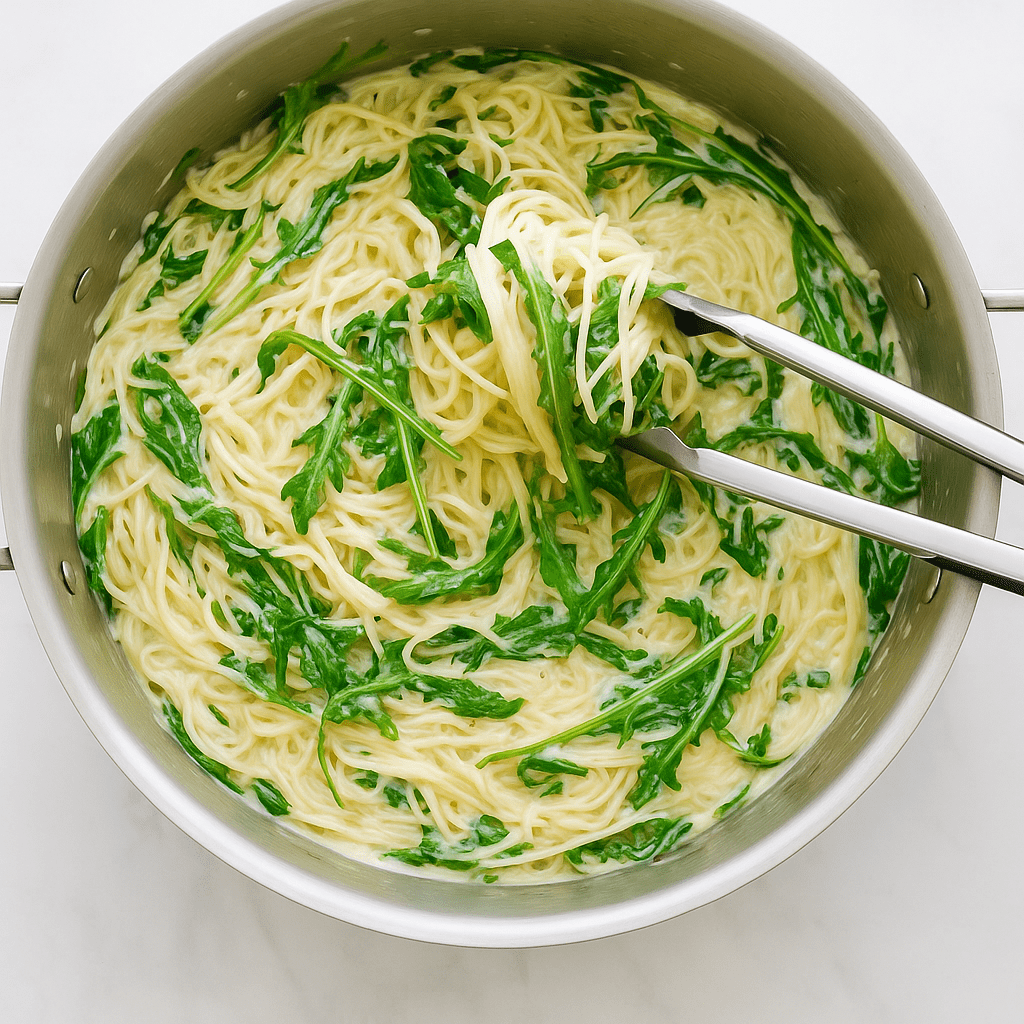
- Combine pasta and sauce.
- Add the drained angel hair pasta directly into the pan with the sauce.
- Use tongs to gently lift and turn the strands until everything is coated.
- Adjust consistency with pasta water.
- Add a splash of the reserved pasta water and keep tossing.
- Aim for a sauce that lightly coats the strands but still pools a little at the bottom of the pan. Add more water in small amounts if needed.
I have found that angel hair can go from perfectly coated to clumpy very quickly if the sauce is too tight, so do not be shy about using that starchy water to keep things silky.
Step 08: Serve with the seared salmon
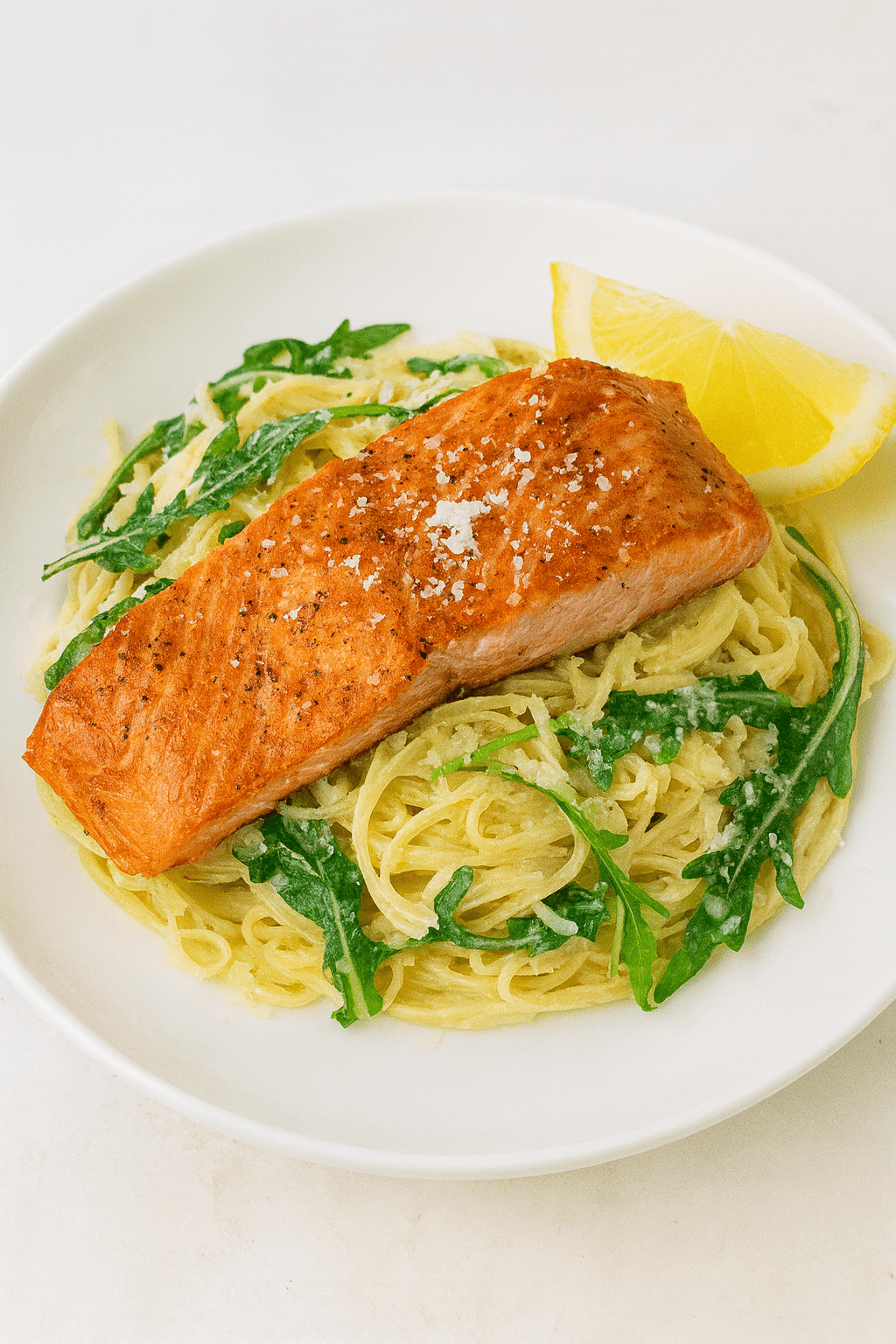
- Plate the pasta.
- Divide the creamy lemon Parmesan angel hair and arugula among four warm bowls or plates.
- Top with salmon and garnish.
- Place one salmon fillet on top of each mound of pasta.
- Garnish with extra Parmesan, lemon wedges, a pinch of red pepper flakes, or fresh herbs if you like.
Serve immediately while everything is hot and the sauce is still glossy.
Variations, Make Ahead, and Storage
Variations
- Different greens: Swap arugula for baby spinach or a mix of tender greens. Spinach is milder and often more kid friendly.
- No wine version: Use seafood or chicken stock plus a little extra lemon juice. You still get depth without using alcohol.
- Different pasta: Linguine, thin spaghetti, or fettuccine all work if you adjust the cooking time.
- Lighter sauce: Replace part of the heavy cream with whole milk or half and half, and thicken slightly by simmering longer or adding a tablespoon of grated Parmesan at the end.
Make ahead
- You can prep ingredients in advance: mince shallot and garlic, zest and juice lemons, grate Parmesan, and store everything separately in the refrigerator for up to one day.
- Salmon is best seared fresh just before serving.
Storage and reheating
Food safety agencies such as the USDA and FoodSafety.gov note that cooked fish can be stored in the refrigerator for about 3 to 4 days when properly chilled in a sealed container at 40 degrees Fahrenheit or below.
- Store leftover salmon pasta in an airtight container.
- For best quality, enjoy within 2 to 3 days even though safety guidelines allow slightly longer.
- Reheat gently in a pan over low heat with a splash of water, milk, or cream, stirring often until warmed through.
- Add the salmon pieces near the end of reheating to avoid drying them out, or reheat the salmon separately, covered, at a low oven temperature.
For longer storage, cooked salmon can be frozen for about 2 to 3 months for best quality, especially for fatty fish like salmon. U.S. Food and Drug Administration
Key Advantages of Making This Dish
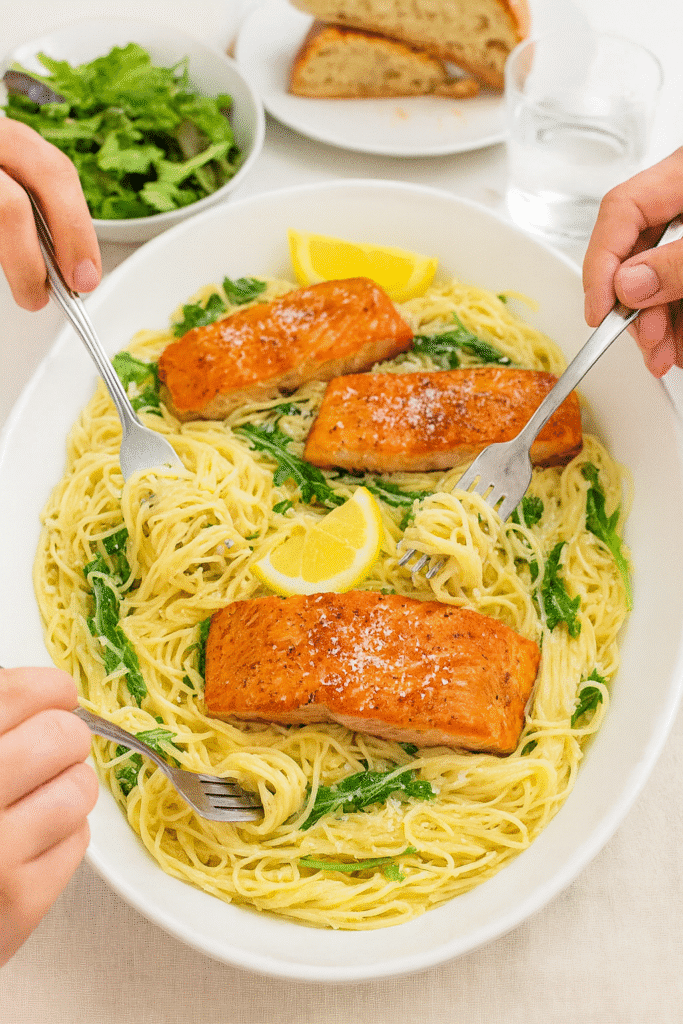
- Balanced one bowl meal: You get high quality protein from salmon, satisfying carbohydrates from angel hair pasta, and leafy greens from arugula in a single dish.
- Restaurant style at home: The combination of seared salmon and creamy lemon Parmesan sauce tastes like something from a bistro menu but can be made in roughly half an hour.
- Weeknight friendly technique: Once you have made it once, the rhythm of searing fish, reducing a quick pan sauce, and finishing pasta in the pan becomes second nature.
- Flexible and customizable: You can adjust the richness of the sauce, change the greens, or use a different pasta while keeping the core idea intact.
- Good way to enjoy salmon: Instead of serving plain baked fillets, you tuck salmon into a comforting pasta, which can be more appealing to reluctant fish eaters.
- Uses many pantry staples: Apart from fresh salmon, lemons, and arugula, the rest is likely already in your kitchen: pasta, cream, butter, garlic, and Parmesan.
Mistakes to Avoid
- Overcooking the salmon
- Problem: Salmon that is cooked too long becomes dry and chalky, even in a creamy sauce.
- Fix: Watch for visual cues and use an instant read thermometer. Aim for around 145 degrees Fahrenheit for fully cooked, or remove slightly earlier if you prefer medium, allowing for carryover cooking.
- Letting the sauce boil hard
- Problem: A violently boiling cream sauce can thicken too aggressively, separate, or taste slightly greasy.
- Fix: Once cream is added, keep the heat at a gentle simmer with small bubbles.
- Overcooking angel hair pasta
- Problem: Because angel hair is very thin, it can turn mushy quickly and break apart.
- Fix: Taste early, aim for just tender, and remember it will cook slightly more when tossed in the hot sauce.
- Adding Parmesan over high heat
- Problem: Cheese added to very hot liquid or hard boiling sauce can clump and turn grainy.
- Fix: Lower the heat before adding Parmesan and stir it in gradually.
- Adding arugula too early
- Problem: If you add arugula long before serving, it can become overly soft and lose its fresh peppery flavor.
- Fix: Stir it in near the end, just long enough to wilt.
- Under seasoning the pasta water
- Problem: If the cooking water is not properly salted, the entire dish can taste flat, even with a flavorful sauce.
- Fix: Salt the boiling water until it tastes pleasantly salty before adding the pasta.
Expert Tips
- Timing everything so it is hot together: I like to start searing the salmon first, then begin reducing the wine and lemon juice. As soon as I add cream, I drop the pasta into the boiling water. By the time the sauce is ready for arugula and Parmesan, the pasta is al dente and can go straight into the pan. This timing keeps everything hot and avoids overcooked fish.
- Choosing wild versus farmed salmon: Wild salmon, such as sockeye, tends to be leaner with a deeper color and more pronounced flavor. Farmed salmon is often a bit fattier and milder. Both can fit into a healthy diet when sourced responsibly. Many health and public health agencies point out that salmon and other fish provide omega three fats, vitamin D, and important minerals. Washington State Department of Health Choose the option that fits your budget and availability.
- Small flavor upgrades: A little lemon zest stirred into the sauce or sprinkled on top brightens the whole dish. A pinch of red pepper flakes wakes up the creaminess without making it truly spicy.
- Scaling the recipe: For two people, halve the pasta and sauce ingredients and use two fillets. For a dinner with six people, you can increase the pasta to one pound, add an extra half cup of cream, and sear six small fillets in batches, holding the first batch warm while you make the sauce.
- A realistic table moment: The first time I served this to family, the thing they commented on most was the contrast between the crisp edges of the salmon and the silky, lemony sauce on the pasta underneath. No one asked for extra bread, because the angel hair itself did all the sauce mopping.
Nutrition Facts (Per Serving)
These numbers are approximate and will vary based on exact ingredient brands and portion sizes. They are based on four servings from the recipe above, including cream, Parmesan, and pasta.
- Calories: roughly 700 to 800
- Protein: about 30 to 35 grams
- Total fat: about 40 to 45 grams
- Includes saturated fat from cream, butter, and cheese, plus unsaturated fats from salmon and olive oil.
- Carbohydrates: about 50 to 60 grams, mainly from the pasta
- Fiber: about 2 to 3 grams from arugula and any whole grain pasta variation
- Notable nutrients:
- Salmon is a good source of omega three fats (EPA and DHA), which are linked to heart and brain health.
- Salmon also provides vitamin D and vitamin B12, important for bone health, energy production, and nervous system function.
Consider these figures a guide, not a diagnostic tool. For precise tracking, use a nutrition calculator with your specific ingredient brands.
Frequently Asked Questions
Q1. Can I use a different type of pasta instead of angel hair?
Yes. Thin spaghetti, regular spaghetti, or linguine all work nicely in this salmon pasta recipe. Just follow the package directions for cooking time and aim for al dente. Because thicker pasta holds more sauce, you may want to add a splash more cream or pasta water when tossing.
Q2. How can I make the sauce lighter but still creamy?
You can replace part of the heavy cream with whole milk or half and half. The sauce will be slightly less rich but still smooth. Let the sauce simmer a bit longer to thicken, and rely on Parmesan to add body. Be careful not to boil it hard to avoid curdling.
Q3. Can I use skinless salmon or leftover cooked salmon?
Skinless salmon fillets are completely fine. They sear a bit more gently, so make sure your pan is hot and oiled to prevent sticking. If you have leftover cooked salmon, you can flake it into large chunks and warm it gently in the sauce just before serving rather than searing from scratch. Take care not to cook it too long or it can dry out.
Q4. What can I substitute for white wine in the sauce?
Low sodium seafood stock or chicken stock is a good substitute for white wine. You can add a teaspoon or two of extra lemon juice to replace the acidity that wine would provide. The technique is the same: deglaze the pan with the liquid, scrape up the browned bits, and reduce it before adding cream.
Q5. How long will leftovers keep and how should I reheat them?
According to USDA and FoodSafety.gov guidance, cooked fish dishes can be stored safely in the refrigerator for about 3 to 4 days when chilled promptly in a sealed container. Reheat the pasta gently in a skillet over low heat with a splash of water, milk, or cream, stirring until hot. Add the salmon pieces near the end of reheating to keep them moist.
Q6. Can I make this dish without arugula or with another green?
Absolutely. You can skip the arugula entirely or use baby spinach, chopped kale that has been blanched, or even peas for a different texture and taste. If using a sturdier green like kale, cook it slightly longer in the sauce so it becomes tender.
Conclusion
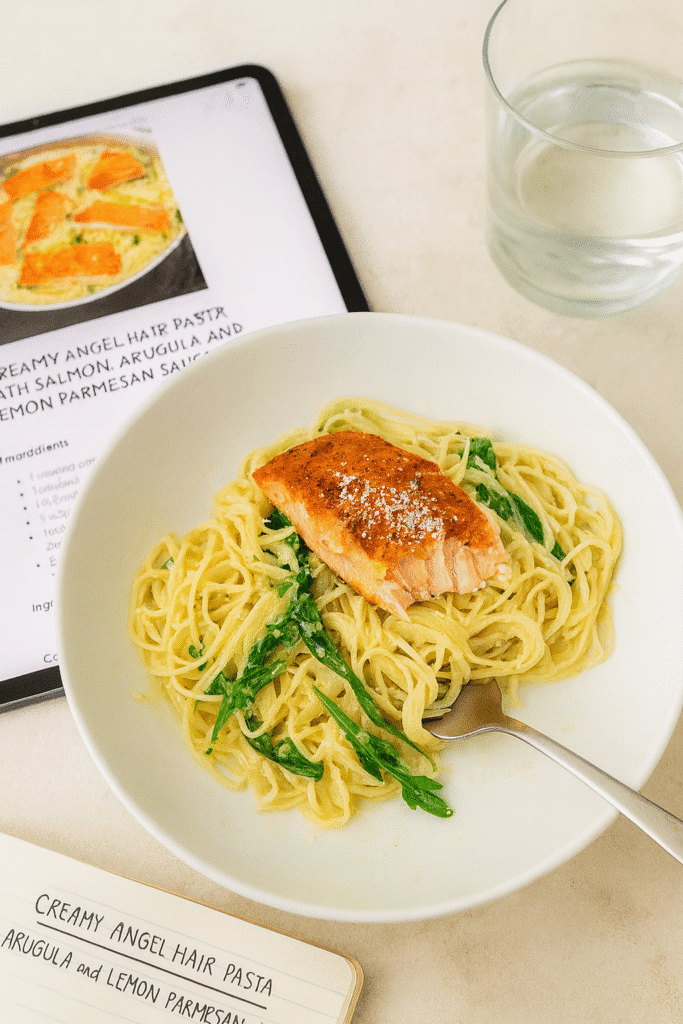
Angel Hair Pasta with Salmon, Arugula, and Creamy Lemon Parmesan Sauce brings together three comforting things in one bowl: silky pasta, rich seared salmon, and a bright, lemony cream sauce that feels special but not fussy. You now know how to choose and portion salmon, how to sear it so it is browned outside and moist inside, and how to build a creamy lemon Parmesan sauce that clings to every strand of pasta without turning heavy or clumpy.
Once you have made the recipe as written, feel free to play. Try different greens, tweak the level of lemon or heat, or swap the pasta shape. With the core technique under your belt, this can easily become a go to salmon dinner for busy weeknights and relaxed weekends alike.
Creamy Angel Hair Pasta with Salmon, Arugula and Lemon Parmesan Sauce