
If you’ve ever wanted a fast, comforting Thai meal that doesn’t require a long ingredient list or special equipment, Kai Jeow (Thai omelet) is it. This golden, crispy-edged omelet is a staple in Thai home cooking and street food – usually served over hot jasmine rice with a little raw cucumber on the side. Recipes are simple, but the flavor is big thanks to fish sauce, high heat, and puffy, lacy edges.
In this guide, we’ll walk through exactly what Kai Jeow is, how it fits into everyday Thai cooking, and how to make a crispy Thai omelet you can trust on your very first try. You’ll also get variations, troubleshooting tips, nutrition info, and FAQs so you can adapt it to your own kitchen and taste.
Time and Serving
- Prep Time: ~5 minutes
- Cook Time: ~5 minutes
- Total Time: ~10 minutes
- Yield: 1 omelet (ideal for 1 person, easy to scale up to 2 to 4 by cooking omelets one at a time)
These times align with typical Thai omelet recipes, which are often listed as 5 to 10 minutes total.
Insight Into Kai Jeow (Thai Omelet)
What Is Kai Jeow?
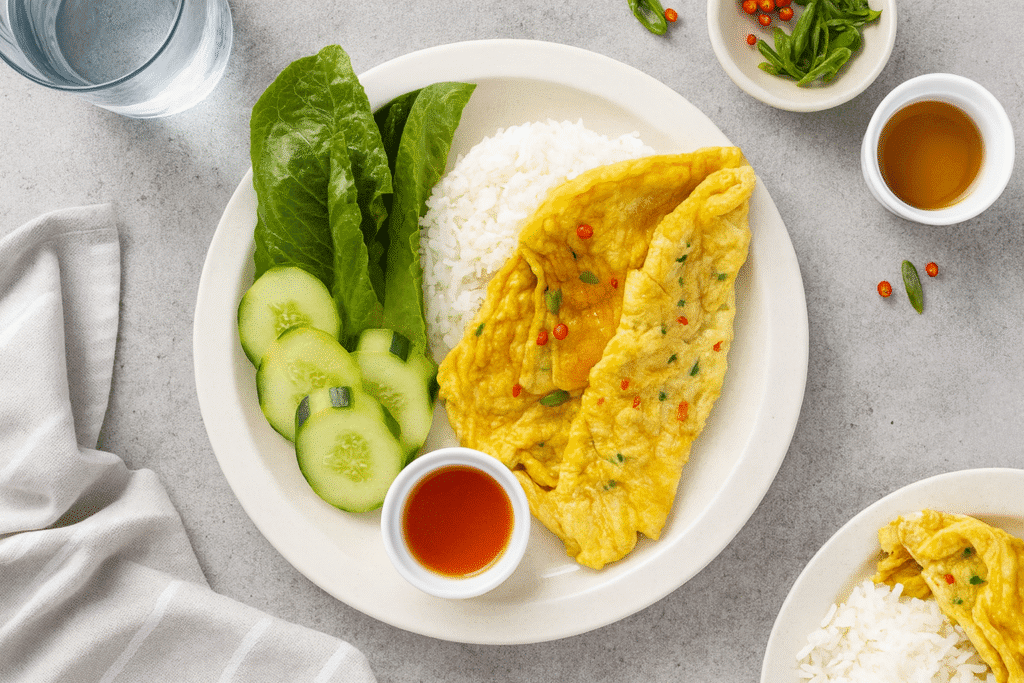
Kai Jeow (also spelled Khai Jiao, Kai Jiew, ไข่เจียว) is a Thai-style omelet made from beaten eggs seasoned primarily with fish sauce, then fried in very hot oil until the edges are deeply crisp and the center puffs up. It’s usually served over steamed jasmine rice, often with sriracha, chili-fish sauce, or other chili condiments on the side.
Unlike a Western omelet, which is typically gently cooked, folded, and sometimes creamy in the center, a Thai omelet is intentionally:
- Crispy and bubbly around the edges
- Light and puffy in the middle
- Deeply savory from fish sauce rather than salt
- Often treated almost like a quick fried topping for rice rather than a big stand-alone centerpiece
Flavor Profile
A good Kai Jeow hits a few key notes:
- Salty–savory umami from fish sauce
- A whisper of sweetness (from a pinch of sugar) to round out the flavor
- Gentle heat from Thai chili (if you use it)
- A faint onion-y aroma from scallion
- Toasty, fried-egg richness from the hot oil and egg edges
With plain jasmine rice, those bold flavors soften and balance out. The rice soaks up the salty juices, while cool cucumber slices or lettuce add freshness and crunch.
Everyday Thai Comfort Food
In Thailand, Kai Jeow is everyday food – a quick meal, snack, or emergency “there’s nothing in the fridge” option. Home cooks often whip it up:
- Over rice for breakfast or lunch
- As a late-night snack
- As a simple side dish to go with a spread of curries or stir-fries
It’s popular with beginners because:
- You only need eggs, fish sauce, and oil
- The method is fast and forgiving
- Even if the omelet tears when you flip it, it still tastes fantastic (Thai cooks say the shape doesn’t matter as much as the crisp and flavor).
For you, that means budget-friendly, pantry-based, and perfect for solo cooks or small households.
Ingredients
For the Thai Omelet
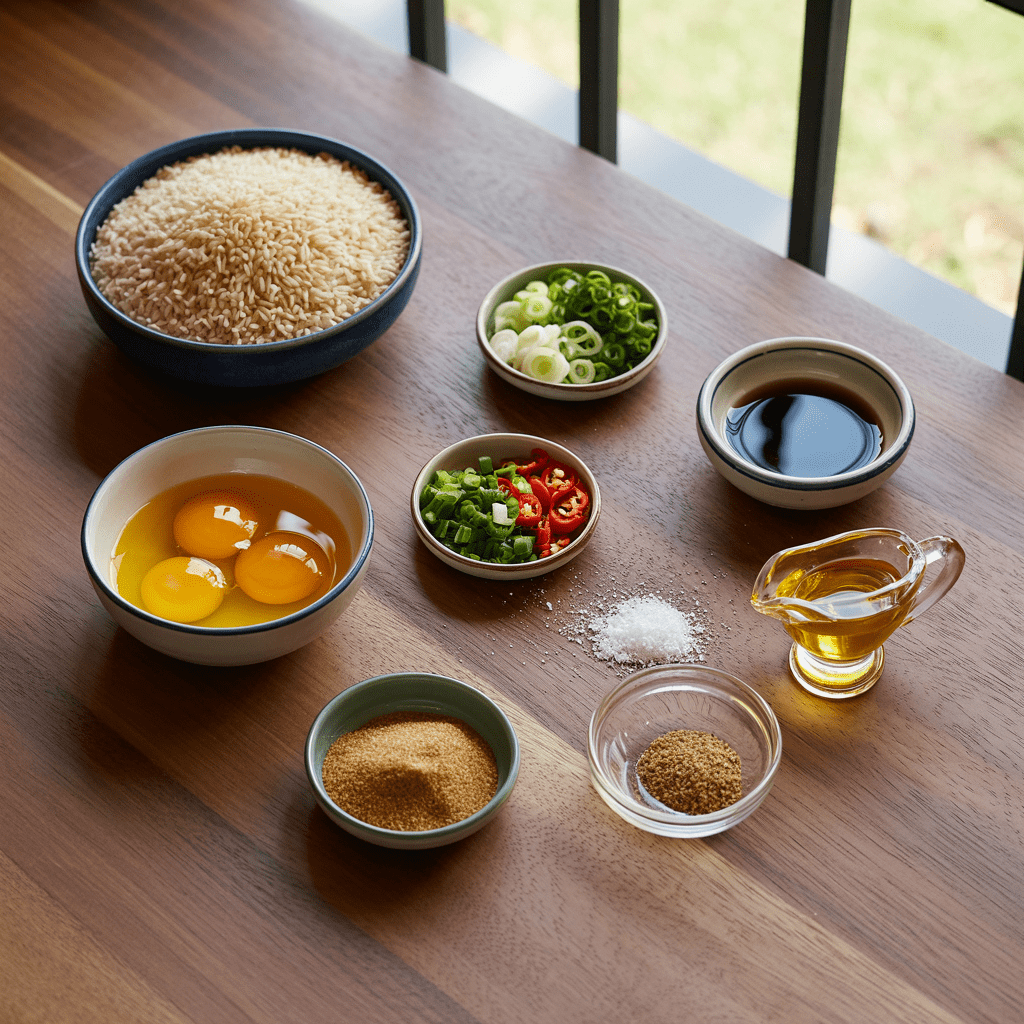
- 3 large eggs
- 1–2 teaspoons Thai fish sauce, to taste
- Use 1 teaspoon if you’ll eat the omelet on its own
- Use 2 teaspoons if serving over plain rice (the omelet “seasons” the rice)
- ¼ teaspoon brown sugar (or white sugar) – balances the saltiness
- 1 scallion, finely minced
- ½ – 1 Thai chili, finely minced (optional)
- Start with ½ chili if you’re new to Thai chilies; they can be quite hot
- ¼ teaspoon ground black pepper
- 2 to 3 tablespoons neutral oil, such as vegetable, canola, or sunflower oil – enough to generously coat the bottom of a small pan (Thai omelets are almost shallow-fried)
For Serving (Optional but Highly Recommended)
- 1 cup cooked jasmine rice
- 4 to 6 slices cucumber
- A few leaves of romaine lettuce or other crunchy greens
- Sriracha, sambal oelek, or Thai chilies in fish sauce (nam pla prik) for extra heat
Ingredient Notes & Tips
- Fish sauce:
- Look for brands with short ingredient lists, ideally just fish and salt (no added sugar or artificial flavorings). High-quality brands such as Red Boat (Vietnamese-style) or Thai brands that list only anchovies and salt are favored by many cooks.
- Traditional fish sauce is usually made by fermenting small fish like anchovies with salt for 6 – 12 months or longer, which develops its deep umami.
- Thai chilies:
- These small chilies (bird’s eye chilies) are significantly spicier than common jalapeños. Handle with care and wash your hands afterward; keep them out of your eyes.
- Sugar:
- A small pinch won’t make the omelet sweet; it just smooths out the edge of the fish sauce and balances the salty-savory flavor, a common technique in Thai cooking.
- Oil:
- Don’t be scared by the amount. Traditional Kai Jeow is fried in fairly generous oil to make the omelet puff and crisp. You’re not deep-frying, but it’s more than a typical Western omelet.
Feel free to adjust fish sauce, sugar, and chilies to taste – you’re aiming for savory and flavorful, not overwhelmingly salty.
Required Tools
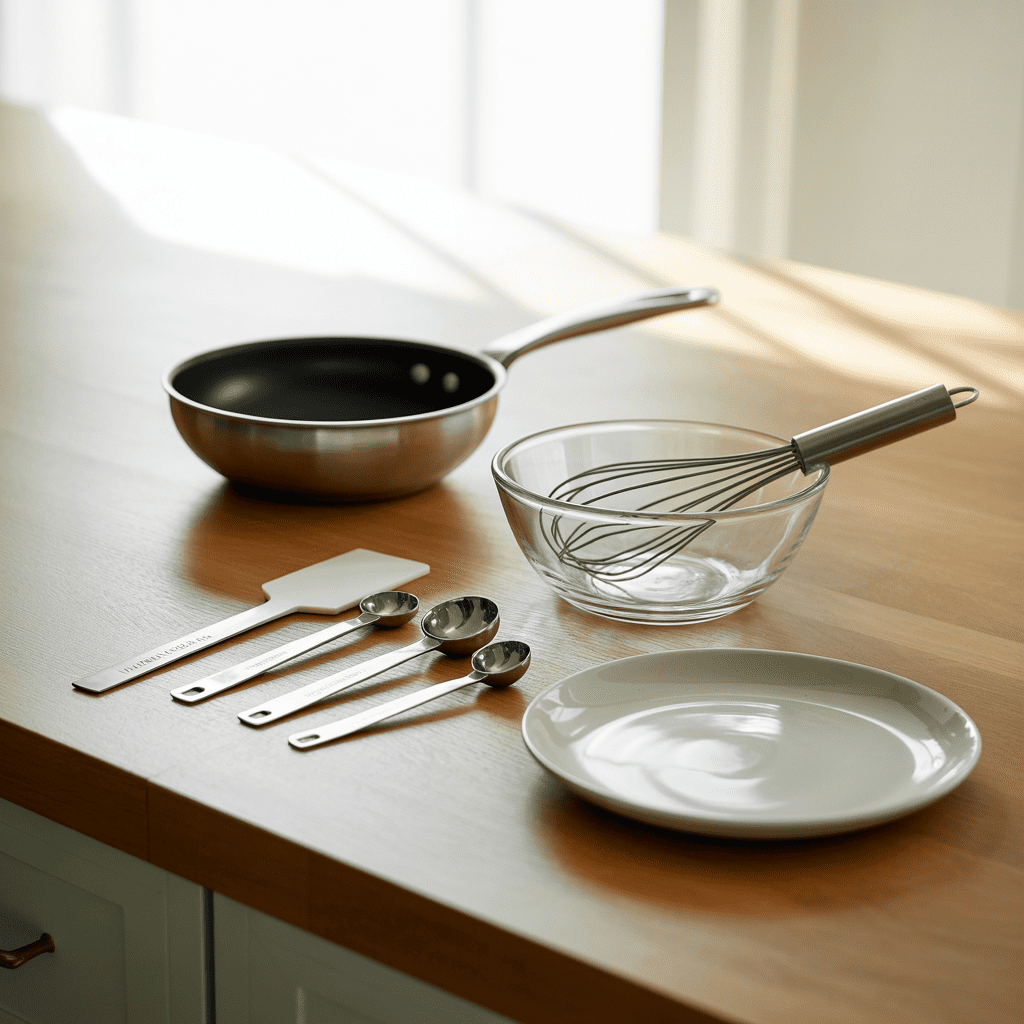
- Small nonstick skillet (about 8 inches / 20 cm)
- A nonstick pan makes flipping much easier and helps prevent sticking. Many Thai home cooks also use a wok, but a small nonstick pan is very beginner-friendly.
- Heat-safe spatula (or chopsticks)
- To push the omelet edges toward the center and help with flipping.
- Medium mixing bowl
- For whisking the egg mixture thoroughly.
- Whisk or fork
- You want the eggs very well beaten and slightly frothy for a puffy texture.
- Measuring spoons
- Helps you learn the right fish-sauce level before seasoning by “feel.”
- Plate or wide lid
- Very handy for the flip-with-a-plate trick if you’re nervous about flipping in the air.
These simple tools are enough to get you a crispy, restaurant-style Thai omelet at home.
Step-By-Step Preparation Guide
Step 1. Mix the Egg Base
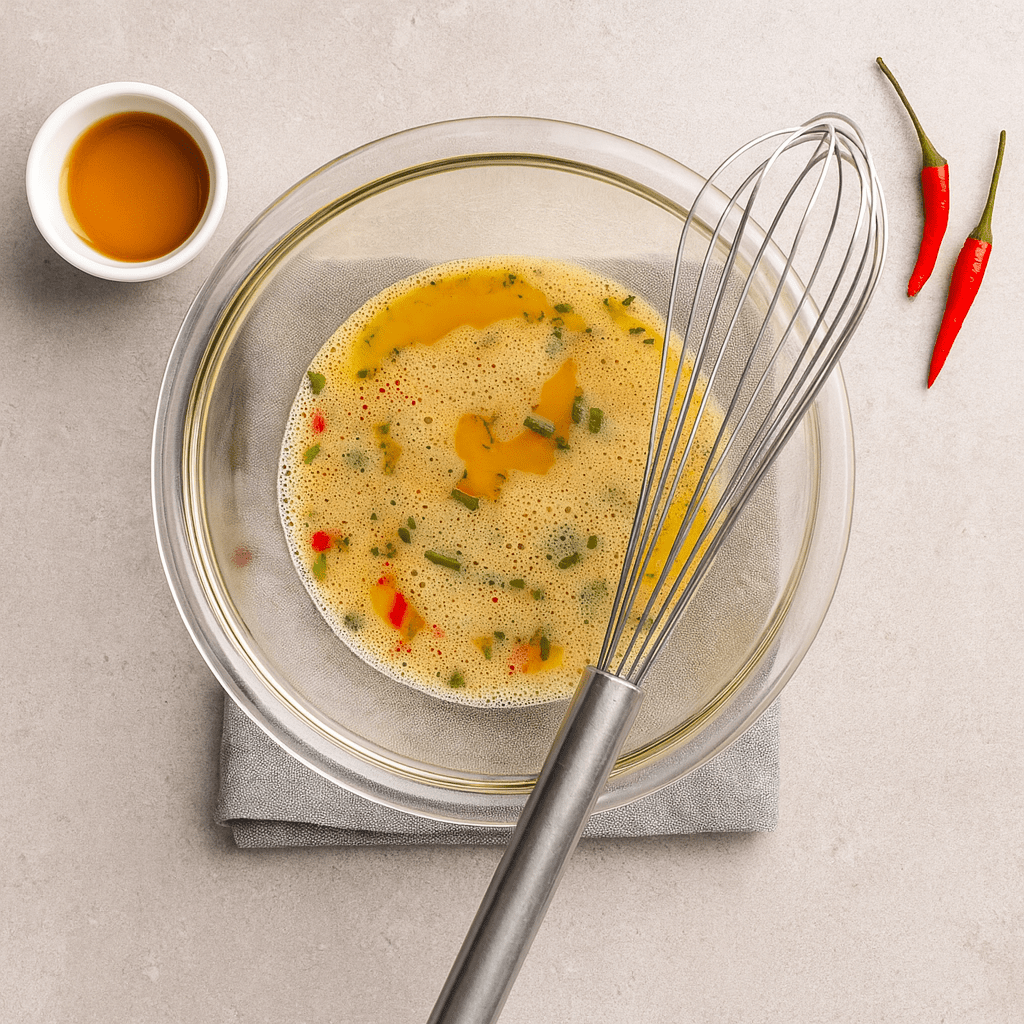
- Crack 3 large eggs into a medium bowl.
- Add:
- 1 to 2 teaspoons fish sauce
- ¼ teaspoon brown sugar
- Minced scallion
- Minced Thai chili (if using)
- ¼ teaspoon black pepper
- Whisk vigorously with a fork or whisk until the mixture is uniform, slightly frothy, and no streaks of egg white remain.
Why this matters: Thoroughly beaten eggs trap more air, which helps the omelet puff. Mixing the fish sauce evenly also prevents random salty pockets.
Step 2. Preheat the Pan and Oil
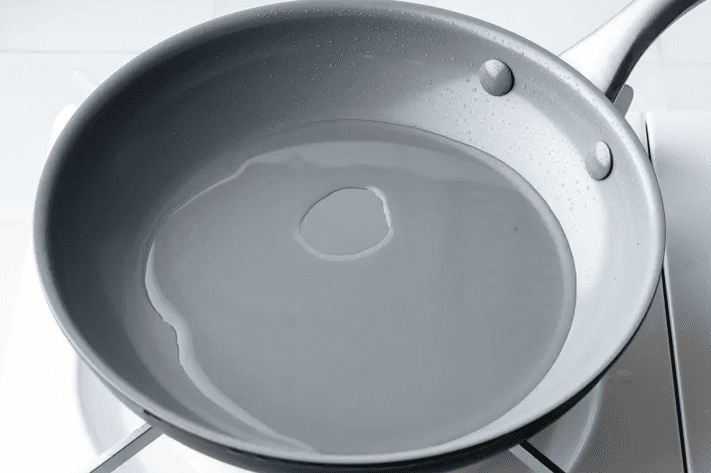
- Place your small nonstick skillet over medium-high heat.
- Add 2 to 3 tablespoons neutral oil, tilting the pan to coat the bottom well.
- Heat the oil until it’s shimmering and just starting to smoke lightly.
You can test the oil by dipping the tip of a chopstick or a tiny drop of egg mixture into it – it should sizzle instantly.
Why the oil must be hot: Thai omelets are meant to puff dramatically as soon as the egg hits the oil. If the oil is not hot enough, the egg will soak up oil, turn heavy and greasy, and won’t develop the signature crispy edges.
Step 3. Pour and Fry the Omelet
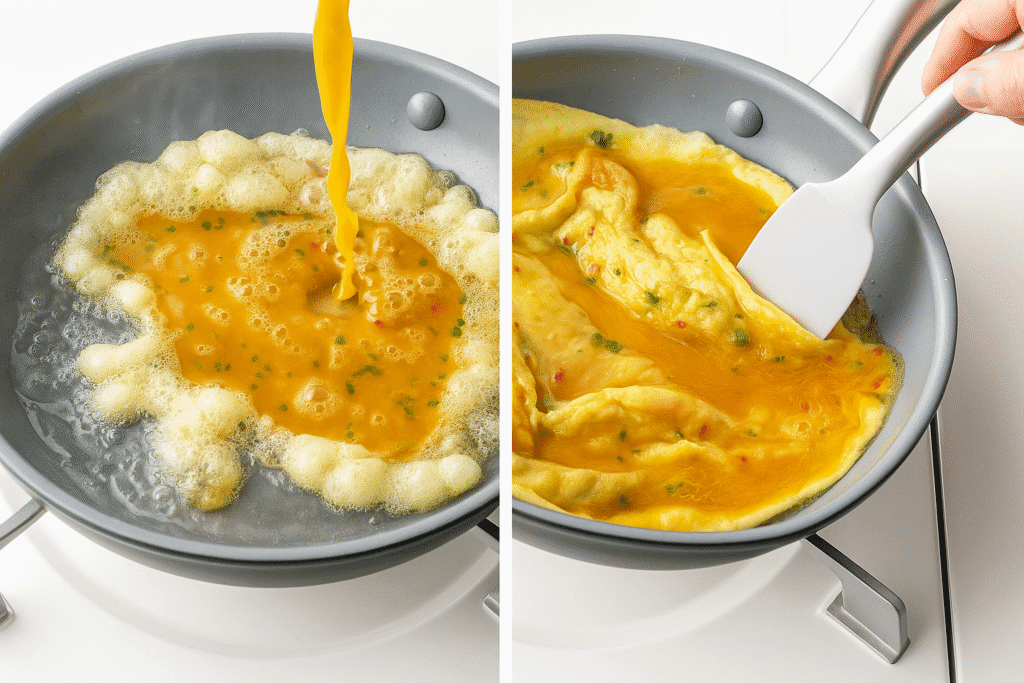
- Hold the bowl of beaten eggs 10 to 12 inches (25 – 30 cm) above the pan.
- Pour the eggs in one confident motion into the center of the hot oil.
- You should hear an immediate loud sizzle and see the omelet bubble and puff at the edges.
As the bottom starts to set:
- Use a spatula or chopsticks to gently push the edges in toward the center, so you build a slightly thicker middle.
- Tilt the pan so the uncooked egg flows out to touch the hot oil and cook.
Cook the first side until:
- The bottom is deep golden-brown, and
- The top is mostly set with just a small area that looks slightly moist (usually around 2 to 3 minutes, depending on your stove and pan).
This technique of pushing the edges inward and tilting the pan is standard in many Thai recipes for Kai Jeow.
Step 4. Flip and Finish Cooking
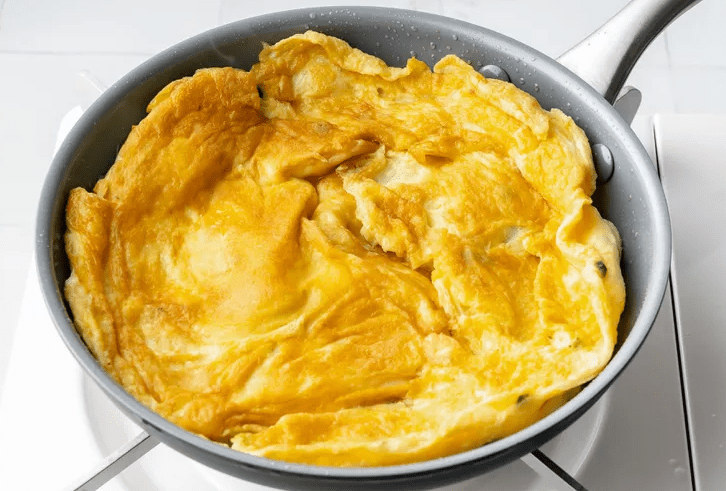
You have two options:
Option A – Pan Flip (for confident flippers):
- Firmly grip the pan handle.
- Give a quick, controlled flick of your wrist to flip the omelet like a pancake.
- Cook the second side for another 20 to 40 seconds, until golden-brown but not dried out.
Option B – Plate or Lid Flip (for cautious flippers):
- Slide the omelet out of the pan onto a large plate or wide lid, cooked side down.
- Place the pan upside down over the plate, then invert so the omelet falls back into the pan, uncooked side down.
- Cook for another 20 to 40 seconds.
You’re done when both sides are nicely browned and crisp at the edges, but the center still feels soft and bouncy when you gently press it with the spatula.
Step 5. Drain (Optional) and Serve
- If you’d like, briefly set the omelet on a paper towel-lined plate to blot excess oil.
- Serve immediately over a bowl of hot jasmine rice.
- Add cucumber slices and lettuce leaves on the side.
- Offer sriracha, sambal, or sliced Thai chilies in fish sauce so everyone can adjust the heat.
Many Thai home cooks also tuck bites of omelet, rice, and cucumber into a piece of lettuce like a quick wrap – it’s crunchy, salty, and very satisfying.
Variations and Add-Ins
Kai Jeow is very flexible. Here are some classic and beginner-friendly variations:
Protein Add-Ins
Mix one of these into the egg mixture before frying (about ¼ to ⅓ cup max):
- Ground pork or ground chicken – very common in Thailand (Kai Jeow Moo Sap)
- Crab meat or chopped shrimp – for a slightly fancier, seafood-forward version
Important: Don’t overload the omelet. Too much filling weighs it down and prevents it from puffing. Keeping add-ins modest (around ⅓ cup) is a common recommendation from Thai cooks.
Heat Levels
- Kid-friendly: Skip Thai chilies; serve with ketchup or mild sriracha instead.
- Medium heat: Use ½ Thai chili, finely minced.
- Spicy: Use a full Thai chili (or more), and serve with extra chili-fish sauce on the side.
Flavor Tweaks
- Extra onion flavor: Add thinly sliced shallots or more scallion.
- Herb twist: A bit of cilantro or green onion on top after frying.
- Fish sauce adjustment:
- More fish sauce if serving over a large portion of plain rice
- Less if you’re eating the omelet alone or with very salty side dishes
Key Advantages of Making Kai Jeow
- Fast: From cracking eggs to sitting down to eat, you’re looking at around 10 minutes.
- Budget-friendly: Eggs, fish sauce, oil, and rice are inexpensive staples in most kitchens.
- Flexible meal slot: Works for breakfast, lunch, dinner, or late-night snack.
- Customizable: Easily adjust spice level, saltiness, and add-ins (meat, seafood, or veggies).
- Comforting & satisfying: Crispy edges, savory fish sauce, and warm rice give serious comfort-food vibes.
- Beginner-friendly: Simple technique that teaches you about pan heat, oil temperature, and egg handling – all core kitchen skills.
Mistakes to Avoid
1. Oil Not Hot Enough
- Problem: The omelet turns flat, greasy, and dense instead of puffy and crisp.
- Fix: Wait until the oil is shimmering and lightly smoking, and the test drop of egg sizzles vigorously.
2. Overcrowding With Add-Ins
- Problem: Too much meat or filling weighs down the egg, so it can’t puff and may break apart.
- Fix: Keep add-ins to about ¼ to ⅓ cup per 3 eggs and chop them finely so they integrate into the omelet.
3. Unbalanced Fish Sauce
- Problem: Too salty if eaten alone, too bland if served over rice.
- Fix:
- Use 1 teaspoon fish sauce if not serving with rice.
- Use 2 teaspoons if you’ll have a full cup of plain jasmine rice underneath (the rice needs that extra seasoning).
4. Overcooking the Omelet
- Problem: Dry, rubbery texture and a burnt taste.
- Fix: Pull the omelet when both sides are deep golden-brown but not dark brown. The center should still feel springy, not stiff.
5. Pan Sticking
- Problem: The omelet tears and sticks, making flipping stressful.
- Fix:
- Use a good nonstick pan or a very well-seasoned wok.
- Make sure there’s enough oil – the bottom should be coated generously, not just lightly greased.
Expert Tips
- Cook for more than one person:
- Beat enough eggs for everyone in a big bowl (say 6 to 8 eggs with fish sauce and seasoning).
- Then cook one omelet at a time so each one puffs properly – crowding a big omelet in a large pan makes it harder to get that signature texture.
- Adjust to your fish sauce brand:
- Some brands are saltier and more intense than others. Start with the lower amount (1 teaspoon per 3 eggs), taste a small fried test piece if you’re unsure, and adjust next time.
- Serve like at home in Thailand:
- Spoon the omelet over hot jasmine rice, tuck cucumber slices and lettuce on the side, and set out a little dish of fish sauce with sliced chilies so everyone can drizzle as they like.
- Make it a full meal:
- Add a simple clear soup, like a light veggie or chicken broth, and some stir-fried greens (such as garlic morning glory or bok choy) for a complete, balanced Thai-style meal.
- Real-life scenario:
- This is the dish you can make when it’s late, you’re hungry, and the fridge holds “nothing but eggs, a bottle of fish sauce, and some rice.” In Thai households, Kai Jeow is often exactly that go-to emergency meal – fast, familiar, and surprisingly satisfying.
Nutrition Facts (Per Serving)
Exact nutrition will vary with the amount of oil absorbed, rice portion, and add-ins. Based on a 3-egg Thai omelet with fish sauce served with about 1 cup jasmine rice, a typical serving is roughly in this range:
- Calories: ~700 to 750 kcal
- Total Fat: ~50 to 60 g
- Carbohydrates: ~35 to 40 g
- Protein: ~22 to 26 g
- Sodium: can be around 1,200 to 1,400 mg (due largely to fish sauce)
These estimates draw from published nutrition labels for similar Kai Jeow recipes and portion sizes.
Note: These numbers are estimates, not a medical or dietary guarantee. Actual values will change with the amount of fish sauce, type and amount of oil, rice quantity, and any added meats or vegetables. Adjust portions and ingredients as needed for your dietary needs.
Frequently Asked Questions
1. Can I make Kai Jeow without fish sauce?
You can, but it won’t taste quite the same. Fish sauce gives classic Thai omelets their signature deep umami. If you can’t use it, you can substitute:
- Light soy sauce or
- A mix of soy sauce and a tiny splash of vinegar or lime juice for brightness
It’ll be tasty, just more like a general Asian-style omelet than a traditional Thai omelet (kai jeow).
2. What’s the best oil to use for Thai omelet?
A neutral, high-heat oil works best:
- Vegetable oil
- Canola oil
- Sunflower oil
Traditional recipes often treat Kai Jeow almost like a shallow-fried dish, so you want oil that can handle higher heat and let the egg crisp without burning or tasting bitter.
3. How do I keep my omelet from falling apart when I flip it?
- Make sure the first side is fully set and golden before flipping.
- Use a good nonstick pan and enough oil.
- Try the plate or lid flip method: slide the omelet onto a plate, invert the pan over it, then flip both together so the omelet lands back in the pan.
And if it tears a little? Thai cooks will tell you: it still tastes great.
4. Can I add meat or vegetables to Kai Jeow?
Absolutely. Common additions include:
- Minced pork or chicken
- Crab meat or chopped shrimp
Keep it to about ¼ to ⅓ cup per 3 eggs so the omelet doesn’t get too heavy. Vegetables should be finely chopped and not too watery (scallion, shallot, or finely diced bell pepper work better than big chunks of tomato).
5. Is Kai Jeow very spicy? How can I make it kid-friendly?
Kai Jeow is as spicy as you make it:
- Traditional versions may include Thai chilies, which can make it quite hot.
- For kids or spice-sensitive eaters, simply leave out the chilies and serve with ketchup, mild sriracha, or no sauce at all.
6. Can I make this ahead of time or reheat leftovers?
Fresh is best – you’ll get the crispy edges and puffy center. However:
- You can refrigerate leftover omelet for up to 1 day.
- Reheat in a hot skillet with a tiny bit of oil to bring back some crispness, or in the oven/air fryer for a few minutes.
- The texture won’t be quite as airy as fresh, but it’s still good over rice.
Conclusion
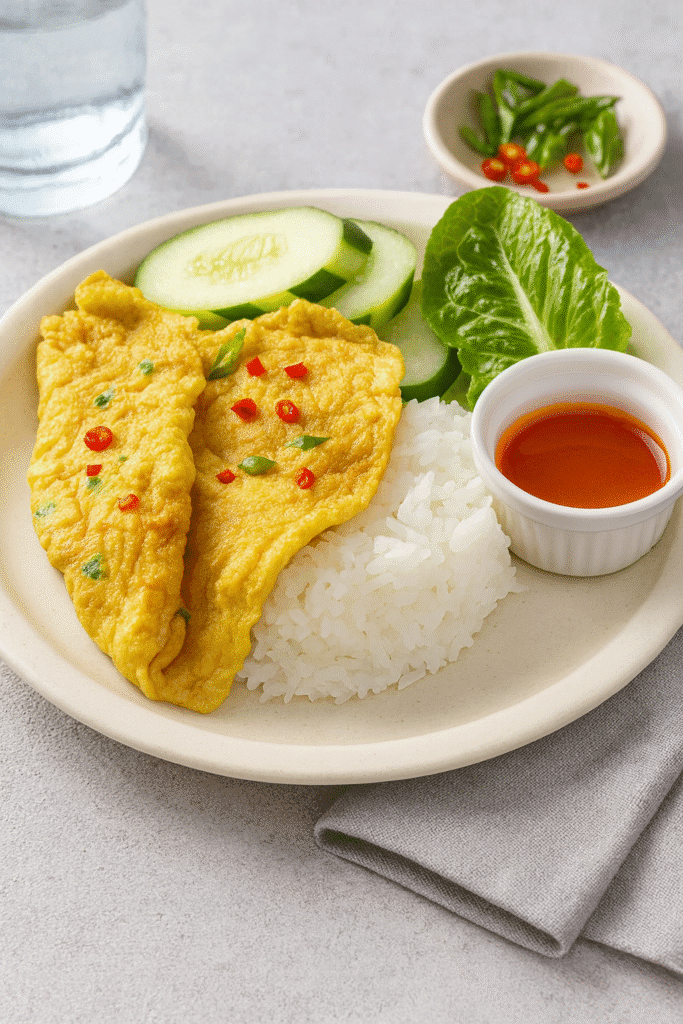
Kai Jeow (Thai omelet) is one of those dishes that proves how much you can do with just a few simple ingredients. In about 10 minutes, you can go from cracking eggs to enjoying a crispy, savory, puffy omelet over hot jasmine rice – the kind of comforting, budget-friendly meal that Thai home cooks rely on all the time.
Start with the basic version: eggs, fish sauce, scallion, and maybe a little chili. Once you’re comfortable with the heat of the oil and the flipping, play with add-ins like minced pork or shrimp, or tweak the seasoning to suit your taste.
With this guide, you’ve got the technique, tips, and context to make Kai Jeow part of your regular weeknight rotation – or your personal “emergency comfort food” when you want something fast, crispy, and deeply satisfying.

Kai Jeow (Thai Omelet): Crispy, Savory, and Ready in 10 Minutes