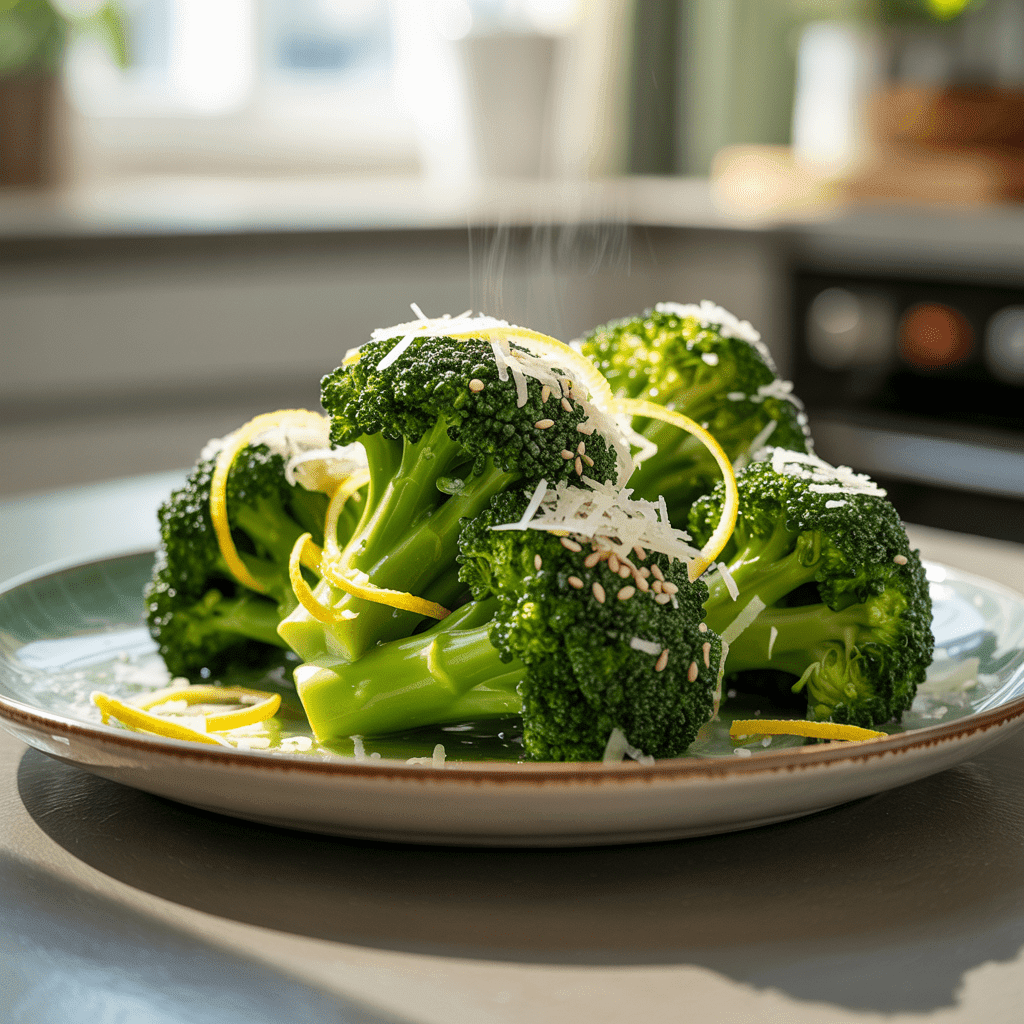

Menemen is Turkey’s beloved pan of softly scrambled eggs cooked in a rich sauce of tomatoes and green peppers, often brought straight from the stove to the breakfast table. In Turkish breakfast culture, or kahvalti which literally means “before coffee,” a simmering pan of menemen is one of the stars among bread, cheese, olives, and strong black tea.
The dish looks simple, but when you cook it gently so the tomatoes become jammy, the peppers turn sweet, and the eggs stay soft and creamy, it feels like something you might have eaten in a café near the Aegean coast. This menemen recipe is quick enough for a weekday breakfast, comforting enough for a lazy weekend brunch, and satisfying as a light lunch or dinner with plenty of bread for dipping.
Time and Serving
- Prep time: about 15 minutes
- Cook time: about 25 minutes
- Total time: about 40 minutes
- Servings: 4 to 6 people, depending on appetite and side dishes
These times are based on traditional menemen recipes and home kitchen testing for an eight egg pan.
Insight of the Menemen (Turkish Scrambled Eggs and Tomatoes)

At its heart, menemen is a one pan egg dish where beaten eggs are gently scrambled into a chunky tomato and pepper sauce. The classic version uses grated fresh tomatoes, Turkish green peppers known as sivri biber, onion in some households, garlic, sweet pepper paste, and a sprinkle of pul biber or Aleppo pepper for gentle heat.
Most sources trace the dish to the Izmir region in western Türkiye, close to the Aegean coast, where tomatoes and peppers grow abundantly. Over time it has spread across the country and beyond, becoming a staple on kahvalti spreads and in casual cafés.
The texture is what surprises many first time cooks. Menemen is softer and saucier than plain scrambled eggs. The tomato base should be thick enough that it is not watery, but still loose and spoonable. When the eggs are cooked correctly, they form delicate curds that ripple through the tomato mixture rather than a solid, dry scramble.
Why it is worth learning this dish:
- It uses affordable ingredients but feels special and restaurant worthy.
- You get a protein rich meal that also packs in vegetables from tomatoes and peppers.
- It works for many moments in the day, from brunch with friends to a solo dinner with bread and a small salad.
- It turns simple pantry items into something that feels like a slice of Turkish breakfast culture at home.
Ingredients
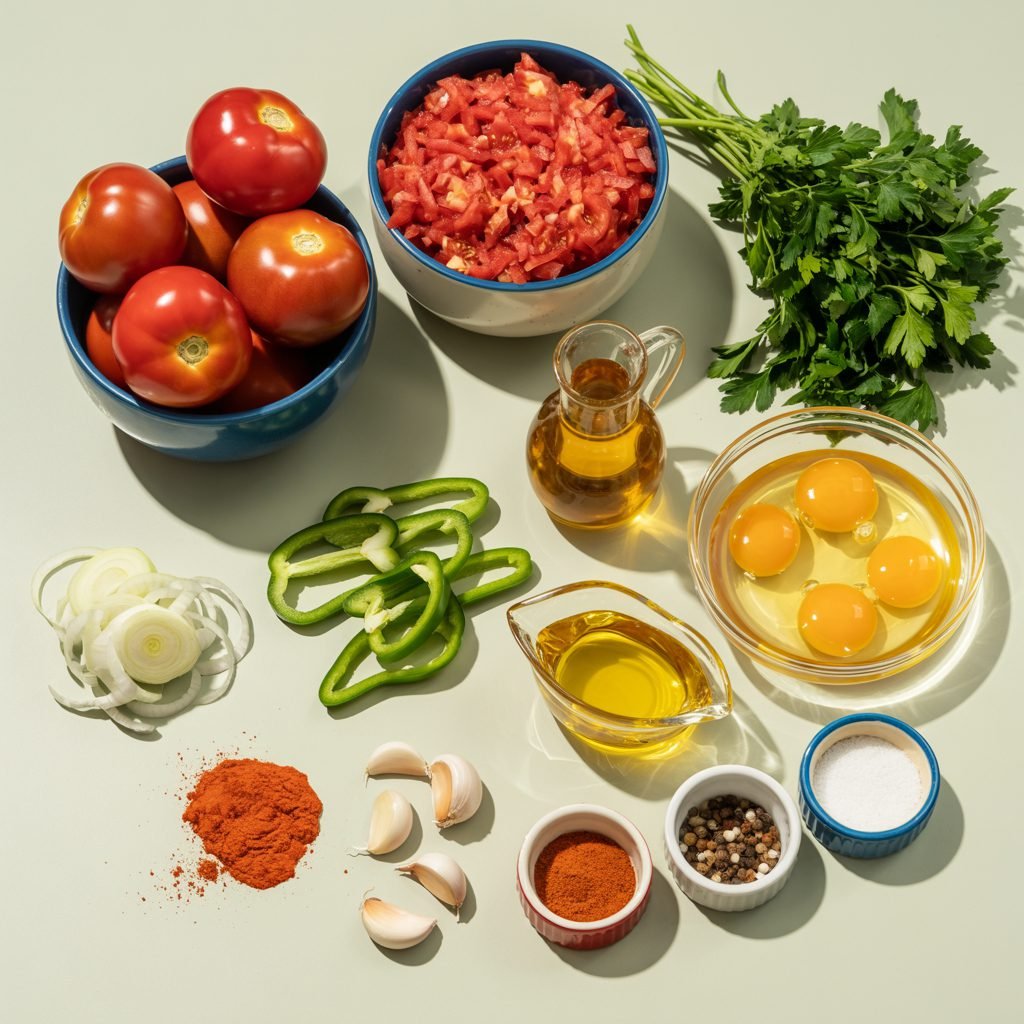
These amounts make a generous pan that feeds 4 as a main dish, or 5 to 6 people if you serve it with a bigger breakfast spread.
For the menemen
- 2 large ripe beefsteak tomatoes, grated on the large holes of a box grater (about 3 cups tomato pulp, skins discarded)
- 8 large eggs
- 2 tablespoons extra virgin olive oil
- 1 medium yellow onion, finely diced
- 1 teaspoon fine sea salt, divided (start with about ¾ teaspoon for the vegetables, save the rest for the eggs, then adjust to taste)
- 3 cloves garlic, finely minced or crushed
- 4 to 6 Turkish green peppers (sivri biber), seeded and finely chopped
- If you cannot find them, use 1 large green bell pepper or a mix of bell pepper and a mild long green chile.
- 1 tablespoon Turkish sweet pepper paste (tatli biber salcasi)
- If unavailable, use 1 tablespoon tomato paste plus an extra pinch of pul biber or sweet paprika.
- 1 teaspoon pul biber or Aleppo pepper flakes
- 1 teaspoon dried oregano
- ½ teaspoon freshly ground black pepper
For garnish
- 2 tablespoons olive oil
- 1 teaspoon pul biber or Aleppo pepper
- Small handful fresh flat leaf parsley, leaves roughly chopped
About the spices and paste
Pul biber or Aleppo pepper has a gentle heat with fruity, slightly smoky notes and hints of sun dried tomato, rather than a sharp burn. Wikipedia Sweet pepper paste gives a deep, rounded pepper flavor and a beautiful red color even if your tomatoes are a little pale. When you substitute tomato paste, you still get body and color, but the flavor will be slightly more tomato forward and less peppery.
A note on onions
There is a real onion debate in Turkey. Some cooks insist that menemen should never include onion, especially at breakfast, while others would not dream of skipping it and happily eat onion rich menemen any time of day. This recipe uses onion for sweetness and depth, but you can leave it out completely if you prefer a lighter, fresher tasting pan.
Required Tools for Making the Recipe

You do not need anything fancy, but a few choices make a big difference in texture.
- Wide skillet or shallow pan, about 10 to 12 inches
- A non stick, enameled, or well seasoned pan works well. A wide surface lets the tomatoes reduce faster and helps the eggs cook gently in a thin layer instead of in a deep mound.
- Cutting board and sharp knife
- For dicing onion, peppers, and garlic.
- Box grater
- Grating tomatoes on the large holes leaves the skins behind and creates a smooth pulp that cooks down evenly.
- Two medium bowls
- One for grated tomatoes and one for beaten eggs.
- Whisk or fork
- For beating the eggs until they are well mixed and slightly frothy.
- Measuring spoons and cups
- To keep the seasoning consistent from one batch to the next.
- Heat resistant spatula or wooden spoon
- For stirring the vegetables and gently folding the eggs so they stay creamy.
A wide pan and moderate heat are the real secret tools here. They allow the tomato base to thicken without scorching and give you time to control the eggs so they stay soft and saucy.
Method: Step by Step Preparation Guide
Step 01: Prep the tomatoes and eggs
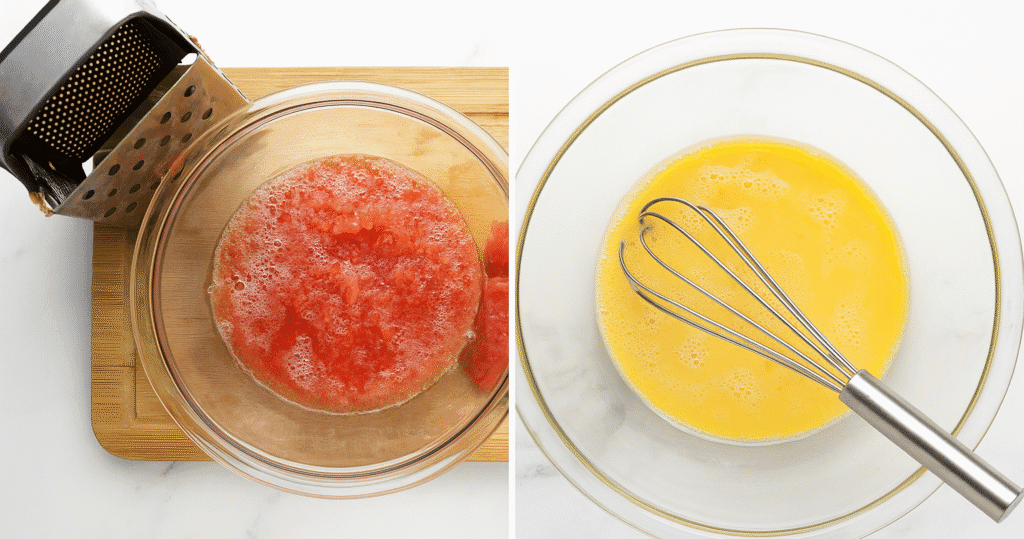
- Stem the tomatoes and cut them in half if they are very large. Hold each piece against the large holes of a box grater set over a bowl and grate until you are left with just the skin in your hand. Discard the skins. You should end up with a bowl of fairly smooth tomato pulp with some small pieces but no big chunks.
- Crack the eggs into a separate bowl. Add a small pinch of salt, then beat with a fork or whisk until the yolks and whites are completely blended and the mixture looks a bit foamy on top. Set aside.
Grating the tomatoes helps them cook down into a thick, almost jam like base rather than a chunky sauce that can make the eggs watery.
Step 02: Cook the onion and peppers

- Place your skillet over medium heat and add 2 tablespoons olive oil. When the oil looks shiny and moves easily around the pan, add the diced onion and about three quarters of the salt.
- Cook the onion for 3 to 4 minutes, stirring occasionally, until it turns translucent and starts to smell sweet instead of sharp. You do not need deep browning here, just a soft, mellow onion.
- Add the minced garlic and cook for about 30 seconds, just until fragrant.
- Stir in the chopped peppers. Cook for 5 to 7 minutes, stirring now and then, until the peppers have softened and lost their raw crunch but still hold their shape. If anything begins to brown too quickly, lower the heat slightly.
At this stage, the kitchen should smell like gentle sweetness from the onions and peppers, with a hint of garlic but no bitterness.
Step 03: Build the tomato and spice base
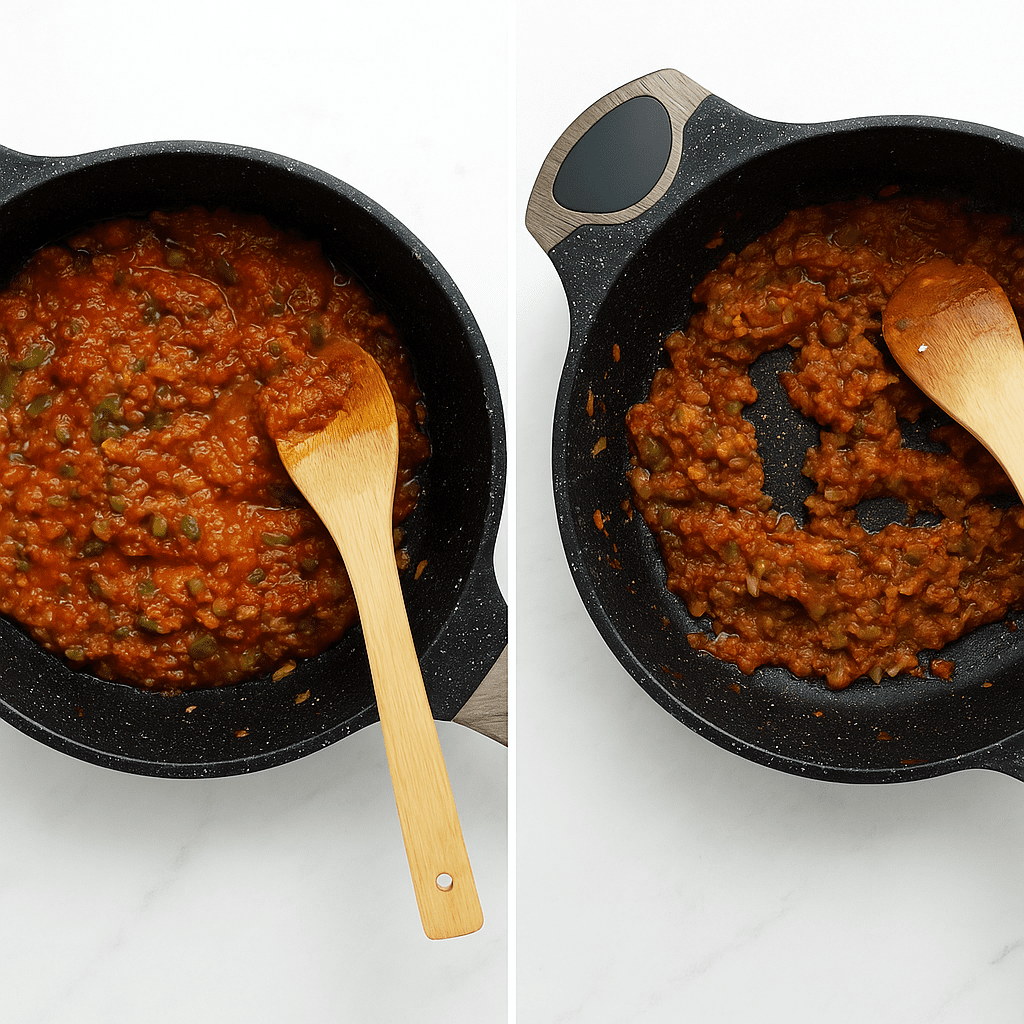
- Add the sweet pepper paste to the pan. Stir it into the onion and pepper mixture for about 1 minute. This helps wake up its flavor and cooks off any raw taste.
- Pour in the grated tomatoes along with any juices in the bowl. Sprinkle in the pul biber, dried oregano, and black pepper. Stir everything together.
- Cook this mixture at a gentle simmer for about 10 minutes, stirring occasionally. You want bubbles to break gently across the surface, not a hard boil.
- The tomato base is ready when it has noticeably thickened, looks glossy, and you can draw a spatula through the mixture and see the bottom of the pan for a second before it fills in again. There should still be moisture, but not pools of thin, watery juice.
Taking time to reduce the tomatoes is one of the most important steps. If you add the eggs while the base is still very watery, the finished menemen can feel soupy instead of creamy.
Taste the tomato mixture and adjust salt if needed before you add the eggs. It should already taste nicely seasoned, since the eggs will dilute the seasoning slightly.
Step 04: Add and cook the eggs
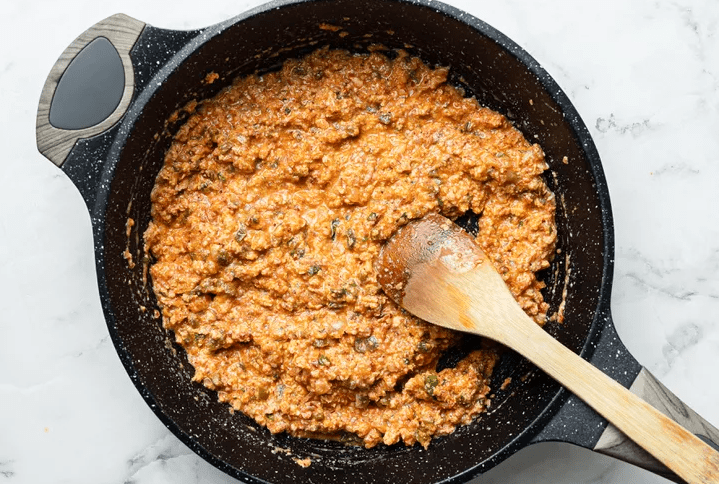
- Lower the heat to medium low. Give the beaten eggs a quick whisk, then pour them evenly over the tomato mixture.
- Let the eggs sit undisturbed for about 15 to 20 seconds, just until you see the edges starting to turn slightly opaque.
- Using a spatula, gently pull the mixture from the outer edge of the pan toward the center, making slow, soft folds rather than vigorous stirring. Rotate the pan as you go so you move different sections each time.
- Continue this gentle folding for 3 to 5 minutes, keeping the heat on the low side. The eggs should form soft, custardy curds that weave through the tomatoes and peppers.
- Stop cooking when the eggs are mostly set but still look slightly glossy and a little loose in places. There should be no visible raw liquid egg, but the mixture will be creamier and wetter than a plain scramble because of the tomatoes.
Remember that the menemen will continue to cook from residual heat in the pan, especially if you bring it straight to the table. It is better to stop while it looks a tiny bit softer than you think you want.
Step 05: Finish and serve

- In a small bowl, stir together 2 tablespoons olive oil with 1 teaspoon pul biber. This makes a quick, brick red spiced oil.
- Remove the pan from the heat. Drizzle the spiced oil over the surface of the menemen in thin streaks.
- Scatter chopped parsley on top for color and freshness.
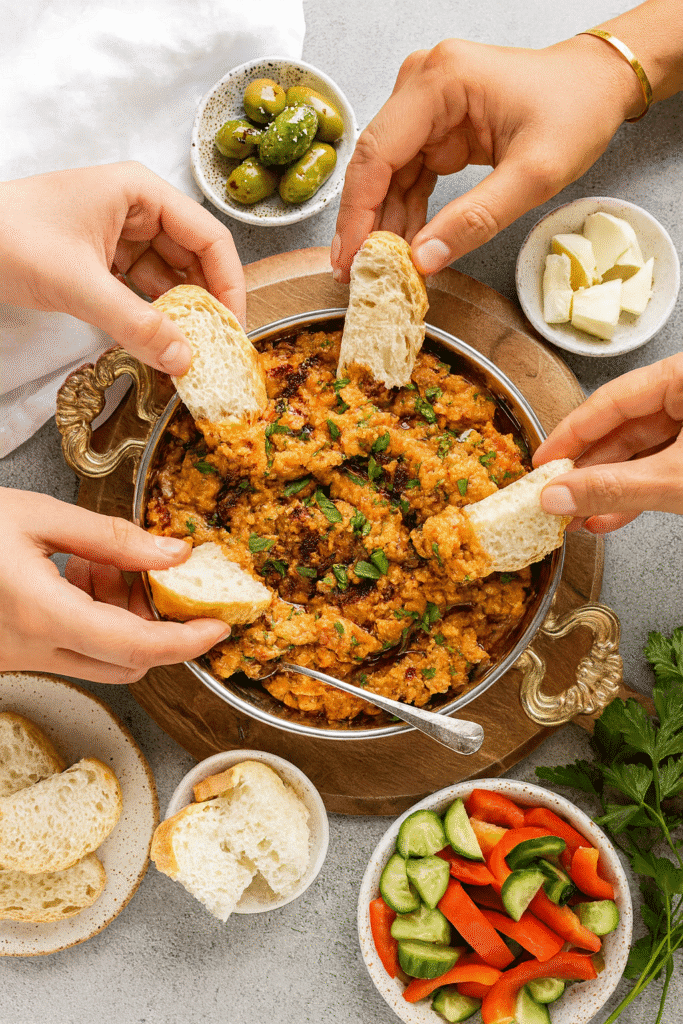
- Take the pan straight to the table and serve immediately with plenty of bread. Many people simply tear off pieces of crusty bread, dip right into the pan, and scoop up soft eggs with tomatoes and peppers.
Variations
Within the same method, you can easily customize your menemen:
- With or without onion
- For a lighter, breakfast forward version, skip the onion and start with peppers and garlic. For deeper sweetness and a more savory taste, keep the onion as written.
- Cheesy menemen
- In the last 1 to 2 minutes of cooking, gently fold in about ½ cup crumbled feta or Turkish white cheese. The cheese will soften and turn creamy without fully melting, giving you little pockets of tangy richness.
- With sucuk or sausage
- Before cooking the onion, lightly fry slices of Turkish sucuk or another dry, garlicky sausage in the pan until some of the fat renders. Remove the sausage, cook the vegetables in the flavored fat, then tuck the sausage back in near the end.
- Extra vegetables
- Mushrooms, zucchini, or spinach can be added, but cook them separately first until their moisture has mostly evaporated, then stir into the tomato base so they do not water down the eggs.
- Using canned tomatoes
- When fresh tomatoes are out of season, you can use about 2 cups of canned crushed tomatoes. Drain off some of the thin liquid first and take a little extra time to reduce the sauce until thick and glossy before adding eggs.
Key Advantages of Making Menemen
- Uses basic pantry ingredients like eggs, onions, tomatoes, and peppers that many households already keep on hand.
- High in protein from the eggs and includes a generous amount of vegetables in every portion.
- Flexible across the day: serve it for breakfast with tea, for brunch with a small salad, or as a light dinner with bread and olives.
- Easily customized for different tastes with onions, cheese, sausage, or extra vegetables.
- Naturally served family style in the pan, which makes it a warm, shareable dish at the table.
Mistakes to Avoid
- Adding eggs before the tomato mixture has reduced
- If you rush this step, the menemen often ends up thin and watery. Make sure the tomato base looks thick, shiny, and almost jammy before you add the eggs.
- Using very high heat for the eggs
- High heat can turn the eggs rubbery and dry within a minute. Keep the heat at medium low once the eggs go in and stir gently, allowing them to set slowly.
- Skipping salt for the vegetables
- Salting the onion and peppers early helps them soften and builds a flavorful base. If you only salt at the very end, the dish may taste flat.
- Using canned tomatoes without reducing them
- Canned tomatoes carry extra liquid. Drain lightly and take a bit more time simmering to get the right consistency.
- Leaving the pan on the burner after eggs are just set
- Once the eggs reach the soft, glossy stage, remove the pan from the heat. Residual heat will finish cooking them. Leaving the pan on the burner, even with the flame off, can overcook the eggs from underneath.
Expert Tips / Real Life Examples
- Even chopping for even cooking
- Dice onions and peppers into similar sized pieces so they soften at the same rate and you do not end up with some crunchy and some mushy bits.
- Why grating tomatoes works so well
- Many Turkish cooks recommend grating tomatoes rather than dicing them. This automatically separates the skins and gives you a smoother pulp that thickens evenly without big chunks that stay hard.
- Adjusting the spice level
- Pul biber and Aleppo pepper are usually mild to moderate, with a slow building warmth. Wikipedia For kids or very sensitive eaters, cut the amount in half or replace with sweet paprika. For spice lovers, add an extra pinch at the end or serve more at the table.
- Weekday versus weekend serving
- On a busy morning, you might just bring the pan to the table with bread, a few olives, and sliced cucumbers from the fridge. On a relaxed weekend, you can build a mini kahvalti spread with cheese, olives, tomatoes, cucumbers, jam, honey, and a pot of strong tea alongside your menemen.
- Bread for dipping
- Turkish simit, crusty sourdough, pita, or any good rustic loaf work beautifully. Tear the bread into pieces and scoop from the edge of the pan, where the eggs and tomatoes mingle with the flavored oil. The combination of soft eggs and chewy bread is a big part of the experience.
Nutrition Facts (Per Serving)
Using the ingredient amounts listed and dividing the recipe into 6 servings, an approximate nutrition profile per serving is:
- Calories: about 230
- Protein: about 10 grams
- Fat: about 16 grams
- Carbohydrates: about 13 grams
These values are estimates based on a standard nutrition database and similar menemen recipes. They will change depending on the exact brands of ingredients you use, the size of the eggs, and how much bread or cheese you serve alongside. Treat these numbers as a helpful guide, not a medical or dietary prescription.
Frequently Asked Questions
Q1: Can I make menemen without onion?
Yes. If you prefer a lighter flavor or are serving menemen early in the morning, you can skip the onion entirely. Simply start by softening the peppers and garlic in olive oil, then continue with the pepper paste and tomatoes. The menemen will taste fresher and more pepper forward without the sweetness of onion. The onion debate is very common in Turkey, and both styles are considered acceptable.
Q2: Can I use canned tomatoes instead of fresh tomatoes?
Canned tomatoes work well when good fresh tomatoes are not available. Use about 2 cups of crushed or finely chopped canned tomatoes. Drain off some of the watery liquid, then simmer the mixture a little longer until it thickens and looks glossy before adding the eggs. Taste as you go, since canned tomatoes can be more acidic; you may want to add a small pinch of sugar if they taste very sharp.
Q3: How spicy is menemen and how can I adjust the heat?
Traditional menemen has a gentle, lingering warmth rather than a strong burn. Pul biber or Aleppo pepper is usually milder than standard red pepper flakes and brings fruity, slightly smoky notes along with its heat. For very mild menemen, reduce the amount of pul biber or replace it with sweet paprika. For spicier versions, add extra pul biber at the end or serve it at the table so everyone can season their own portion.
Q4: How long do leftovers keep in the fridge and how should I reheat them?
Like other cooked egg dishes, leftover menemen should be cooled promptly, stored in an airtight container in the refrigerator, and eaten within about 3 to 4 days according to general food safety guidance for egg based casseroles and cooked egg products. For the best texture, try to enjoy leftovers within 2 to 3 days. Reheat gently in a non stick skillet over low heat, stirring often, just until warmed through. Overheating can make the eggs firm.
Q5: What is the difference between menemen and shakshuka?
Menemen and shakshuka are both egg dishes cooked in tomato based sauces, but they differ in texture and technique. Menemen scrambles the eggs directly into the tomato and pepper mixture so the final dish is soft and spoonable. Shakshuka usually keeps the eggs whole, poaching or baking them in little wells in the sauce so the yolks stay runny. Menemen is usually a bit looser, with smaller egg curds, and is almost always eaten with bread straight from the pan.
Conclusion

Menemen is one of those recipes that proves how far a few simple ingredients can go when they are treated with care. By slowly softening onions and peppers, cooking tomatoes down until thick and glossy, and then gently folding in eggs until they are just set, you get a pan of Turkish scrambled eggs and tomatoes that is comforting, flavorful, and deeply satisfying.
This menemen recipe is designed to feel authentic yet achievable with supermarket ingredients and a single skillet. Once you try it, you can adjust it to your own kitchen routine, adding cheese on slow Sundays, skipping the onion for quick weekday mornings, or slipping in a few slices of sausage when you want something heartier.
Pull the pan off the stove, scatter over some parsley, bring it to the table with warm bread, and let everyone dig in. With a little practice, this menemen can become one of those reliable dishes you turn to whenever you want a fast, cozy, Mediterranean inspired meal.
Menemen Recipe: Turkish Scrambled Eggs and Tomatoes for Cozy Kahvalti at Home