
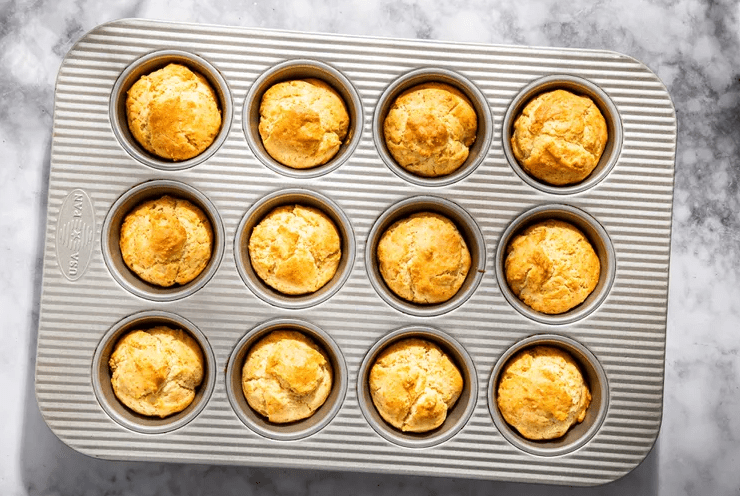
If you keep self-rising flour, mayonnaise, and milk or half-and-half in the house, you’re about 30 minutes away from warm, tender “more-biscuit-than-cupcake” muffins that go with almost anything. These 3-ingredient mayonnaise muffins are one of those weeknight heroes I reach for when I suddenly realize I forgot to buy bread… again.
They’re incredibly simple: self-rising flour gives you the lift, mayonnaise stands in for both oil and egg, and a splash of milk or half-and-half brings everything together into a smooth batter. The result is a savory-leaning muffin with a soft crumb and lightly golden crust – perfect with butter, jam, or next to a bowl of soup.
Think of them as a cross between a biscuit and a classic dinner roll: not sweet, not fussy, and very flexible. You can keep them plain for an easy weeknight bread, dress them up with herbs and cheese for dinner, or bake jam right into the center for a brunch treat.
Below, I’ll walk you through the exact method, why the recipe works, and how to customize it so you can nail these 3-ingredient muffins on the very first try.
Time and Yield
These times are based on tested mayonnaise muffin recipes that use the same ingredient ratios and oven temperature.
- Prep Time: about 5 minutes
- Cook Time: 20 to 25 minutes
- Total Time: 25 to 30 minutes
- Yield: 12 standard-size muffins
Actual time may vary slightly based on your oven and how quickly you work, but this is a very fast recipe from start to finish.
What Makes This Mayonnaise Muffins Special?
At their core, these are 3-ingredient mayonnaise muffins made with self-rising flour and milk or half-and-half. That’s it:
- Self-rising flour already contains baking powder and salt, so you don’t have to measure separate leaveners.
- Mayonnaise is essentially oil + egg + acid (usually vinegar or lemon juice). That combination adds fat for tenderness, egg for structure and richness, and a bit of tang that keeps the muffins from tasting flat.
- Milk or half-and-half provides moisture and helps create steam in the oven, which also contributes to rise.
Because of the self-rising flour and the savory nature of mayo, these muffins lean more toward savory dinner muffins or quick biscuits than sweet bakery-style muffins. They’re:
- Fantastic as easy weeknight bread beside soups, stews, chilis, or roasted meats.
- Great at brunch with jam, honey, or butter.
- Handy as a holiday side when the oven is already busy, since the batter mixes in minutes.
There’s also a bit of Southern pantry tradition here. Self-rising flour has a long history in Southern baking, where it’s used in biscuits, quick breads, and fried coatings as a built-in shortcut – the leavening and salt are already blended in, which helps keep results consistent.
Ingredients

Core 3-Ingredient Muffin Base
For 12 standard muffins, you’ll need:
- 2 cups (240 g) self-rising flour
- 6 tablespoons mayonnaise (regular, full-fat works best)
- 1 cup half-and-half OR whole milk
That’s the entire batter. No extra oil, no separate eggs, no sugar required.
Note: If you only have low-fat mayo or a lighter milk, the muffins will still bake, but they may be a bit less tender and rich.
Optional Add-Ins and Serving Extras
These are optional, but they’re where you can really make the recipe your own:
Savory Ideas:
- 1/2 to 1 cup shredded cheddar, pepper Jack, or Parmesan
- 2 to 3 tablespoons chopped fresh herbs (chives, parsley, thyme, rosemary)
- 1/4 to 1/2 teaspoon garlic powder, onion powder, or smoked paprika
- A pinch of black pepper or red pepper flakes
Sweet-leaning Ideas:
- 1 to 2 teaspoons sugar or honey stirred into the batter (for a lightly sweet muffin)
- 1 teaspoon vanilla extract (if you’re leaning sweet)
- Jam, jelly, or fruit preserves (for jam-filled or swirled muffins)
For Serving:
- Softened butter
- Honey or maple syrup
- Extra jam or jelly
Keep the base recipe as written the first time you make it. Once you know how the batter should look and feel, you can start layering in your favorite flavors.
Required Tools for Making the Recipe
You don’t need any special equipment, but a few simple tools will make the process smoother:
- Standard 12-cup muffin tin – The recipe is designed for a regular-sized pan.
- Mixing bowl (medium to large) – Plenty of room helps you combine the batter without spilling.
- Whisk and/or silicone spatula – A whisk helps you get a smooth, lump-free batter; a spatula is handy for scraping the bowl and folding in add-ins.
- Measuring cups and spoons – Especially important for the flour and mayo; too much flour can make muffins dense.
- Cooking spray, neutral oil, or soft butter – For greasing the muffin tin so the muffins release easily.
- Optional: ice cream scoop or muffin scoop – Makes portioning the batter into the cups fast and even, which helps them bake uniformly.
Step-by-Step Method
1. Preheat and Prep the Pan
a) Preheat your oven to 400°F (200°C).
This is a fairly hot oven, which helps the muffins rise quickly and develop a lightly browned top.
b) Grease a 12-cup muffin tin.
- Lightly coat each cup with cooking spray, or rub with butter or oil.
- Make sure the sides and bottoms are covered; this prevents sticking.
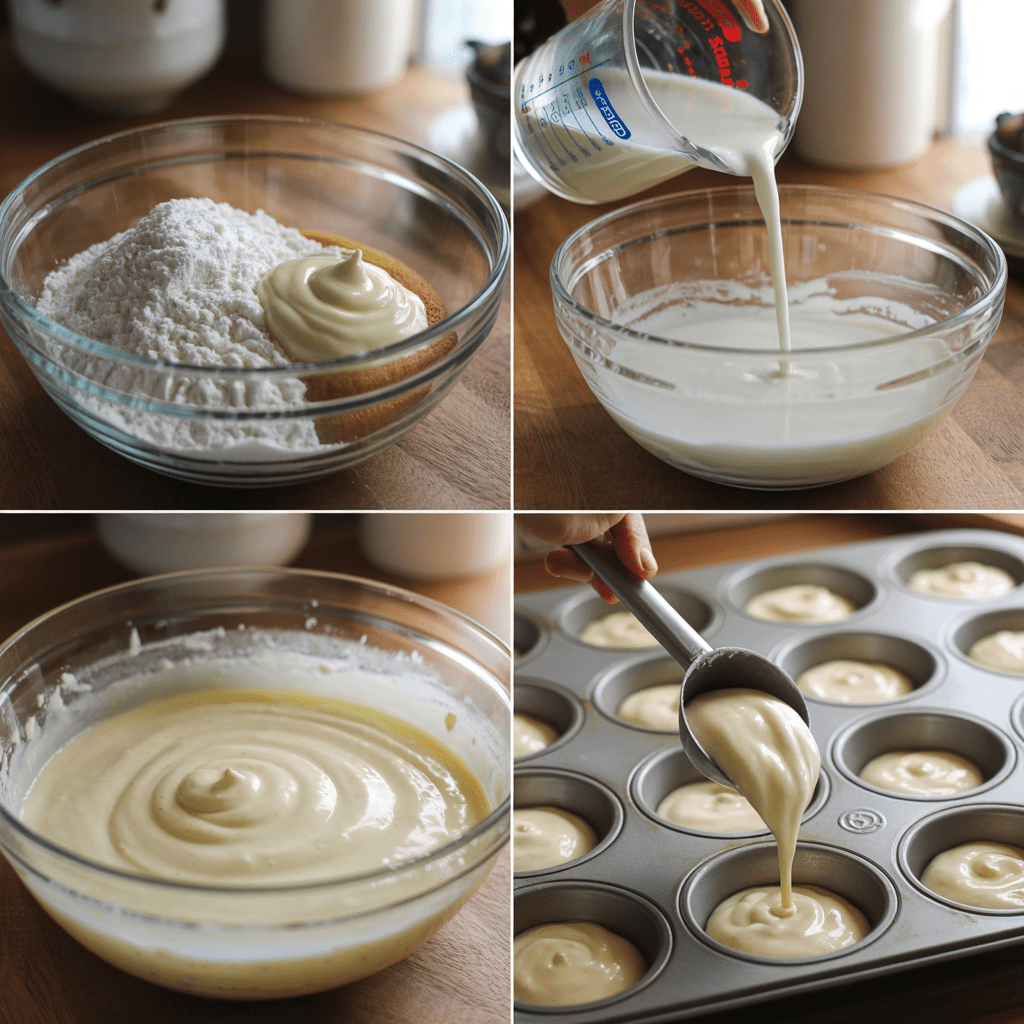
2. Combine the Flour and Mayonnaise
a) Measure 2 cups self-rising flour into a mixing bowl.
b) Add 6 tablespoons mayonnaise.
- Drop the mayo in by spoonfuls around the bowl so it’s easier to incorporate.
c) Stir until the flour and mayo are loosely combined.
- At this stage, it will look shaggy and crumbly, not like a smooth dough. That’s okay.
Why this step matters:
Starting with flour + mayo helps distribute the fat evenly through the flour, similar to how you’d cut butter into flour for biscuits. This encourages tenderness and prevents dry pockets.
3. Add the Milk or Half-and-Half
a) Pour in about 3/4 cup of the milk or half-and-half and start whisking.
b) Gradually add the remaining liquid, whisking or stirring until the batter is smooth and mostly lump-free.
- You’re aiming for a thick, pourable batter – a little looser than cake batter, but not runny like pancake batter.
If using whole milk:
- The batter may feel slightly looser than with half-and-half. That’s fine as long as it’s not watery. If it looks very thin, sprinkle in a tablespoon or two more self-rising flour and stir gently.
If using half-and-half:
- The batter may be a touch thicker and richer. It should still fall off the spoon slowly but easily.
Batter check: When you lift the whisk or spatula, the batter should ribbon back into the bowl and disappear after a second or two.
4. Fold in Optional Add-Ins (If Using)
a) For savory muffins, gently fold in:
- 1/2 to 1 cup shredded cheese
- 2 to 3 tablespoons chopped herbs
- Any spices you like (garlic powder, smoked paprika, etc.)
b) For lightly sweet muffins, you can stir in:
- 1/2 teaspoons sugar or honey
- 1 teaspoon vanilla extract
Stir just until evenly distributed. Overmixing at this point can toughen the muffins.
5. Portion the Batter
Divide the batter among the 12 muffin cups, filling each about 2/3 full.
- Using a scoop helps keep the muffins the same size, which means they bake at the same rate.
Sweet Jam Variation (Inside or Swirled)
You can build the jam variation right in the pan:
- Jam-filled center:
- Fill each cup halfway with batter.
- Add about 1 teaspoon of jam or jelly in the center.
- Cover with a little more batter until the cups are about 2/3 full total.
- Jam swirl on top:
- Fill each cup about 2/3 full with batter.
- Place a small spoonful of jam on top.
- Use a toothpick or chopstick to gently swirl the jam into the surface.
This bakes the sweetness into the muffin for a brunch-style treat, similar to jam-topped variations used in classic mayonnaise muffin recipes.
6. Bake the Muffins
a) Place the muffin tin on the middle rack of the preheated oven.
b) Bake for 20 to 25 minutes, or until:
- The tops are lightly golden.
- A toothpick inserted into the center of a plain muffin comes out clean or with just a few moist crumbs (avoid a jam-filled center when testing).
- The edges may pull slightly away from the sides of the pan.
Oven temperatures can vary, so start checking around 18 to 20 minutes.
7. Cool and Serve
a) Let the muffins cool in the pan for 3 to 5 minutes.
This helps them set and makes them easier to remove without breaking.
b) Carefully loosen each muffin with a butter knife or offset spatula and transfer to a rack or plate.
c) Serve warm, ideally within the first hour or so, with butter, honey, jam, or alongside your meal.
Fresh out of the oven, they’ll be very tender inside with a soft, biscuit-like crumb.
Variations and Flavor Twists
You can use this base recipe as a flexible template. Here are some specific, tested-style ideas:
1. Jam-Filled Brunch Muffins
- Make the batter as directed (you can add 1–2 teaspoons sugar if you’d like a hint of sweetness).
- Fill each muffin cup halfway, add 1 teaspoon of your favorite jam (strawberry, raspberry, apricot, etc.) and cover with more batter.
- Bake as usual.
Great for brunch, holidays, or coffee breaks – they’re like a cross between a biscuit and a jam thumbprint.
2. Herb & Cheese Dinner Muffins
- Stir in 1/2 – 1 cup shredded sharp cheddar or Parmesan.
- Add 2/3 tablespoons chopped fresh herbs (chives, thyme, rosemary, or parsley).
- A pinch of garlic powder or black pepper works well too.
These turn your 3-ingredient muffins into an easy weeknight bread that pairs perfectly with soups, chili, or roasted chicken.
3. DIY Self-Rising Flour (If You Don’t Have It)
If you only have all-purpose flour, you can make a self-rising style blend at home.
For each 1 cup of self-rising flour, whisk together:
- 1 cup (120 g) all-purpose flour
- 1 1/2 teaspoons baking powder
- 1/4 teaspoon fine salt
For this recipe (which uses 2 cups self-rising flour), you would mix:
- 2 cups all-purpose flour
- 3 teaspoons baking powder
- 1/2 teaspoon salt
Whisk thoroughly to distribute the baking powder and salt evenly, then use just as you would self-rising flour in the recipe.
4. Different Milk Options
- Half-and-half: Gives the richest, most tender texture. The crumb may be slightly denser but very moist.
- Whole milk: Still tender and delicious, just a bit lighter than half-and-half.
- 2% milk: Works, but the muffins may be a touch less rich.
- Non-dairy milks: Unsweetened soy or oat milk can work in a pinch, but the texture may be slightly different – they contain different proteins and fats than dairy.
Serving Suggestions, Make-Ahead, and Storage
How to Serve
These versatile 3-ingredient mayonnaise muffins can be used in several ways:
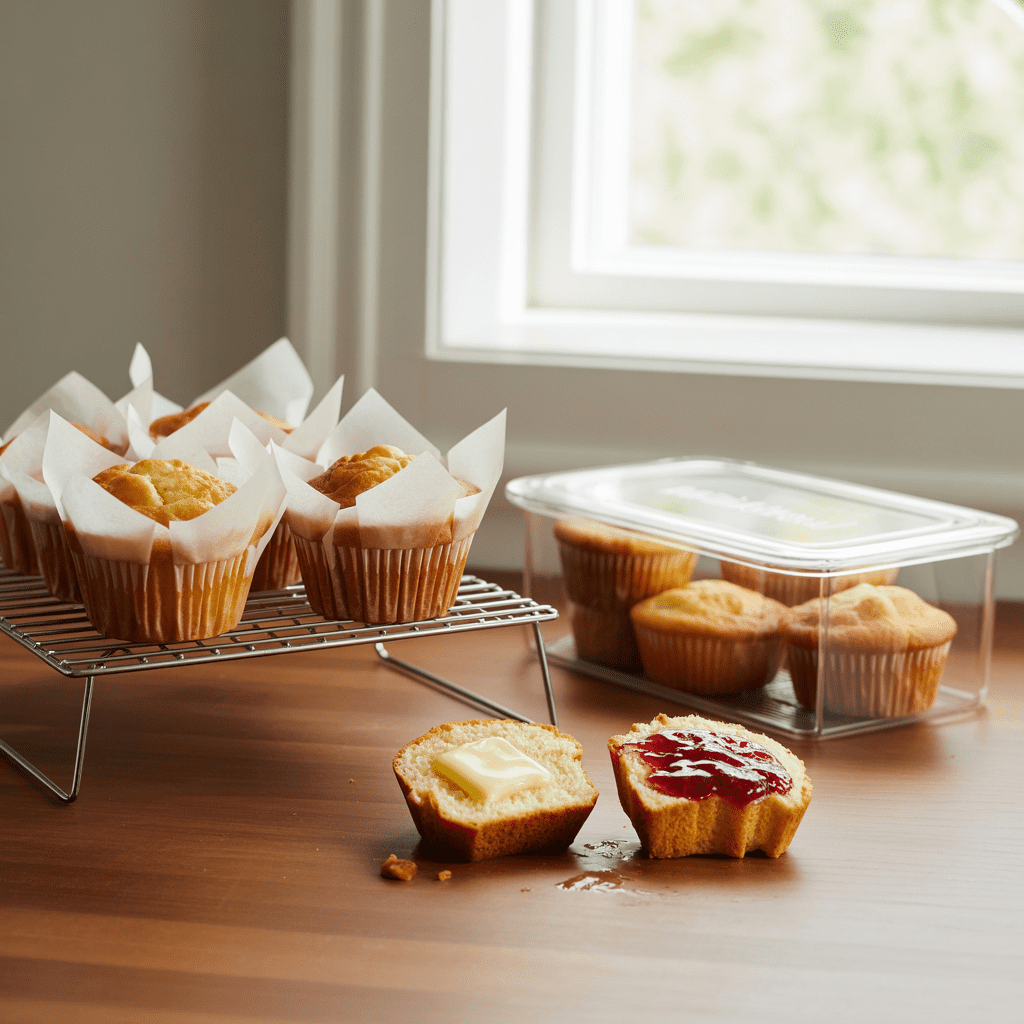
- As a breakfast: Split and toast them later, then top with butter, honey, or cheese.
- At brunch: Offer jam-filled or jam-swirl versions with eggs, bacon, or a breakfast casserole.
- With dinner: Serve warm with butter alongside soups, stews, chilis, or roasted meats.
Short-Term Storage
Like most homemade quick breads, these are best the day they’re baked for peak texture. You can:
- Store completely cooled muffins in an airtight container at room temperature for about 1 day.
- Keep them in a cool, dry place away from direct sunlight, in line with general baked-goods storage guidelines.
Because these muffins contain dairy (milk, mayo), it’s safest not to leave them out uncovered for long periods. Food-safety guidance generally recommends refrigerating perishable foods within 2 hours if they’ve been at room temperature.
Refrigeration and Freezing
- Refrigeration:
- Place cooled muffins in an airtight container or zip-top bag.
- Refrigerate for up to 3/4 days. (Texture may firm up slightly.)
- Freezing:
- Wrap each cooled muffin individually in plastic wrap, then place in a freezer bag.
- Freeze for up to 2/3 months for best quality.
These time frames are based on general quick-bread and baked-good storage practices, not just this single recipe.
Reheating
- From room temperature or fridge:
- Warm in a 300°F (150°C) oven or toaster oven for 5 to 8 minutes, just until heated through.
- This helps restore a softer interior and slight crispness on the outside.
- From frozen:
- Thaw at room temperature for 30 to 60 minutes, then warm in the oven as above.
- Or reheat directly from frozen in a 300°F oven for about 10 to 15 minutes.
Microwaving works in a pinch, but keep it brief (10 to 15 seconds at a time) to avoid rubbery or tough results.
Key Advantages of These 3-Ingredient Muffins
- Ultra-short ingredient list:
Just 3 main ingredients: self-rising flour, mayonnaise, and milk or half-and-half. - Minimal prep time:
The batter comes together in about 5 minutes, with no special skills needed. - Beginner-friendly:
No yeast, no kneading, no lengthy resting time – perfect for new bakers. - Versatile flavor base:
Works as a savory muffin, quick biscuit, or brunch bread, depending on add-ins and toppings. - Pantry-staple friendly:
Uses ingredients many home cooks already keep on hand, especially in households that routinely buy self-rising flour and mayo. - Scales easily:
You can double the recipe for gatherings or cut it in half for smaller households.
Common Mistakes to Avoid
Even simple recipes have a few traps. Here’s what to watch out for:
- Overmixing the batter
- Problem: Overworking the batter can make the muffins tough.
- Fix: Stir or whisk just until the mixture is smooth and no dry streaks of flour remain. Once the batter looks uniform, stop.
- Using all-purpose flour without adjusting it
- Problem: If you swap self-rising flour for all-purpose flour and don’t add baking powder and salt, your muffins may not rise properly and will taste bland.
- Fix: Make DIY self-rising flour (see the variation above) before starting.
- Overfilling or underfilling muffin cups
- Problem: Overfilled cups can overflow; underfilled cups may bake too quickly and dry out.
- Fix: Aim for about 2/3 full. That gives the muffins enough room to rise without spilling over.
- Baking at the wrong temperature
- Problem: An oven that’s too hot can burn the tops while the centers stay underbaked; too cool and the muffins can be dense.
- Fix: Preheat to 400°F and, if possible, use an oven thermometer to confirm the temperature.
- Skipping the greasing
- Problem: Even with nonstick pans, these muffins can stick.
- Fix: Lightly grease each cup with cooking spray, butter, or oil.
- Storing muffins uncovered
- Problem: Leaving them out on the counter without covering will dry them out quickly.
- Fix: Once completely cool, store them in an airtight container.
Expert Tips
- How the batter should look:
Smooth, thick, and pourable. If it’s so stiff that it clings like dough, add a splash more milk; if it’s runny like pancake batter, sprinkle in a little more self-rising flour. - Adjusting browning:
- If your muffins brown too quickly, move the pan to a lower rack.
- Dark metal pans tend to brown faster than light-colored ones.
- How they compare to biscuits or cornbread:
These muffins sit somewhere between a drop biscuit and a soft dinner roll. They don’t have the layers of a rolled biscuit, but they’re more tender and richer than plain cornbread. - Scaling the recipe:
- Half batch: Use 1 cup self-rising flour, 3 tablespoons mayo, and 1/2 cup milk or half-and-half for about 6 muffins.
- Double batch: Use 4 cups self-rising flour, 12 tablespoons mayo (3/4 cup), and 2 cups milk or half-and-half for 24 muffins. Bake in two pans or in batches.
- Brand of mayonnaise:
Any full-fat, real mayonnaise will work. Southern cooks often have strong brand loyalties, but from a technical perspective, the important thing is a classic mayo with consistent fat and egg content, not a whipped or reduced-fat spread.
Nutrition Facts
The following values are approximate estimates based on a 12-muffin batch using self-rising flour, regular mayonnaise, and whole milk, and are similar to published nutrition data for comparable mayonnaise muffin recipes.
Per 1 muffin (plain, without add-ins or toppings):
- Calories: ~140 – 150 kcal
- Total Fat: ~7 g
- Carbohydrates: ~16 g
- Protein: ~3 g
Jam, cheese, extra butter, or other add-ins will increase these numbers. For precise values, you’d need to run the exact ingredients and brands you use through a nutrition calculator.
Frequently Asked Questions
1. Can I make these muffins without self-rising flour?
Yes, but you must mimic self-rising flour. For each cup of self-rising flour, mix:
- 1 cup all-purpose flour
- 1 1/2 teaspoons baking powder
- 1/4 teaspoon salt
For this recipe’s 2 cups, double that. Whisk well, then proceed.
2. Which type of mayonnaise works best?
A regular, full-fat mayonnaise gives the best results because it provides enough fat and emulsified egg to keep the muffins tender and rich. Reduced-fat or “light” mayo will work, but the texture may be slightly drier. Avoid salad dressings or whipped spreads labeled “dressing” rather than mayonnaise, as their sugar and water content can change the texture.
3. Can I make them ahead for a party or brunch?
Yes. Here’s a practical approach:
- Bake the muffins the day before.
- Once completely cool, store them in an airtight container at room temperature if serving within about 1 day, or refrigerate up to 3/4 days for safety and quality.
- Reheat briefly in a 300°F oven for 5 to 8 minutes before serving.
For longer storage, freeze and reheat as described above.
4. How do I make them sweeter?
Add 1 to 3 teaspoons of sugar or honey to the batter, plus vanilla if you like, and consider baking jam in the center or swirled on top. These tweaks give you lightly sweet brunch-style muffins without turning them into dessert cupcakes.
5. How do I make them more savory?
Fold in grated cheese, herbs, and a pinch of garlic or onion powder. You can also add freshly ground black pepper or a pinch of smoked paprika. Serve alongside soups, chili, or roasted meat instead of rolls.
6. Can I use low-fat mayo or non-dairy milk?
You can, but expect some changes:
- Low-fat mayo: Slightly less tender and rich muffins.
- Non-dairy milk: Unsweetened soy or oat milk usually works better than very watery alternatives. The muffins may be a bit less rich but should still rise and bake properly.
Conclusion
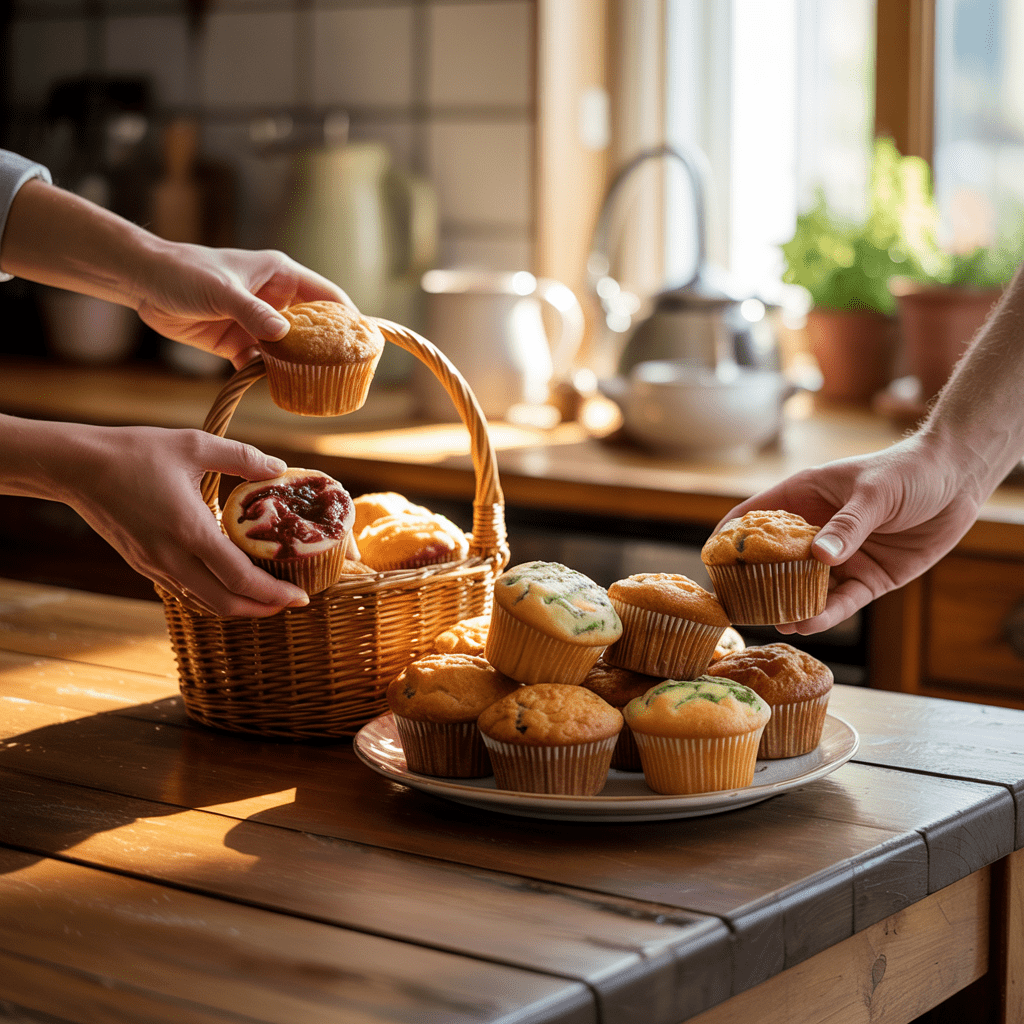
These 3-ingredient mayonnaise muffins are the kind of recipe that quietly becomes a staple: fast, forgiving, and endlessly useful. With nothing more than self-rising flour, mayo, and milk or half-and-half, you can have warm, tender, biscuit-like muffins on the table in about half an hour.
Once you’ve made the base version a time or two, it’s easy to branch out into jam-filled brunch muffins or herb-and-cheese dinner muffins, or to mix up your own self-rising flour when the pantry is looking bare. The recipe is simple enough for a brand-new baker but satisfying enough to earn a permanent spot in your weeknight rotation.
Use it as a flexible template you can return to whenever you need quick bread and don’t be surprised if these 3-ingredient muffins become the ones you make on repeat.
Quick 3-Ingredient Mayonnaise Muffins for Busy Breakfast