
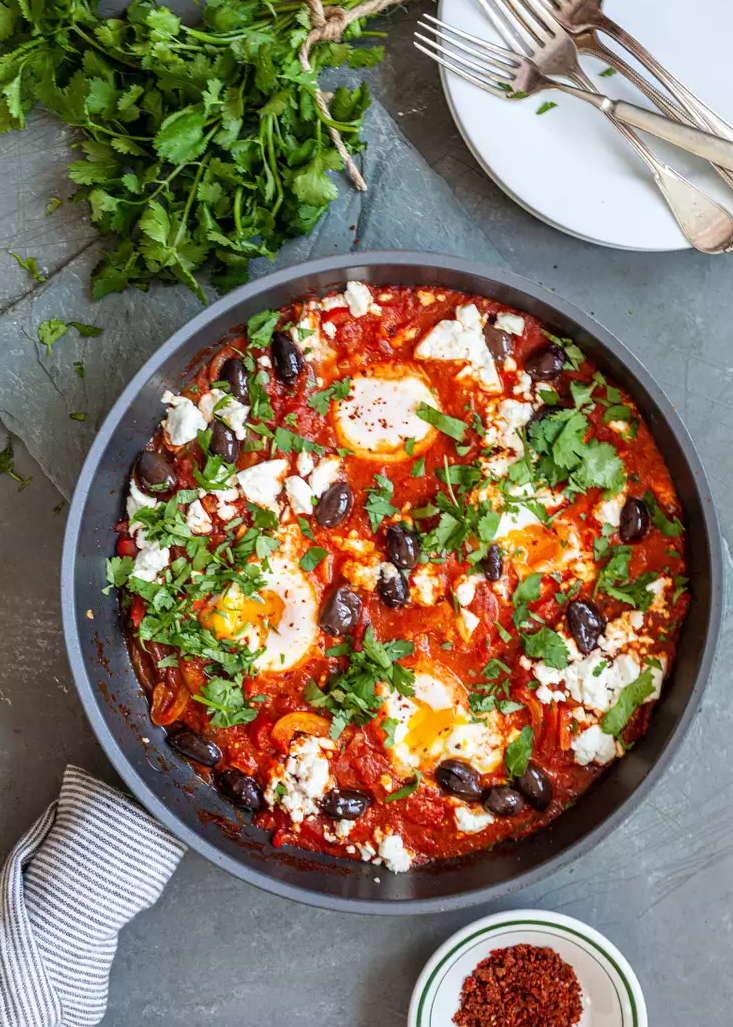
If you love Mediterranean and Middle Eastern flavors and want a colorful one pan meal that works just as well for dinner as it does for brunch, this shakshuka with feta, olives, and peppers belongs in your regular rotation. Eggs gently cook in a spiced tomato and pepper sauce until the whites are just set and the yolks stay soft and saucy. Crumbled feta and briny olives go on at the end so every scoop has a little creamy, salty contrast.
This version is hearty, mostly vegetable based, and very forgiving. Once you learn what the sauce should look and smell like before the eggs go in, you can make it on autopilot on a busy weeknight or stretch out a slow weekend brunch with a skillet in the middle of the table. In this guide, you will get a clear ingredient list, step by step method, technique notes, variations, serving ideas, storage and safety tips, and answers to the most common shakshuka questions.
Time and Serving
Prep time: About 20 minutes for chopping vegetables and gathering ingredients
Cook time: About 30 minutes from softening the peppers to setting the eggs
Total time: About 50 minutes
Servings: 4 servings, with one egg per person and plenty of sauce for scooping with bread
If you like to serve two eggs per person, use a larger pan and increase the egg count while keeping the sauce amount the same, or double the sauce for a very generous meal.
Insight of Shakshuka with Feta, Olives, and Peppers
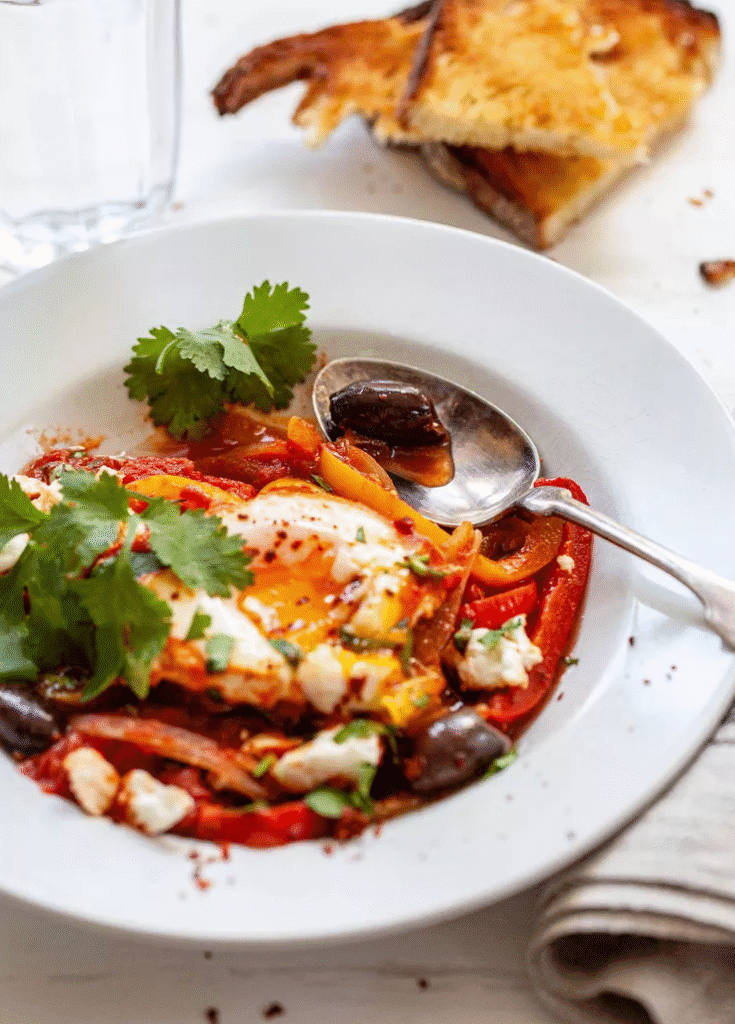
Shakshuka is a dish where eggs cook gently in a tomato and pepper sauce that is scented with warm spices such as cumin and smoked paprika. The dish most likely began in North Africa and has become very popular across the Middle East, especially in Israel, and now in homes and cafes around the world.
This version leans into contrast. Sweet red and yellow bell peppers simmer until tender in a rich tomato base. Smoked paprika and cumin add warmth, while a pinch of mild chile brings gentle heat rather than aggressive spice. Right before serving, you scatter crumbled feta and briny olives over the top. The feta softens into creamy little pockets and the olives give bright, salty bites that balance the sweetness of the peppers and the acidity of the tomatoes.
For everyday life, this recipe is flexible. It relies on pantry friendly canned whole tomatoes, a couple of bell peppers, a small amount of feta, and a handful of olives. You can make it as a cozy brunch for two with leftovers for the next day, stretch it for a family with extra bread and salad, or cook it on a weeknight when you want something comforting that still feels light and vegetable forward.
Ingredients
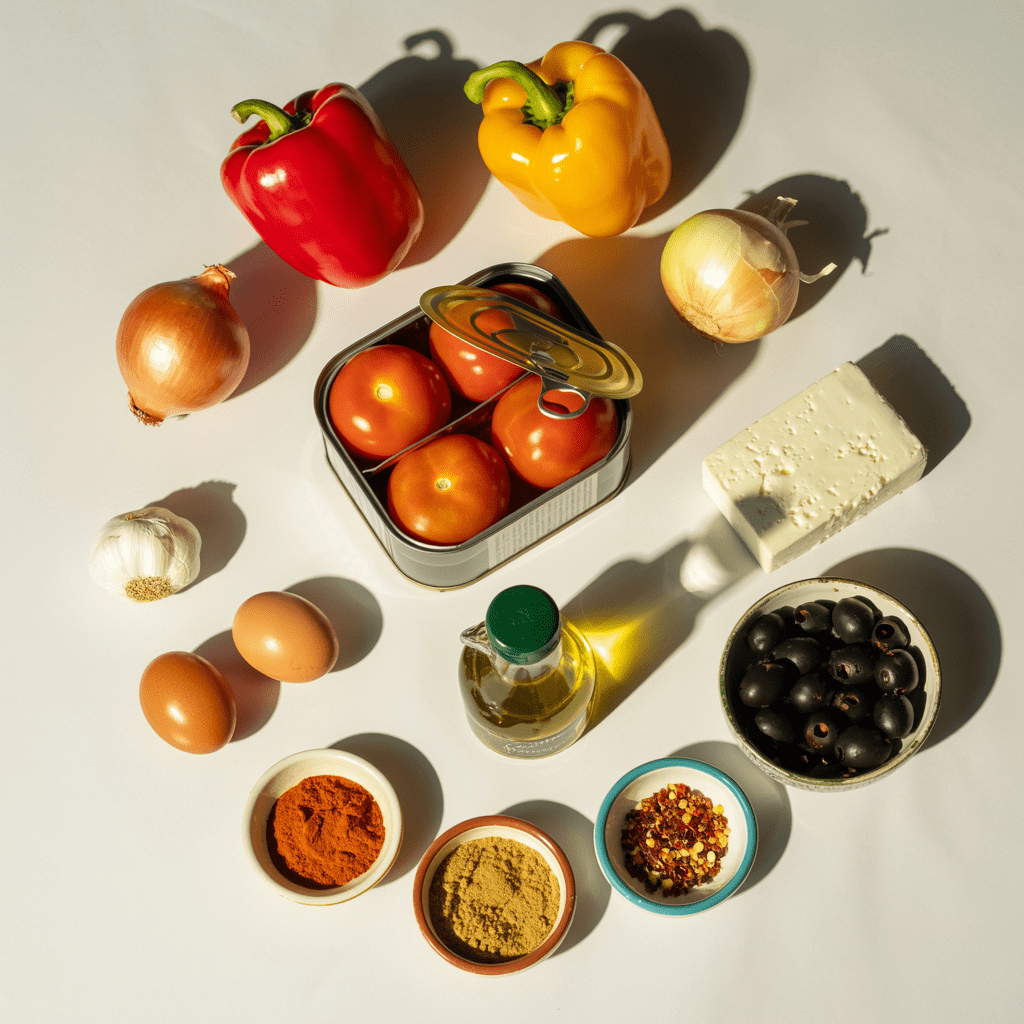
For four servings
- Two tablespoons olive oil
- One teaspoon smoked paprika
- One teaspoon ground cumin
- One quarter teaspoon Aleppo or Maras pepper flakes, or a small pinch of regular crushed red pepper flakes
- One large yellow onion, halved and thinly sliced
- Two cloves garlic, thinly sliced or finely minced
- One red bell pepper, seeded and thinly sliced
- One yellow bell pepper, seeded and thinly sliced
- One can whole peeled tomatoes in puree, about twenty eight ounces, preferably a good quality brand such as San Marzano style
- Half teaspoon fine sea salt to start, plus more to taste
- Four ounces feta cheese, crumbled
- One third cup pitted olives in brine, such as Kalamata or another flavorful black or green olive, drained and roughly chopped if large
- Four large eggs
- A small handful fresh cilantro or flat leaf parsley leaves, coarsely chopped, for garnish
- Optional for serving: extra pepper flakes, more olive oil to drizzle, crusty bread, pita, or a simple green salad
Notes on ingredients and substitutions
- Whole canned tomatoes
Whole peeled tomatoes in thick puree tend to break down into a soft, rich sauce, while many diced tomatoes contain calcium chloride that helps them keep their shape and stay firmer. That firm texture is useful in soups but less ideal when you want a thick, silky sauce. - Peppers
Using both red and yellow peppers gives sweetness and color. You can swap in orange peppers or use all red peppers if that is what you have. Green peppers will make the sauce sharper and a bit more bitter, so they change the flavor profile. - Olives
Kalamata olives bring classic Mediterranean character, but any flavorful olive packed in brine works. Black olives will be milder, while small green olives can add more punchy saltiness. Rinse very salty olives briefly and pat dry if you are sensitive to salt. - Herbs
Cilantro gives a fresh, slightly citrusy finish. Flat leaf parsley is a great option if some diners do not love cilantro. - Heat level
Aleppo or Maras pepper flakes are often milder and fruitier than standard crushed red pepper. Use more or less to match your preferred spice level or keep the dish very mild and offer extra flakes at the table.
Required Tools for Making the Recipe

Having the right pan and a few simple tools makes shakshuka much easier and more predictable.
- Wide heavy skillet with a lid
A twelve inch skillet gives enough room for the sauce to reduce quickly and for the eggs to sit in their own little wells without crowding. A lid is important because covering the pan traps steam and helps the egg whites set gently without drying out the sauce on top. - Cutting board and sharp knife
For slicing the onion, peppers, garlic, and herbs. - Wooden spoon or heatproof spatula
Useful for stirring the vegetables, scraping the bottom of the skillet, and making wells in the sauce. - Small bowl or ramekin for cracking eggs
Cracking each egg into a small bowl first makes it easier to remove any shell and slide the egg neatly into the sauce without breaking the yolk. - Measuring spoons and cups
Helpful for spices and oil so you can reproduce the same flavor each time.
If you use a smaller pan, the sauce will be deeper and will take longer to thicken. If the pan is much larger, the sauce may reduce very quickly and you might need to add a splash of water before cooking the eggs.
Method – Step by Step Preparation Guide
Step One: Prepare and bloom the spices
Set the skillet over medium heat and add the olive oil. When the oil looks shiny and loose, sprinkle in the smoked paprika, cumin, and pepper flakes. Stir constantly for about thirty seconds to one minute until the spices smell fragrant and the oil takes on a deeper color. This step wakes up the flavor compounds in the spices and lets them infuse the oil that will coat the vegetables.
Step Two: Soften the onion and peppers
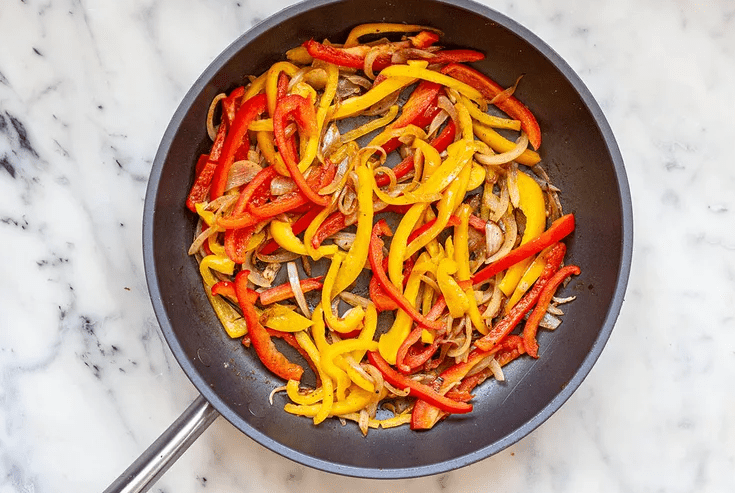
Add the sliced onion to the skillet with a pinch of salt. Stir occasionally and cook for about three minutes until the onion starts to look translucent at the edges.
Add the sliced red and yellow peppers and the garlic. Stir so everything is coated in the spiced oil. Cook, stirring now and then, until the peppers become very tender and slightly sweet. This usually takes around twelve to fifteen minutes on medium heat. The vegetables should look soft and relaxed, not browned and crisp. If the pan looks dry at any point, you can add a small splash of olive oil.
Step Three: Crush the tomatoes and build the sauce
While the peppers cook, pour the canned tomatoes into a large bowl. Use clean hands or scissors to crush the whole tomatoes into smaller pieces. The goal is a chunky but soft texture without large firm pieces.
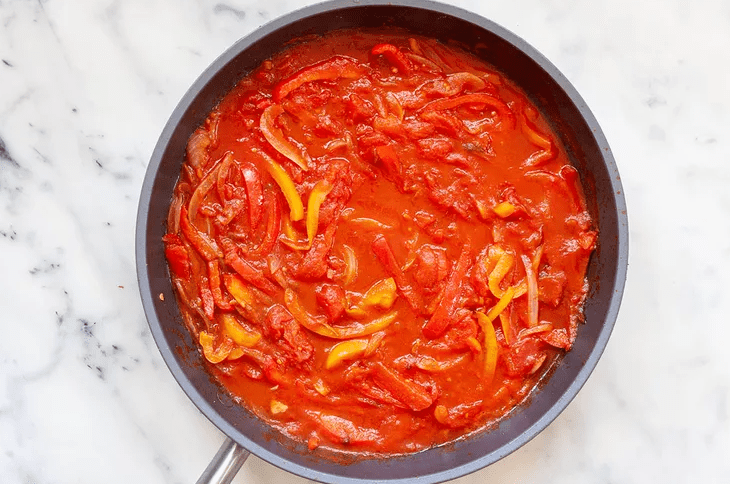
When the peppers are tender, tip the crushed tomatoes and all their puree into the skillet. Add the half teaspoon of salt and stir well. Bring the mixture to a gentle simmer.
Let the sauce cook, uncovered, for about ten to fifteen minutes, stirring occasionally, until it thickens. You are aiming for a texture similar to a hearty pasta sauce. The surface should be gently bubbling, not vigorously boiling. As it cooks, the tomatoes will darken slightly in color, the oil may rise in small pools at the edges, and the sauce will smell concentrated and savory.
If the sauce still looks thin and watery after fifteen minutes, keep simmering for a few more minutes. If it becomes too thick and starts to look dry before you add the eggs, you can always loosen it later with a small splash of water.
Taste the sauce and add more salt if needed. Remember that feta and olives will add extra salt at the end, so stop just short of perfectly salted at this stage.
Step Four: Make wells and add the eggs
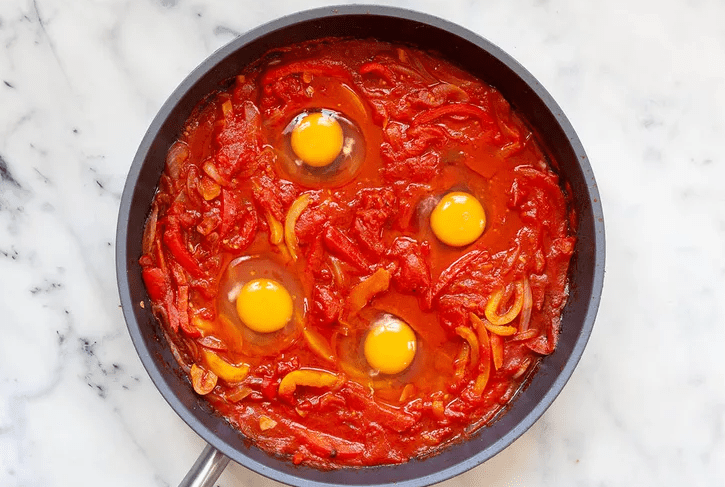
Once the sauce is thick and gently bubbling, reduce the heat slightly. Use the back of a spoon to create four small wells in the sauce, spaced evenly around the pan and deep enough to hold an egg without the yolk spilling out.
Crack one egg into a small bowl, then slide it carefully into one of the wells. Repeat with the remaining eggs, working quickly but gently. If any egg whites run outside the well, nudge the sauce back around them so they have some support.
Sprinkle the crumbled feta and the olives evenly over the sauce, avoiding the very center of the yolks as much as possible so they remain visible.
Step Five: Cook the eggs on the stovetop
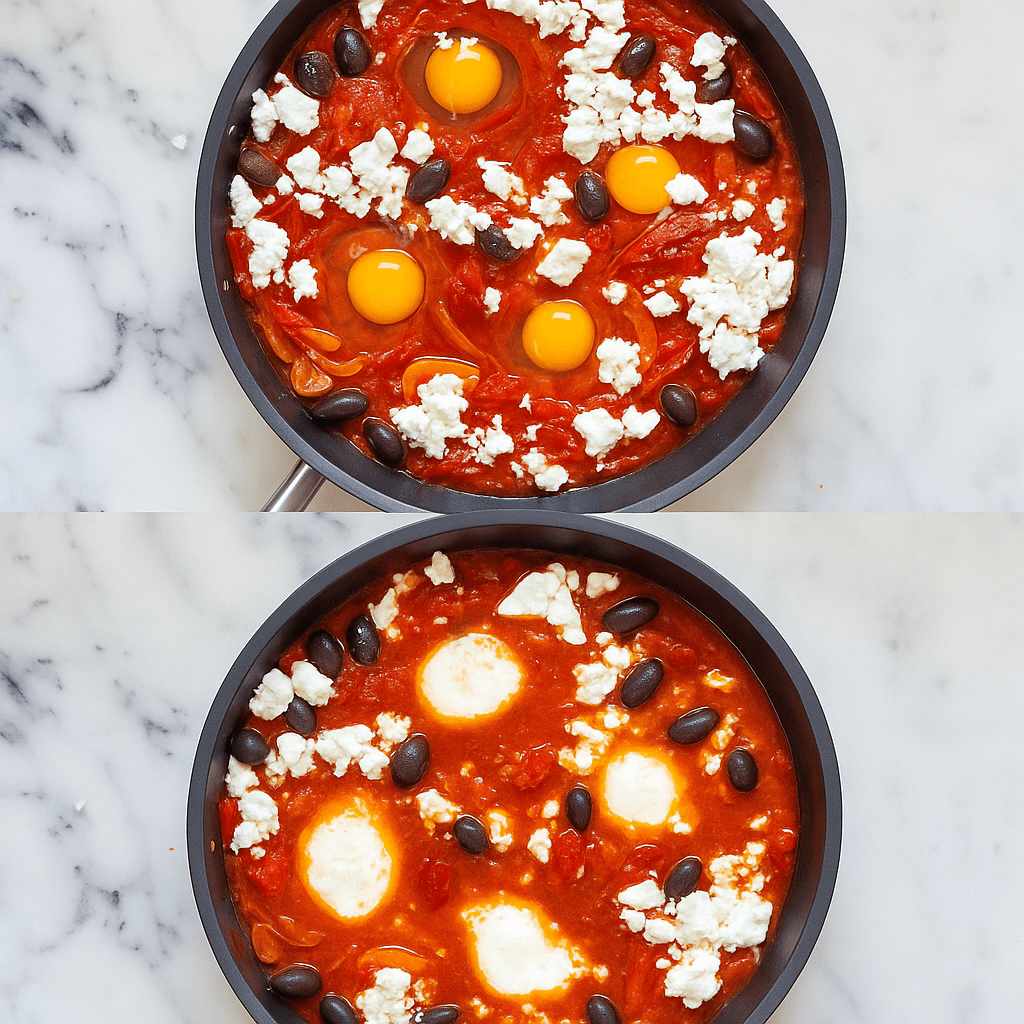
Cover the skillet with the lid and keep the heat at a gentle simmer. The steam under the lid will set the egg whites from the top while the simmering sauce cooks them from beneath.
Approximate timing for the eggs
- Soft set whites with very runny yolks
About six to seven minutes - Medium set yolks with jammy centers
About eight to nine minutes - Fully set yolks
About ten to eleven minutes
Every stove and pan behaves a little differently, so start checking around the six minute mark by lifting the lid briefly. The whites should be opaque and mostly set, with just a little wobble, and the yolks should still look glossy. If the sauce seems very thick before the eggs are done, add one or two tablespoons of water around the edges and recover the pan to create more steam.
If you have diners who strongly prefer firm yolks, you can serve the softer eggs first, then recover the pan and continue cooking the remaining eggs for a couple more minutes.
Step Six: Garnish and serve
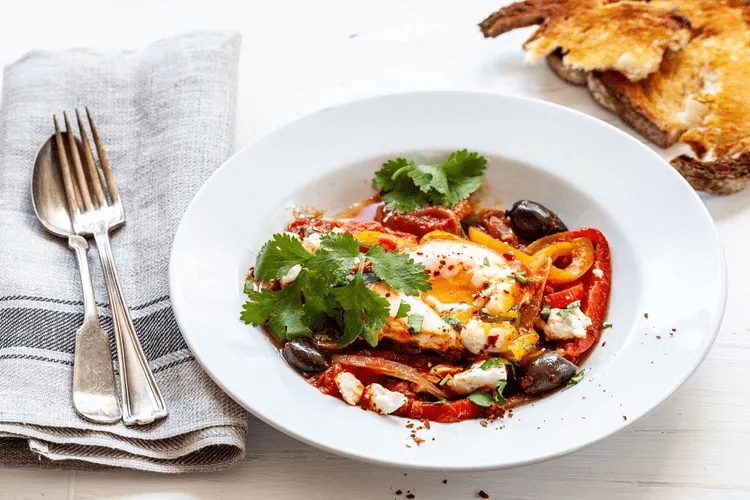
Once the eggs are cooked to your liking, remove the pan from the heat. Scatter the chopped cilantro or parsley over the top and add a pinch of extra pepper flakes if you like more heat. Drizzle with a tiny bit of olive oil for shine.
Bring the skillet directly to the table on a trivet. Serve with toasted crusty bread, warm pita, or flatbread for scooping up the sauce and yolks. A lightly dressed green salad or sliced cucumbers and tomatoes makes a fresh side.
Variations
You can adjust this basic method in many ways while keeping the core idea of eggs in a spiced tomato and pepper sauce.
- Harissa shakshuka
Stir one to two teaspoons of harissa paste into the sauce with the tomatoes for a deeper heat and more complex spice. Because harissa often contains salt, taste before adding extra salt. - Extra heat with fresh chile
Finely chop a jalapeno or similar fresh chile and cook it with the peppers and onion. This makes the heat more front and center. - Chickpea or bean shakshuka
Add one can of drained chickpeas or white beans to the sauce once it has thickened and simmer for five minutes before adding the eggs. You may need a small splash of extra water since the beans absorb some liquid. - Leafy green addition
Stir in a few handfuls of chopped spinach or Swiss chard during the last five minutes of simmering the sauce. The greens will wilt down and add a bit more body. - Green style shakshuka
For a version inspired by green shakshuka, skip the canned tomatoes and use lightly sautéed leeks, onions, and garlic with plenty of leafy greens and herbs plus a bit of cream or yogurt to create a rich green base. The timing for the eggs stays similar, but there is far less acidity.
Whenever you add extra ingredients such as beans or potatoes, keep an eye on the sauce thickness. You might need to add a few tablespoons of water or cook a few minutes longer so the consistency still supports the eggs.
Key Advantages of Shakshuka with Feta, Olives, and Peppers
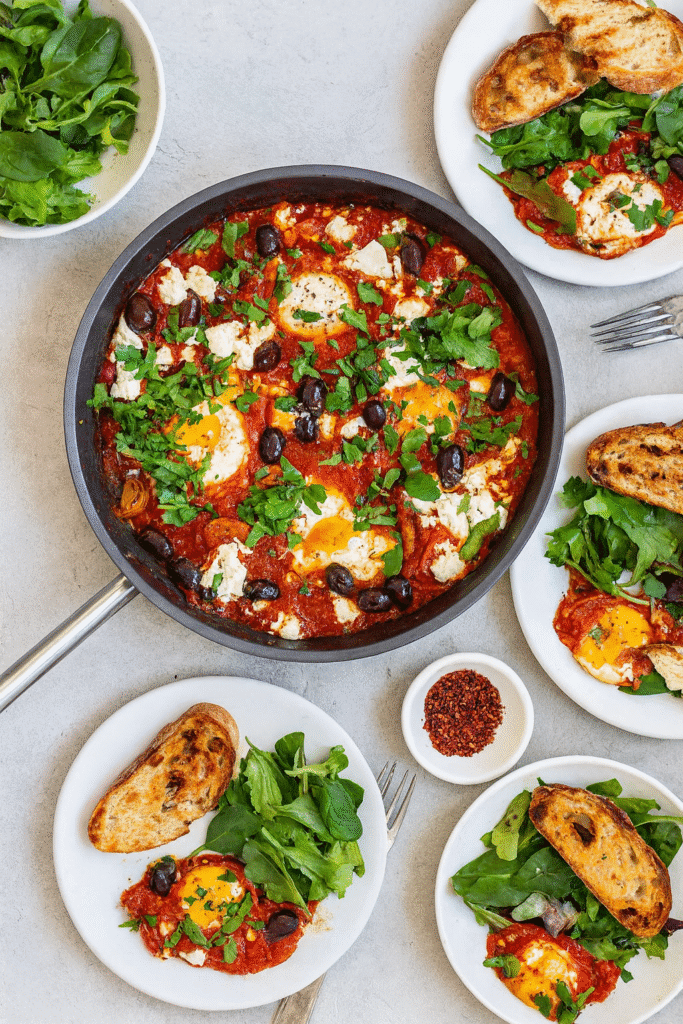
- One pan cooking with very little cleanup
- Works for breakfast, brunch, lunch, or dinner
- Packs in peppers, tomatoes, and herbs while still feeling indulgent because of the eggs and feta
- Easy to adjust the spice level and richness
- Naturally gluten free when served with potatoes or gluten free bread
- Impressive presentation when you set the skillet right on the table
Mistakes to Avoid
- Adding eggs to a thin sauce
If the tomato mixture is still loose and soupy when you add the eggs, the whites may spread out too much and cook unevenly. Always reduce the sauce until it is thick and gently bubbling before you make the wells. - Overcrowding the eggs
For four eggs, a twelve inch skillet gives enough room. If you try to squeeze too many eggs into a smaller pan, they can merge into one large mass and be harder to serve neatly. - Using very high heat
Cranking the heat up can scorch the bottom of the sauce while the eggs on top are still undercooked. A steady gentle simmer is your friend here. - Overcooking the yolks
Leaving the lid on for too long turns runny yolks chalky. Start checking early and remember that eggs continue to firm slightly even after you remove the pan from the heat. - Forgetting to adjust seasoning after adding feta and olives
Tomatoes and peppers need a fair amount of salt, but feta and olives are salty too. Aim for a slightly under salted sauce before the eggs go in, then taste a spoonful with a bit of feta or olive at the end to decide if it needs a final pinch.
Expert Tips and Real Life Examples
- Prep ahead for faster mornings
You can slice the onion and peppers and store them in an airtight container in the refrigerator for up to two days. Some cooks even make the full tomato and pepper sauce the night before, then reheat it gently and add the eggs fresh in the morning. - Use the sauce more than once
If you have leftover sauce without eggs, it works beautifully over cooked grains, roasted cauliflower, or as a base for beans. I have also used a scoop of the sauce as a quick topping for toasted bread with a little extra feta for an easy lunch. - Serving ideas
For a slow weekend brunch, put the skillet in the center of the table, add a basket of warm pita, and offer small bowls of olives, cucumber slices, and yogurt. For a quick weeknight dinner, keep it simple with toasted bread and a green salad dressed with lemon and olive oil. - Adjusting for a larger group
To serve six people, you can use a larger skillet and increase the eggs to six or eight while keeping the sauce amount the same. Make the wells closer together and check carefully so the eggs do not merge. Another option is to double the sauce and cook it in two pans side by side. - Cooking for a smaller household
Cook the full amount of sauce but only add as many eggs as you plan to eat right away. Store the extra sauce in the refrigerator and reheat small portions in a small skillet later in the week, then crack fresh eggs into the reheated sauce.
Food safety guidance from national food safety agencies recommends refrigerating cooked egg dishes within two hours and using leftovers within about three to four days, with thorough reheating until the food is steaming hot. U.S. Food and Drug Administration
Nutrition Facts (Per Serving)
The exact numbers will vary with the brand of tomatoes, feta, and olives you use. Based on similar shakshuka recipes with peppers, feta, and olives, a serving that includes one egg and a generous portion of sauce is roughly:
- Calories: About 310
- Protein: About 14 grams
- Fat: About 21 grams
- Carbohydrates: About 20 grams
- Fiber: Around 3 to 4 grams
These values come from typical nutrition analyses of tomato and pepper based shakshuka dishes with eggs and feta and should be treated as estimates rather than medical advice.
If you serve extra bread, pita, potatoes, or additional cheese, the calories and carbohydrates will increase accordingly.
Frequently Asked Questions
Q1: Can I make shakshuka ahead of time?
You can make the tomato and pepper sauce ahead of time, cool it, and store it in the refrigerator for up to three or four days. When you are ready to eat, reheat the sauce in a skillet until it is hot and gently bubbling, then add the eggs and cook them fresh. The eggs themselves are best cooked right before serving so the yolks stay soft and the whites have a pleasant texture.
Q2: How do I keep the eggs runny without undercooking the whites?
The key is gentle heat and a lid. Once the eggs are in the sauce, cover the pan and keep the mixture at a low simmer. The steam under the lid cooks the whites from the top so they set while the yolks stay soft. Start checking around six minutes. As soon as the whites look opaque and mostly firm and the yolks are still glossy, pull the pan off the heat. The residual heat will finish the whites without overcooking the yolks.
Q3: What can I use instead of feta or olives?
If you do not eat feta, you can use small spoonfuls of thick yogurt or labneh on top after cooking. These give creaminess and a bit of tang. For a dairy free option, skip the cheese and add extra fresh herbs and a drizzle of good olive oil at the end. If you are not a fan of olives, you can leave them out or replace them with chopped roasted red peppers or marinated artichoke hearts for extra flavor without the strong briny note.
Q4: Can I use fresh tomatoes instead of canned, and how does that change the timing?
You can use ripe fresh tomatoes, but the cooking time will be longer. Fresh tomatoes release more water, so the sauce will need extra time to reduce. You will also get the best texture if you peel them first. Plan for at least twenty to twenty five minutes of simmering after you add fresh chopped tomatoes, and adjust the seasoning once the sauce has thickened.
Q5: How long do leftovers keep and how should I reheat them?
Leftover shakshuka should be cooled, covered, and refrigerated within two hours. Food safety resources generally recommend using cooked egg dishes within three to four days. To reheat, warm the leftovers in a skillet over low heat or in a covered dish in the oven until the sauce and eggs are steaming hot. The yolks will be firmer after reheating, but the dish will still be flavorful and satisfying.
Conclusion
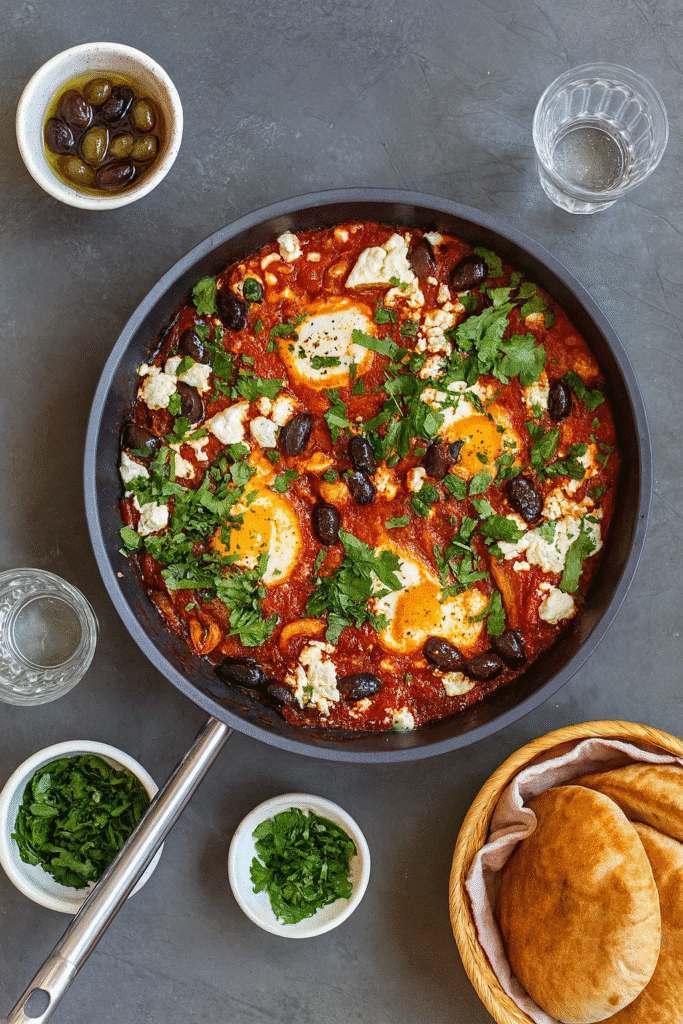
Shakshuka with feta, olives, and peppers is one of those recipes that looks impressive in the pan but is very approachable once you have made it once or twice. A simple base of onions, peppers, and canned whole tomatoes becomes something rich and cozy when you take the time to soften the vegetables, bloom the spices, and simmer until the sauce is thick and fragrant. Eggs poach directly in that sauce, and feta plus olives add creamy, salty contrast in every spoonful.
With one pan, a handful of pantry ingredients, and a few basic techniques, you can turn this dish into a regular part of your breakfast, brunch, or dinner routine. Use the method here as your base, then play with variations such as harissa, greens, or chickpeas. Adjust the heat and toppings to your household and enjoy the pleasure of dipping warm bread into runny yolks and spiced tomato sauce at any time of day.
Shakshuka with Feta, Olives, and Peppers – A Healthy Breakfast